Kilmalruf
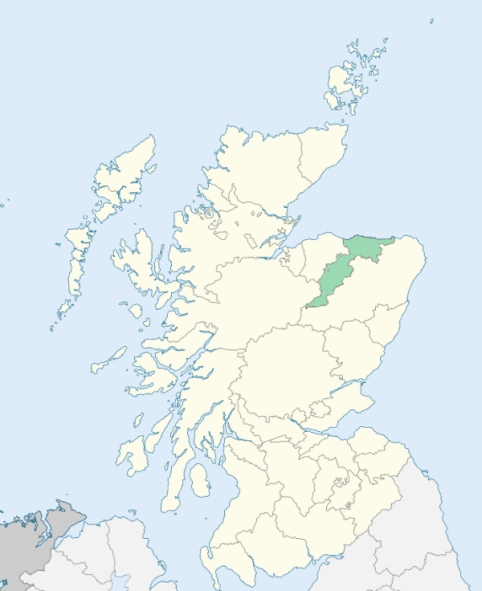
Keith is a parish partly in Elginshire, but chiefly in Banffshire. It lies at one of the narrowest parts of Banffshire, extending from side to side of that county, and is bounded by the parishes of Rathven, Deskford, Grange, Cairney, Glass, Botriphnie, and Boharm. (1867: The Imperial Gazetteer of Scotland, by John Marius Wilson).
Auchindachy, Fife-Keith, Keith, Old Keith, New Keith, Newmill
(1) The parish of Cairnie was situated partly in the county of Aberdeen and partly in the county of Banff. No change was made on the county boundary, but the Banffshire part of the parish was transferred to the Banffshire parish of Keith. See affected properties and landholders. (1892: Boundary of counties and parishes in Scotland as settled by the Boundary Commissioners under the Local Government Act, 1889, by Hay Shennan)
(2) Whereas each of the parishes of Bellie, Boharm, Inveravon, Keith, and Rothes is situated partly in the county of Banff and partly in the county of Elgin: The whole of the parish of Keith shall be included in and form part of the county of Banff. See affected properties and landholders. (1892: Boundary of counties and parishes in Scotland as settled by the Boundary Commissioners under the Local Government Act, 1889, by Hay Shennan)
PRE-REFORMATION GOVERNANCE:
POST-REFORMATION GOVERNANCE:
The parish church was dedicated to St Malrubh. Kilmalruf was a mensal kirk of the Bishop of Moray. Fairs of St Malrubh and St Alexander were held at Keith.
Disjoined Quoad Sacra Parishes:
Newmill. Disjoined from Keith and erected quoad sacra on 18 June 1877.
Includes ministers, licentiates, assistants, readers, and clerks.
Keith (QO)
Newmill (QS)
(1928: Fasti Ecclesiæ Scoticanæ, by Hew Scott, D. D.)
Parish registers turned over to the Registrar-General, as a result of the Registration of Births, Deaths, and Marriages (Scotland) Act of 1854. The letters B. D. and M. indicate Births (or Baptisms), Deaths (or Burials), and Marriages (or Proclamations of Banns) respectively. Numbers indicate separate volumes or books. Note: These records are by no means complete or without damage; consult the Detailed List of the Old Parochial Registers of Scotland (1872) to learn more about the condition of the records.
| OPR and RD Numbers | |||
|---|---|---|---|
| Date Range | Name | Number | Type |
| 1686-1854 | Keith | 159 | OPR |
| 1855-1971 | Keith | 159 | RD |
| 1972-2002 | Keith | 295 | RD |
| 2003-2006 | Keith and Upper Speyside | 295 | RD |
| 2009 | Moray, Keith | 295 | RD |
| 2026 | Moray Council; Keith Community Council | ||
(2009: Parishes and Registration Districts of Scotland - Old and New, National Records of Scotland)
Local community councils (2026) are provided as a potential source of additional information for settlements within the original boundaries of the parish. (Source)
Statistics from informal and official censuses
Duncan, Fraser, Grant, Milne, Robertson, Simpson, Smith, Stewart, Watt, Wilson
Note: Names appearing in research materials, other than censuses. Simple names (First name, surname only) have been omitted unless they appear associated with large properties. All women's names, and men's names with occupations, military ranks, or peerage titles are included.
By the Reverend Mr Alexander Humphrey, Minister of Fordyce, and late assistant minister of Keith.
"At present, (1791) from a very accurate survey it appears that there are only 3057 souls. Of these, the number who live in the villages, is, 1662; in the country 1395; of whom 1709 are males, 1348 are females. Since 1755, the population in Keith has increased upon the whole 374, but since 1783, it has decreased 526. Since the writer of this had the charge of the parish, or for three years back, it has decreased 90. This may easily be accounted for, from the state of the manufactures.
The principal branches of manufacture carried on in Keith are flax-dressing, spinning, and weaving. The first of these has been in a very unprosperous condition; so much so, that many flax-dressers have been dismissed by their employers, and, with their families, have left the place.
In this parish, and in all the neighbourhood, the language spoken is the Scotch dialect of the English language. All the old names of places are evidently derived from the Gaelic, which language is generally spoken in a detached corner of the parish, by a colony from various districts of the Highlands; who being indigent, and supported by begging, or their own alertness, are allured there by the abundance of moss, and the vicinity of a very populous and plentiful country.
As there are no persons of independent fortune within the parish, the inhabitants are distinguishedly sober and industrious. Several of them have thus raised themselves to easy circumstances, which enables them to enjoy the comforts of life and of society, in the greatest perfection. Unaccustomed to the elegancies and luxuries of life, or ignorant of them, they feel not their want; they are not disquieted with their desire; satisfied with their neat abundance, they enjoy it with satisfaction; they shew it with pleasure among their equals, and extend it with liberality to such as are in want.
All ranks are regular in their attendance on the ordinances of religion; maintain, in general, great decorum of behaviour, and value themselves on respectability of character, which excites them, of consequence, to support it. Nor are they, in any gradation of society, notorious for any particular vices. They have no pastimes or holidays, except dancing on Christmas and New Year's day. They are generally sensible, shrewd, and intelligent. The tradesmen and manufacturers appear more cheerful, and seem happier, than the farmers and their tenants. This evident difference naturally arises, from the difficulty the latter now find, to procure a subsistence. For though the generality of the tradesmen and manufacturers live more expensively, than most of the farmers, several of them are, notwithstanding, improving their circumstances, while the farmers, with a very few exceptions indeed, are doing the reverse."
(This section contains excerpts, at times restructured or paraphrased, from an article appearing in Statistical Account of Scotland, Sir John Sinclair, 1791-1799)
Primary Sources:
Statistical Account of Scotland (1791-1799), Volume 5, p. 414
New Statistical Account of Scotland (1834-1845), Volume 13, Section I, p. 388
See Parish Page Sources for all source information and links.