Tinwald and Trailflat
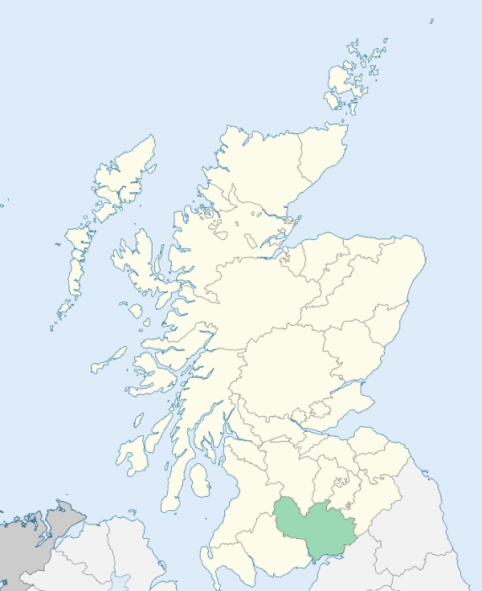
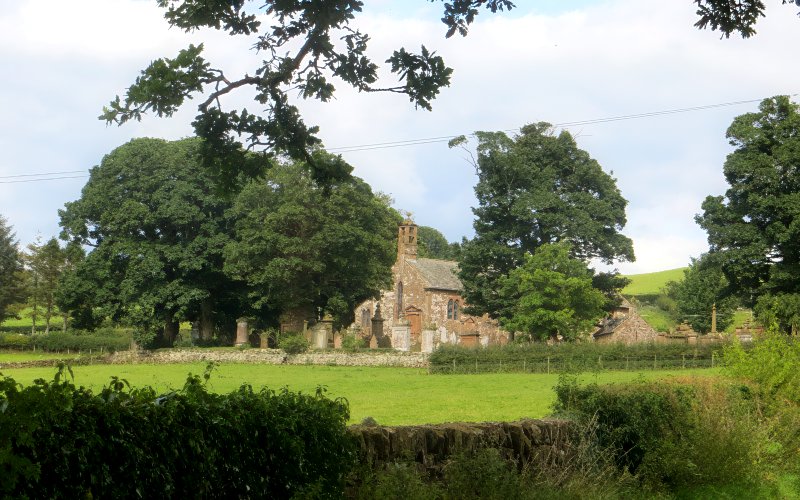
Tinwald is a parish lying doubtfully between Nithsdale and Annandale, but belonging mainly to the latter, in Dumfries-shire. It is bounded by Kirkmahoe, Kirkmichael, Lochmaben, Torthorwald, and Dumfries. (1867: The Imperial Gazetteer of Scotland, by John Marius Wilson).
Amisfield, Kirkland, Tinwald, Townhead
Queensberry
PRE-REFORMATION GOVERNANCE:
POST-REFORMATION GOVERNANCE:
The parishes of Tinwald and Trailflat were united in 1650. Previous to the Reformation the church of Trailflat belonged to the Abbey of Kelso.
Includes ministers, licentiates, assistants, readers, and clerks.
Tinwald (QO)
Trailflat (QO)
(1928: Fasti Ecclesiæ Scoticanæ, by Hew Scott, D. D.)
Parish registers turned over to the Registrar-General, as a result of the Registration of Births, Deaths, and Marriages (Scotland) Act of 1854. The letters B. D. and M. indicate Births (or Baptisms), Deaths (or Burials), and Marriages (or Proclamations of Banns) respectively. Numbers indicate separate volumes or books. Note: These records are by no means complete or without damage; consult the Detailed List of the Old Parochial Registers of Scotland (1872) to learn more about the condition of the records.
| OPR and RD Numbers | |||
|---|---|---|---|
| Date Range | Name | Number | Type |
| 1789-1854 | Tinwald | 849 | OPR |
| 1855-1968 | Tinwald | 849 | RD |
| 2009 | Dumfries and Galloway, Castleton | 824 | RD |
| 2026 | Dumfries & Galloway Council; Tinwald Parish Community Council | ||
(2009: Parishes and Registration Districts of Scotland - Old and New, National Records of Scotland)
Local community councils (2026) are provided as a potential source of additional information for settlements within the original boundaries of the parish. (Source)
Statistics from informal and official censuses
Bell, Brown, Dobie, Ferguson, Henderson, Johnstone, Kerr, Kirkpatrick, Little, Paterson
Note: Names appearing in research materials, other than censuses. Simple names (First name, surname only) have been omitted unless they appear associated with large properties. All women's names, and men's names with occupations, military ranks, or peerage titles are included.
By the Reverend Mr James Laurie.
"The inhabitants at present amount to 850. Of these 419 are males, 431 are females, and 133 are children under 8 years of age. There are 21 Seceders and 1 Roman Catholic family. There are only 3 small villages. The inhabitants were more numerous many years ago, by some hundreds, than at present; ten or more tenants sometimes being turned out with their cottagers to make way for one. In some instances, only the herdsman is retained in the farm.
There are 55 farmers, 3 cart and plough wrights, 1 wheel-wright, 2 masons, 4 blacksmiths, 9 weavers, 4 shoemakers, and 4 tailors. One of the most extensive bleach-fields in Scotland is carried on at Trailflat."
(This section contains excerpts, at times restructured or paraphrased, from an article appearing in Statistical Account of Scotland, Sir John Sinclair, 1791-1799)
Primary Sources:
Statistical Account of Scotland (1791-1799), Volume 1, p. 159
New Statistical Account of Scotland (1834-1845), Volume 4, Section I, p. 39
See Parish Page Sources for all source information and links.