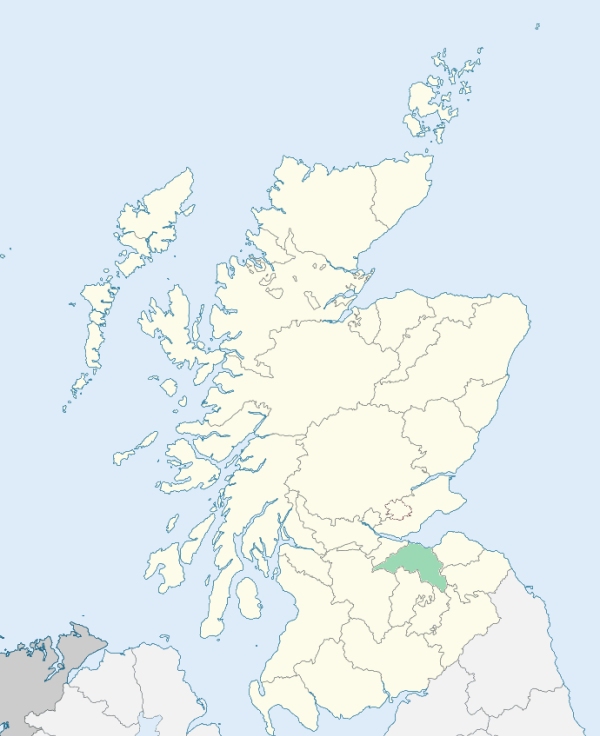
Dalkeith is a parish in the eastern district of Edinburghshire. It is bounded by Liberton, Newton, Inveresk, Cranston, Newbattle, and Lasswade. (1867: The Imperial Gazetteer of Scotland, by John Marius Wilson).
Bridgend, Dalkeith, Lugton, Whitehill
PRE-REFORMATION GOVERNANCE:
POST-REFORMATION GOVERNANCE:
Dalkeith. Founded in 1406 as a collegiate church, dedicated to St Nicholas, and a prebend of the Deanery of Restalrig. On the dissolution of the Deanery a parish was erected by Parliament, 5 June 1592.
Melville. Previous to the Reformation the church of Melville, dedicated to St Andrew, belonged to the Abbey of Dunfermline. The parish was united to Newbattle by the General Assembly about the end of 1583, but on 28 June 1633 annexed by Parliament, the larger portion to Lasswade, and the lesser to Dalkeith.
Disjoined Quoad Sacra Parishes:
Dalkeith West. Disjoined from Dalkeith and erected into a parish quoad sacra, 1853. Church built and endowed by Walter Francis, Duke of Buccleuch.
Includes ministers, licentiates, assistants, readers, and clerks.
Dalkeith (QO)
Melville (QO)
Dalkeith West (QS)
(1928: Fasti Ecclesiæ Scoticanæ, by Hew Scott, D. D.)
Parish registers turned over to the Registrar-General, as a result of the Registration of Births, Deaths, and Marriages (Scotland) Act of 1854. The letters B. D. and M. indicate Births (or Baptisms), Deaths (or Burials), and Marriages (or Proclamations of Banns) respectively. Numbers indicate separate volumes or books. Note: These records are by no means complete or without damage; consult the Detailed List of the Old Parochial Registers of Scotland (1872) to learn more about the condition of the records.
| OPR and RD Numbers | |||
|---|---|---|---|
| Date Range | Name | Number | Type |
| 1609-1854 | Dalkeith | 683 | OPR |
| 1855-1971 | Dalkeith | 683 | RD |
| 1972-2006 | Dalkeith | 762 | RD |
| 2007-2008 | Dalkeith, Midlothian | 762 | RD |
| 2009 | Midlothian | 762 | RD |
| 2026 | Midlothian Council; Dalkeith and District Community Council Eskbank and Newbattle Community Council | ||
(2009: Parishes and Registration Districts of Scotland - Old and New, National Records of Scotland)
Local community councils (2026) are provided as a potential source of additional information for settlements within the original boundaries of the parish. (Source)
Statistics from informal and official censuses
Brown, Campbell, Dickson, Robertson, Scott, Smith, Stewart, Thomson, Wilson, Young
Note: Names appearing in research materials, other than censuses. Simple names (First name, surname only) have been omitted unless they appear associated with large properties. All women's names, and men's names with occupations, military ranks, or peerage titles are included.
By the Reverend Mr William Scott.
"The parish contains 1095 families, of which about 50 reside in the country, and all the rest in the villages of Dalkeith, Lugton, and Bridgend. The number of souls amounts to 4366. In this parish there is a great number of dissenters of various denominations.
Of these, there are at present, including journeymen and apprentices: 56 weavers, 62 shoemakers, 44 tailors, 12 dyers, 53 gardeners, 30 butchers, 3 candle-makers, 6 practitioners in physic, 21 weavers, 77 hammermen (including masons, wrights, &c.), 60 or 70 carters, 11 bankers, 36 bakers, 4 brewers, 4 hairdressers, and 2 watchmakers.
The only articles worth mentioning, regarding manufactures, are, a tannery, a soap-work, and the making of candles. There was a tambour manufacture erected here in February 1790; 110 girls, from 9 to 12 years of age, besides 4 boys, were indentured as apprentices. These apprentices are bound for 4 years."
(This section contains excerpts, at times restructured or paraphrased, from an article appearing in Statistical Account of Scotland, Sir John Sinclair, 1791-1799)
Primary Sources:
Statistical Account of Scotland (1791-1799), Volume 12, p. 18
New Statistical Account of Scotland (1834-1845), Volume 1, p. 451
See Parish Page Sources for all source information and links.