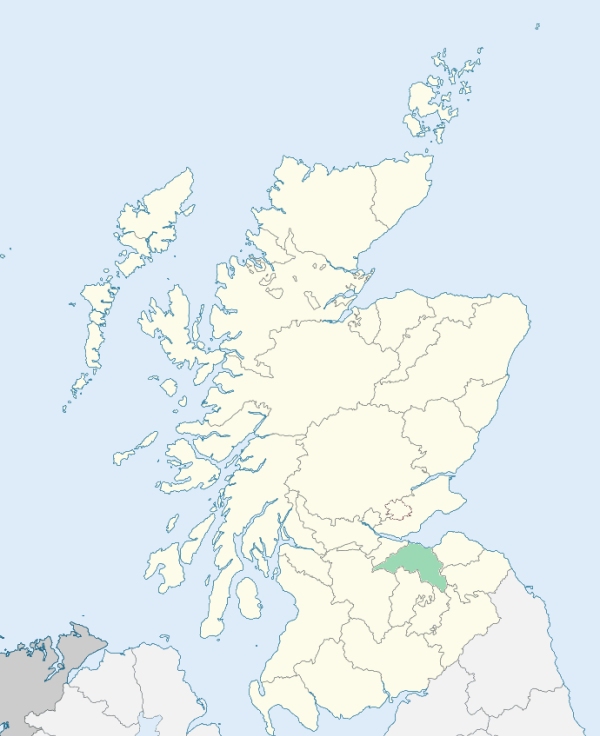
Lasswade is a parish in Edinburghshire. It is bounded by Colinton, Liberton, Dalkeith, Newbattle, Cockpen, Carrington, Penicuick, and Glencross. (1867: The Imperial Gazetteer of Scotland, by John Marius Wilson).
Auchindinny, Kirkhill, Lasswade, Loanhead, Melville, New Pentland, Pentland, Rosewell, Roslin or Rosslyn
Auchindinny
PRE-REFORMATION GOVERNANCE:
POST-REFORMATION GOVERNANCE:
Lasswade. The church was dedicated to St Edwin. Previous to the Reformation the minister was Dean of the collegiate church of Restalrig, which was dissolved by Parliament, 5 June 1592.
Pentland. In 1583 the Synod of Lothian remitted to the General Assembly that means be taken for establishing a minister here. The parish was united to Lasswade in 1647, there not being sufficient competence for a minister.
Melville. Previous to the Reformation the church of Melville, dedicated to St Andrew, belonged to the Abbey of Dunfermline. The parish was united to Newbattle by the General Assembly about the end of 1583, but on 28 June 1633 annexed by Parliament, the larger portion to Lasswade, and the lesser to Dalkeith.
Disjoined Quoad Sacra Parishes:
Loanhead. Disjoined from Lasswade and Pentland, and erected into a parish quoad sacra, 1884.
Rosewell. Disjoined from Lasswade and erected into a parish quoad sacra, 22 June 1874. Church built 1872.
Roslin. The collegiate church, dedicated to St Matthew, was founded by William, Earl of Orkney, in 1446. A chapel-of-ease was opened 3 June 1827. A parish quoad sacra was declared by Act of Assembly, 31 May 1834. Disjoined from Lasswade and erected by the Court of Teinds, 15 July 1863.
Includes ministers, licentiates, assistants, readers, and clerks.
Lasswade (QO)
Pentland (QO)
Melville (QO)
Loanhead (QS)
Rosewell (QS)
Roslin (QS)
(1928: Fasti Ecclesiæ Scoticanæ, by Hew Scott, D. D.)
Parish registers turned over to the Registrar-General, as a result of the Registration of Births, Deaths, and Marriages (Scotland) Act of 1854. The letters B. D. and M. indicate Births (or Baptisms), Deaths (or Burials), and Marriages (or Proclamations of Banns) respectively. Numbers indicate separate volumes or books. Note: These records are by no means complete or without damage; consult the Detailed List of the Old Parochial Registers of Scotland (1872) to learn more about the condition of the records.
| OPR and RD Numbers | |||
|---|---|---|---|
| Date Range | Name | Number | Type |
| 1617-1854 | Lasswade | 691 | OPR |
| 1855-1968 | Lasswade | 691 | RD |
| 1969-1971 | Bonnyrigg and Lasswade | 676 | RD |
| 1972-1984 | Bonnyrigg and Lasswade | 764 | RD |
| 2009 | Midlothian | 762 | RD |
| 2026 | Midlothian Council; Bonnyrigg and District Community Council Damhead Community Council Loanhead Community Council Rosewell and District Community Council Roslin/Bilston Community Council | ||
(2009: Parishes and Registration Districts of Scotland - Old and New, National Records of Scotland)
Local community councils (2026) are provided as a potential source of additional information for settlements within the original boundaries of the parish. (Source)
Statistics from informal and official censuses
Brown, Clark, Dickson, Reid, Robertson, Scott, Smith, Thomson, Watson, Young
Note: Names appearing in research materials, other than censuses. Simple names (First name, surname only) have been omitted unless they appear associated with large properties. All women's names, and men's names with occupations, military ranks, or peerage titles are included.
By the Reverend Mr John Paton.
"In 1791, this parish contained rather more than 3000 inhabitants. The return to Dr Webster, in 1744, was 2190 souls. For this increase the following reasons may be assigned, viz. 1st, Manufactures have greatly increased, particularly that of paper. 2d, Improvements of every kind have been carried on to a great extent, which has occasioned a greater demand for labourers. 3rd, Some of the proprietors have been in the use of feuing ground for building upon, which, added to the plenty of coal in the parish, has induced strangers to settle in it.
Manufactures are in a thriving state, there being two extensive bleachfields, 1 barley, and 2 meal mills, and 4 paper mills, besides a fifth lately erected. It is about 50 years since the first paper mill was built, and within these 30 years, the number of people employed in this manufacture has increased from 30 to 40 to about 260."
(This section contains excerpts, at times restructured or paraphrased, from an article appearing in Statistical Account of Scotland, Sir John Sinclair, 1791-1799)
Primary Sources:
Statistical Account of Scotland (1791-1799), Volume 10, p. 277
New Statistical Account of Scotland (1834-1845), Volume 1, p. 323
See Parish Page Sources for all source information and links.