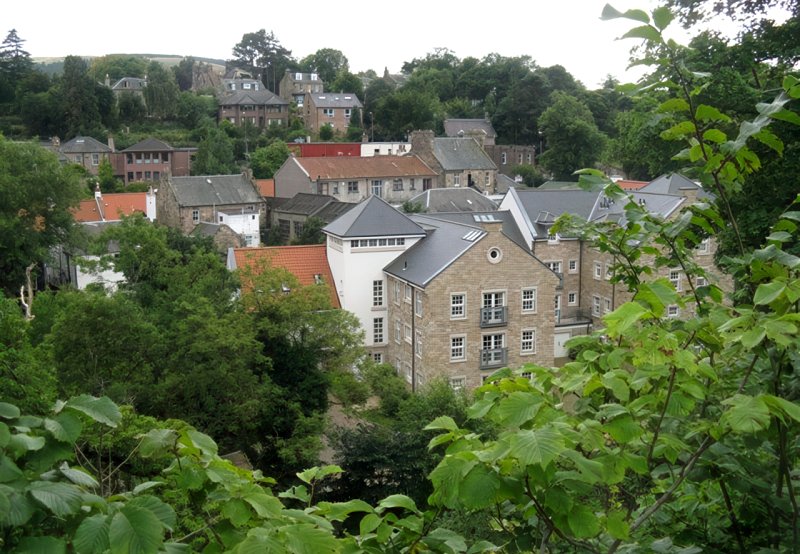
Collington, Halis, Hailes
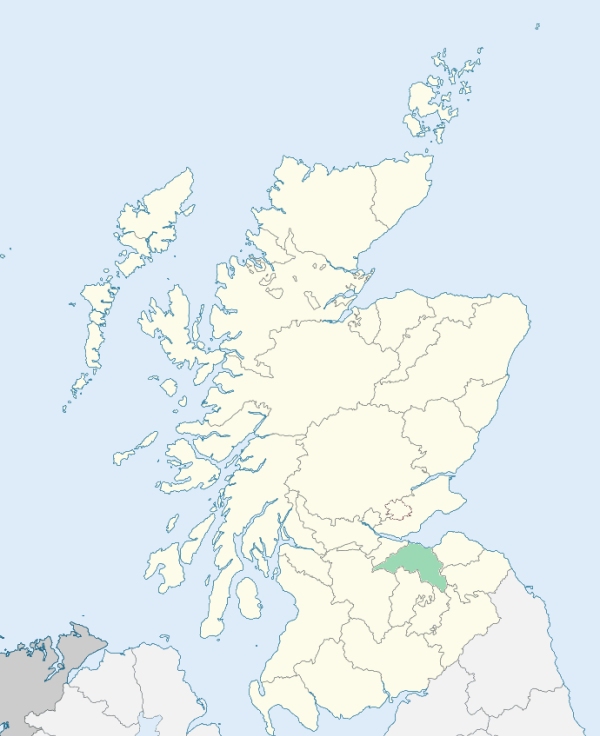
Colinton is a parish in Edinburghshire. It is bounded by the parishes of Corstorphine, St Cuthberts, Liberton, Lasswade, Glencross, Penicuick, and Currie. (1867: The Imperial Gazetteer of Scotland, by John Marius Wilson).
Colinton, Craiglockhart, Hailes, Hailes Quarry, Kingsknows, Juniper Green, Longstone, Slateford, Swanston
Hailes, Redhall, Woodhall, Woodville
PRE-REFORMATION GOVERNANCE:
POST-REFORMATION GOVERNANCE:
St Cuthbert's church and parish of Halis or Hailes, now Colinton, was founded about 1095 A.D. by Ethelred, Earl of Fife, son of Malcolm III and Queen Margaret. A church dedicated 17 November 1248 was probably destroyed during the English invasion, 1544-45. A church built on the present site in 1636 was rebuilt in 1771, and again in 1907. Before the Reformation the church belonged to the Preceptory of St Anthony, Leith.
Disjoined Quoad Sacra Parishes:
Craiglockhart. Erected into a parish quoad sacra 10 December 1897, out of the parish of St Cuthbert, and the Slateford district of the parish of Colinton.
Juniper Green. The congregation dates from 1892. On 21 February of that year an iron church was opened. The foundation stone of the present building was laid in June 1895, and the church was opened 23 January 1897. Erected from Colinton into a parish quoad sacra by decree of the Court of Teinds, 30 Nov 1906.
Includes ministers, licentiates, assistants, readers, and clerks.
Colinton (QO)
Craiglockhart (QS)
Juniper Green (QS)
(1928: Fasti Ecclesiæ Scoticanæ, by Hew Scott, D. D.)
Parish registers turned over to the Registrar-General, as a result of the Registration of Births, Deaths, and Marriages (Scotland) Act of 1854. The letters B. D. and M. indicate Births (or Baptisms), Deaths (or Burials), and Marriages (or Proclamations of Banns) respectively. Numbers indicate separate volumes or books. Note: These records are by no means complete or without damage; consult the Detailed List of the Old Parochial Registers of Scotland (1872) to learn more about the condition of the records.
| OPR and RD Numbers | |||
|---|---|---|---|
| Date Range | Name | Number | Type |
| 1654-1854 | Colinton | 677 | OPR |
| 1855-1920 | Colinton | 677 | RD |
| 1921-1929 | Colinton (City of Edinburgh) | 685-14 | RD |
| 1930-1932 | Corstorphine | 685-13 | RD |
| 2009 | City of Edinburgh, Central | 744 | RD |
| 2026 | City of Edinburgh Council; Colinton Community Council Firrhill Community Council | ||
(2009: Parishes and Registration Districts of Scotland - Old and New, National Records of Scotland)
Local community councils (2026) are provided as a potential source of additional information for settlements within the original boundaries of the parish. (Source)
Statistics from informal and official censuses
Anderson, Brown, Campbell, Davidson, Henderson, Johnston, Robertson, Scott, Smith, Young
Note: Names appearing in research materials, other than censuses. Simple names (First name, surname only) have been omitted unless they appear associated with large properties. All women's names, and men's names with occupations, military ranks, or peerage titles are included.
By the Reverend Dr John Walker.
"At present, the number of inhabited houses in the parish is exactly 313; and the number of inhabitants is nearly 1395. The greater part of the inhabitants are supported by manufactures, and by various occupations, independent of the soil.
There are 71 mills in the parish. The numerous mills erected for flour and barley; the mills for the manufacture of flax, paper, tobacco, and the waulking of cloth; the skinnery manufacture; the bleaching fields, a flourishing distillery; a manufacture of magnesia, and the great quarries of Hailes and Redhall; have brought together, of late years, into this parish, a concourse of people, and a degree of opulence formerly unknown."
(This section contains excerpts, at times restructured or paraphrased, from an article appearing in Statistical Account of Scotland, Sir John Sinclair, 1791-1799)
Primary Sources:
Statistical Account of Scotland (1791-1799), Volume 19, p. 579
New Statistical Account of Scotland (1834-1845), Volume 1, p. 107
See Parish Page Sources for all source information and links.