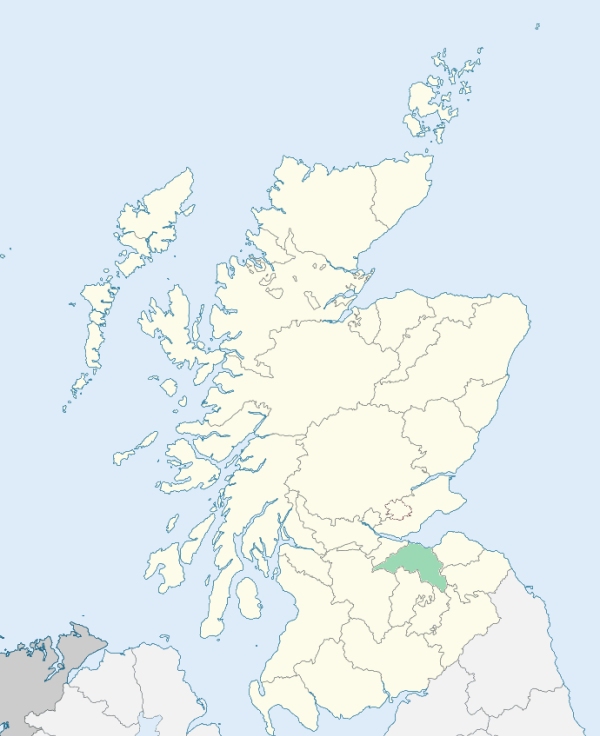
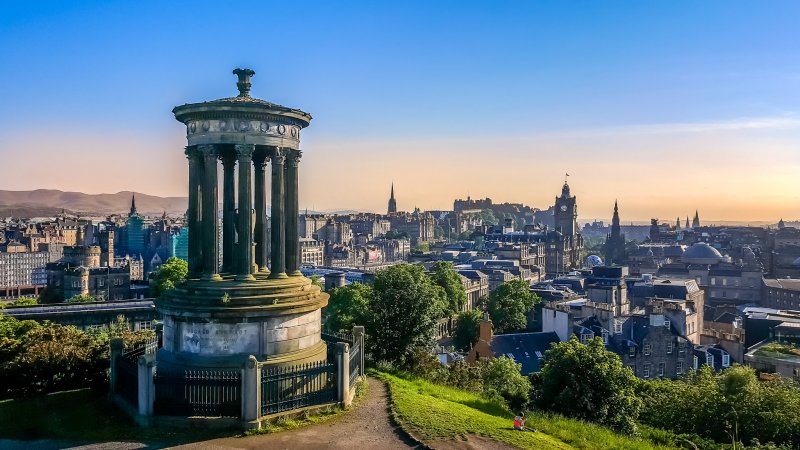
Canongate is a large and ancient suburb of Edinburgh, constituting all the eastern part of the Old Town, and possessing the separate jurisdiction of a burgh of regality. The parish of Canongate also comprises Holyrood and Arthur's Seat. (1867: The Imperial Gazetteer of Scotland, by John Marius Wilson).
Blackhall, Edinburgh, Gorgie, Slateford
PRE-REFORMATION GOVERNANCE:
POST-REFORMATION GOVERNANCE:
Quoad Omnia Parishes in the City of Edinburgh:
Canongate, previously Holyroodhouse. The Privy Council, at His Majesty's desire, 13 September 1672, forbade the use of the church at Holyrood as a parish church, that it might be set apart as a Chapel Royal, and a chapel for the Knights of the Thistle. The congregation worshipped in Lady Yester's Church until the new church in the Canongate was opened in 1691.
Greenside. Disjoined from St Cuthbert's and erected into a parish by the Town Council with concurrence of the Presbytery, 29 June 1836, when the Old Kirk Parish was made an uncollegiate charge; church opened 6 October 1839.
Lady Yester's. Founded by Margaret, third daughter of Mark, first Earl of Lothian, and wife of James, seventh Lord Hay of Yester. She died 15 May 1647. The church was badly damaged by Cromwell's soldiers in November 1650, but being restored, was erected into a parish church, 24 August 1655, for the south-east portion of the city.
New Greyfriars. A church ordered by the Town Council to be built in 1719 was finished in 1721, and the parish was erected in 1722; formed out of portions taken from the Tolbooth and Old Greyfriars.
Old Greyfriars. In 1598 Edinburgh was divided into four parishes, and on 18 May of that year the High or Upper Tolbooth, then situated in the west part of St Giles, was allocated as a church for the South-West Quarter of the city. The church was built very slowly, and was not opened until Christmas 1620. In November 1650 much of the inside was destroyed by English soldiery. On 7 May 1718 the steeple, which was used for holding gunpowder, was blown up. In 1845 the building took fire on 19 January 1845, and in a few hours nothing was left but the old rubble walls. After considerable delay it was again restored, and reopened 13 June 1857.
St Andrew's. A church and parish being required for the increasing population of the New Town, this erection was proposed by James Hunter Blair, 25 April 1780, and unanimously resolved upon by the Town Council, 31 January 1781. Opened 12 December 1784. St Andrew's was the first parish of the New Town.
St Cuthbert's, or West Kirk. The first church erected on the site of the present church, if it did not owe its existence to the personal efforts of St Cuthbert himself, was erected shortly after his decease in the latter part of the seventh century. In the early ages this was one of the wealthiest parishes in Scotland, but in 1128 it was, with all its endowments, transferred to the Abbey of Holyroodhouse, then founded by David I.
St George's. Founded 14 May 1811, erected 26 January, and opened 5 June 1814.
St Giles, or The High Kirk. There is record evidence of a church here, very likely on the present site, in the year 854. In 1120 King Alexander I rebuilt the church in the Norman style. Features survived until 1798. During the fourteenth century, Edinburgh was captured by the English under Edward II and Edward III, and twice St Giles was laid waste. After restoration, the church was more thoroughly ruined at the Burnt Candlemas in 1387, when Richard II sacked the city. The restoration lasted on into the sixteenth century. Further restorations were carried out in the 1800s, finishing and reopening on May 23 1883.
St John's. In 1840 a part of Old Greyfriars Parish was disjoined and erected by the Court of Teinds into a new parish, which was called St John's, because certain of the lands within the area had belonged before the Reformation to the Knights Templars of St John of Jerusalem.
St Mary's, previously Bellevue Chapel. Erected into a parish by the Town Council, and concurred in by the Presbytery 27 October 1824. A church was opened 12 December 1824, and the name St Mary's given to it in 1825.
The Tolbooth. Erected by the Town Council 24 December 1641, the west portion of St Giles adjoining the Tolbooth being appropriated for its use.
Tron Kirk. Christ's Kirk at the Tron, so called from the great beam, the public weighing-place of the city. The foundation stone was laid 4 March 1637, and the church dedicated 1641. The steeple dates from 1826, its predecessor being destroyed by fire 15 November 1824.
Trinity Church. Founded in 1462 as a collegiate church by Queen Mary of Guelders, widow of James II. In 1584 it became the church for the North-East Quarter of the City. The interior was greatly damaged by Cromwell's troops in November 1650, but was restored in 1653. In 1848 it was sold to the North British Railway Co. and a new church was rebuilt on a new site. The congregation met in several locations until the new church was opened in 1873.
West St Giles, or New North Church. There was a meeting-house in the Lawnmarket in 1692, to which a parish was allocated 25 March 1698, termed the New North, for whose accommodation the north-west portion of St Giles was fitted up 20 December 1699. It was also called, from its size, the Little Kirk. A new building was erected near the Meadows, to which the congregation removed in 1880.
Note: Also see Edinburgh Disjoined Quoad Sacra Parishes
Includes ministers, licentiates, assistants, readers, and clerks.
Note: Also see Edinburgh Quoad Sacra Parishes clergy
Canongate, or Holyroodhouse (QO)
Greenside (QO)
Lady Yester's (QO)
New Greyfriars (QO)
Old Greyfriars (QO)
St Andrew's (QO)
St Cuthbert's, or West Kirk (QO)
St George's (QO)
St Giles, or The High Kirk (QO)
St John's (QO)
St Mary's (QO)
The Tolbooth (QO)
Tron Kirk (QO)
Trinity Church (QO)
West St Giles, or New North Church (QO)
(1928: Fasti Ecclesiæ Scoticanæ, by Hew Scott, D. D.)
Parish registers turned over to the Registrar-General, as a result of the Registration of Births, Deaths, and Marriages (Scotland) Act of 1854. The letters B. D. and M. indicate Births (or Baptisms), Deaths (or Burials), and Marriages (or Proclamations of Banns) respectively. Numbers indicate separate volumes or books. Note: These records are by no means complete or without damage; consult the Detailed List of the Old Parochial Registers of Scotland (1872) to learn more about the condition of the records.
See: City of Edinburgh Parochial Registers
| OPR and RD Numbers | |||
|---|---|---|---|
| Date Range | Name | Number | Type |
| 1595-1854 | Edinburgh | 685-1 | OPR |
| 1573-1854 | St Cuthberts | 685-2 | OPR |
| 1564-1854 | Canongate | 685-3 | OPR |
| 1855-1858 | Dean, Boroughmuirhead and Morningside | 685-1 | RD |
| 1855-1858 | Newington and Grange | 685-2 | RD |
| 1855-1858 | Castle and Portsburgh | 685-3 | RD |
| 1855-1971 | St Giles | 685-4 | RD |
| 1855-1858 | Holyrood and Canongate | 685-5 | RD |
| 1855-1858 | Calton and Bonnington | 685-6 | RD |
| 1855-1858 | Heriot and Warriston | 685-7 | RD |
| 1859-1919 | St George | 685-1 | RD |
| 1859-1971 | St Andrew | 685-2 | RD |
| 1859-1938 | Canongate | 685-3 | RD |
| 1859-1919 | Newington | 685-5 | RD |
| 1897-1902 | Portobello | 685-6 | RD |
| 1903-1919 | Morningside | 685-6 | RD |
| 1903-1919 | Portobello | 685-7 | RD |
| 1920-1929 | St Bernard | 685-1 | RD |
| 1920-1971 | George Square | 685-5 | RD |
| 1920-1971 | Newington | 685-6 | RD |
| 1920-1971 | Morningside | 685-7 | RD |
| 1920-1929 | Dalry and Gorgie | 685-8 | RD |
| 1920-1929 | Portobello | 685-9 | RD |
| 1921-1929 | Leith North | 685-10 | RD |
| 1921-1929 | Leith South | 685-11 | RD |
| 1921-1929 | Cramond | 685-12 | RD |
| 1921-1929 | Corstorphine | 685-13 | RD |
| 1921-1929 | Colinton | 685-14 | RD |
| 1921-1929 | Liberton | 685-15 | RD |
| 1921-1929 | Newcraighall | 685-16 | RD |
| 1930-1971 | Haymarket | 685-1 | RD |
| 1930-1938 | Portobello | 685-8 | RD |
| 1930-1935 | Leith North | 685-9 | RD |
| 1930-1935 | Leith South | 685-10 | RD |
| 1930-1932 | Cramond | 685-11 | RD |
| 1930-1932 | Corstorphine | 685-12 | RD |
| 1930-1932 | Colinton | 685-13 | RD |
| 1930-1932 | Liberton | 685-14 | RD |
| 1930-1932 | Newcraighall | 685-15 | RD |
| 1936-1938 | Leith | 685-9 | RD |
| 1939-1971 | Canongate and Portobello | 685-3 | RD |
| 1939-1971 | Leith | 685-8 | RD |
| 1972-1994 | Canongate and Portobello | 742 | RD |
| 1972-1994 | George Square | 738 | RD |
| 1972-1997 | Haymarket | 730 | RD |
| 1972-1994 | Morningside | 744 | RD |
| 1972-1994 | Newington | 746 | RD |
| 1972-1994 | St Andrew | 734 | RD |
| 1972-1973 | St Giles | 736 | RD |
| 1995-2002 | Edinburgh Central | 734 | RD |
| 2003-2006 | Edinburgh | 734 | RD |
| 2003-2006 | Edinburgh, Kirkliston | 742 | RD |
| 2003-2006 | Edinburgh, Queensferry | 743 | RD |
| 2009 | Edinburgh Central | 730-746 | RD |
| 2026 | City of Edinburgh Community Councils (See list below) | ||
(2009: Parishes and Registration Districts of Scotland - Old and New, National Records of Scotland)
Local community councils (2026) are provided as a potential source of additional information for settlements within the original boundaries of the parish. (Source)
City of Edinburgh Community Councils:
Statistics from informal and official censuses
Buccleuch: Anderson, Brown, Campbell, Johnston, Miller, Robertson, Smith, Thomson, Wilson, Young
Canongate: Anderson, Brown, Campbell, Henderson, Robertson, Scott, Smith, Stewart, Walker, Wilson
Greenside: Brown, Clark, Henderson, Robertson, Scott, Simpson, Smith, Sutherland, Thomson, Wilson
Greenside South: Campbell, Fraser, Melville, Millar, Pringle, Smith, Watson, Weir, Wilson, Young
High Church: Anderson, Brown, Fraser, Grant, Inglis, Reid, Robertson, Smith, Thomson, Wilson
Lady Yester: Brown, Clark, Duncan, Forrest, Murray, Ross, Smith, Sutherland, Thomson, Wilson
New Edinburgh: Burns, Clark, Fraser, Henderson, Johnston, Murray, Ross, Smith, Thomson, Wilson
New Edinburgh North: Burns, Clark, Cullen, Kelly, MacKay, Murray, Robertson, Scott, Smith, Ward
Newington: Bain, Muirhead, Palmer, Paterson, Robertson, Scott, Smith, Sutherland, Taylor, Walker
Old Edinburgh: Brown, Burns, Clark, Drummond, Ford, Henderson, Murray, Smith, Thomson, Ward
Old Church: Brown, Campbell, Edwards, Flynn, Murphy, Murray, Robertson, Scott, Smith, Wilson
St Andrews: Cameron, Campbell, Grant, Gray, Johnston, Robertson, Ross, Smith, Stewart, Watt
St Cuthberts: Anderson, Brown, Campbell, Henderson, Robertson, Scott, Smith, Stewart, Thomson, Wilson
St Georges: Anderson, Bell, Brown, Fraser, Henderson, Miller, Robertson, Smith, Stewart, Wilson
St Johns: Black, Henderson, Hoare, Johnston, Mitchell, Murphy, Smith, Stewart, Wilson, Young
St Marys: Anderson, Brown, Fraser, Murray, Robertson, Scott, Smith, Stewart, Thomson, Wilson
St Stephens: Brown, Campbell, Robertson, Ross, Scott, Smith, Stewart, Sutherland, Wilson, Walker
Tollbooth: Anderson, Campbell, Fraser, Jack, Reid, Robertson, Smith, Stewart, Thomson, Wilson
Trinity: Anderson, Brown, Flannigan, Murray, Reid, Rennie, Robertson, Smith, Stevenson, Thomson
Tron Church: Anderson, Flannigan, Kelly, Reid, Robertson, Rutherford, Scott, Smith, Stewart, Wright
Note: Names appearing in research materials, other than censuses. Simple names (First name, surname only) have been omitted unless they appear associated with large properties. All women's names, and men's names with occupations, military ranks, or peerage titles are included.
By the ministers and elders of six parishes of the city of Edinburgh (the High Church, Old Church, Little Church, Lady Yester's, Old-Grayfriars, and St Andrew's).
"The population of Edinburgh and its environs in 1791: In the city of Edinburgh 29718; in Canongate parish 6200; in St Cuthberts parish, 32947; in South Leith, 11432; in North Leith, 2409; total 82706. In Edinburgh castle, 847; in the hospitals, charity workhouse, infirmary, and prison, 1333; grand total 84886.
In Canongate parish, of the 6200 inhabitants, about 1200 are under ten years of age. Of 1552 families, about 1200 profess the established religion; 80 belong to the Episcopal church, 114 are Seceders, 18 Roman Catholics, and the remaining 140 either sectaries of different denominations, or families who will give no account of their religious persuasion.
In St Cuthbert's, or West Church parish, there are 9710 males, 11163 females, and 12074 children. It is not perfectly easy to draw a precise line between the suburbs and the country, and therefore it is necessary to mention that the inhabitants of Lauriston, Tollcross, Castlebarns, Fountainbridge, West Church charity workhouse, Water of Leith, Stockbridge, Silver-mills, Canonmills, Broughton, and Leith Walk, are included in the number above.
In Edinburgh Castle there were 41 commissioned and staff officers, 26 sergeants, 14 drummers and pipers, 472 rank and file, 1 barrack master, 4 gunners, 158 women, and 131 children."
(This section contains excerpts, at times restructured or paraphrased, from an article appearing in Statistical Account of Scotland, Sir John Sinclair, 1791-1799)
Primary Sources:
Statistical Account of Scotland (1791-1799), Volume 6, p. 559
New Statistical Account of Scotland (1834-1845), Volume 1, p. 614
See Parish Page Sources for all source information and links.