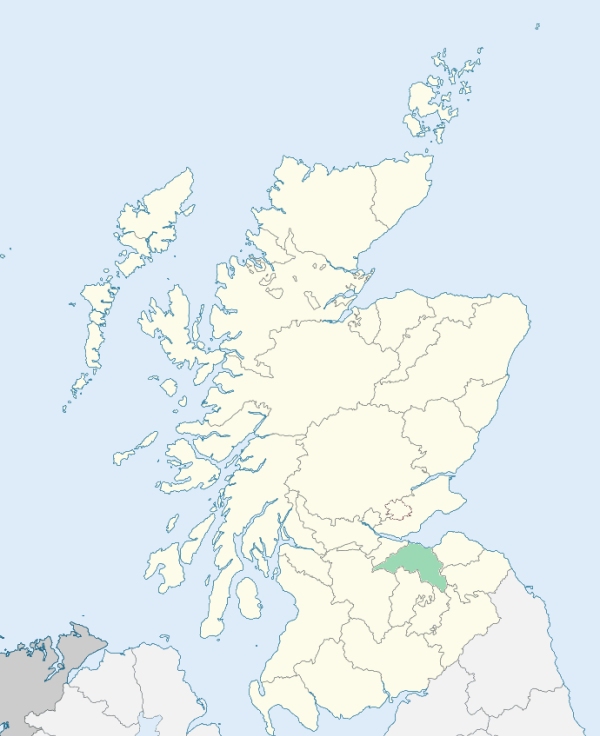
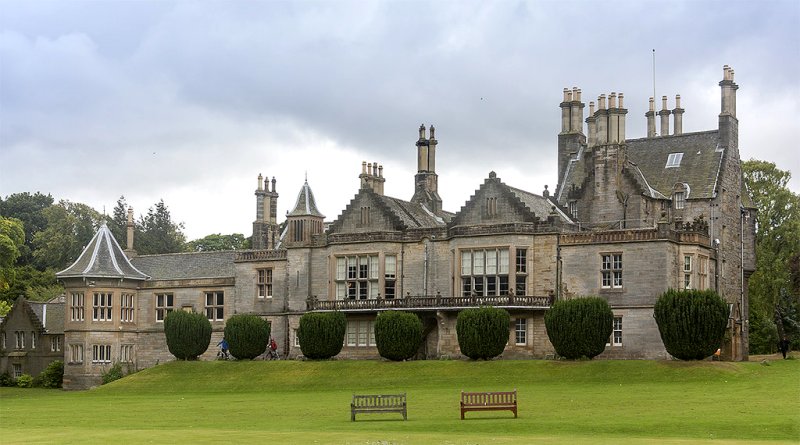
Cramond is a parish on the south coast of the Firth of Forth, partly in Linlithgowshire, but chiefly in Edinburghshire. It is bounded by the Firth of Forth, and by the parishes of Dalmeny, Kirkliston, Corstorphine, and St Cuthberts. (1867: The Imperial Gazetteer of Scotland, by John Marius Wilson).
Blackhall, Cramond, Cramond Bridge, Davidson's Mains or Muttonhole, Granton, Leny, Wardie
Braehead, Muirhouse
The parish of Cramond was situated partly in the county of Edinburgh and partly in the county of Linlithgow, the county boundary being the River Almond. The Linlithgowshire part of Cramond parish was transferred to the parish of Dalmeny, and the only alteration made on the county boundary was one by which a small part of Dalmeny parish on the Edinburgh side of the River Almond was transferred to the parish of Cramond and to the county of Edinburgh. See affected properties and landholders. (1892: Boundary of counties and parishes in Scotland as settled by the Boundary Commissioners under the Local Government Act, 1889, by Hay Shennan)
PRE-REFORMATION GOVERNANCE:
POST-REFORMATION GOVERNANCE:
A mensal or patrimonial kirk, dedicated to St Columba. Previous to the Reformation it belonged to the Bishop of Dunkeld.
Disjoined Quoad Sacra Parishes:
Granton. After the Rev. James Robertson had ministered for nearly twenty years to the workers and others connected with Granton Harbour, the Duke of Buccleuch gifted the church, built in 1877, to the Church of Scotland. Erected into a parish quoad sacra in January 1889, having been disjoined from Cramond, Dean, and St Bernard's parishes.
Includes ministers, licentiates, assistants, readers, and clerks.
Cramond (QO)
Granton (QS)
(1928: Fasti Ecclesiæ Scoticanæ, by Hew Scott, D. D.)
Parish registers turned over to the Registrar-General, as a result of the Registration of Births, Deaths, and Marriages (Scotland) Act of 1854. The letters B. D. and M. indicate Births (or Baptisms), Deaths (or Burials), and Marriages (or Proclamations of Banns) respectively. Numbers indicate separate volumes or books. Note: These records are by no means complete or without damage; consult the Detailed List of the Old Parochial Registers of Scotland (1872) to learn more about the condition of the records.
| OPR and RD Numbers | |||
|---|---|---|---|
| Date Range | Name | Number | Type |
| 1651-1854 | Cramond | 679 | OPR |
| 1855-1920 | Cramond | 679 | RD |
| 1921-1929 | Cramond (City of Edinburgh) | 685-12 | RD |
| 1930-1932 | Cramond | 685-11 | RD |
| 2009 | City of Edinburgh, Leith | 730 | RD |
| 2026 | City of Edinburgh Council; Cramond, Barnton and Cammo Community Council | ||
(2009: Parishes and Registration Districts of Scotland - Old and New, National Records of Scotland)
Local community councils (2026) are provided as a potential source of additional information for settlements within the original boundaries of the parish. (Source)
Statistics from informal and official censuses
Anderson, Brown, Hunter, Johnston, Scott, Smith, Wilson, Thomson, Wishart, Wright
Note: Names appearing in research materials, other than censuses. Simple names (First name, surname only) have been omitted unless they appear associated with large properties. All women's names, and men's names with occupations, military ranks, or peerage titles are included.
This account is an abstract of a manuscript entitled "The Topography of Cramond Parish," written by John Wood, Esq..
"From an estimate taken in 1785, there were then 319 families, and 1340 souls, viz., 37 families of gentlemen and farmers (servants included) containing 309 individuals; 20 families of iron workmen containing 91 individuals; 13 families of seamen containing 56 individuals; 11 families of wrights, carpenters, coopers, and turners containing 45 individuals; 10 families of gardeners containing 42 individuals; 8 families of weavers containing 41 individuals; 9 families of masons containing 36 individuals; 6 families of smiths containing 25 individuals; 5 families of tailors containing 20 individuals; 7 families of brewer, baker, butcher, shoemaker, beadle, tidewaiter, and schoolmaster containing 38 individuals, and 193 families of common labourers containing 637 individuals.
Mr Bonar, the present minister of Cramond, having very obligingly taken a list of the parish, found, that, in the present year, 1790, it contained 299 families only, and 1112 souls. The village of Cramond contains 74 families, 300 inhabitants, mostly iron workmen, sailors, and day labourers. It has a harbour, to which belong 7 sloops, manned with 23 seamen and apprentices.
The iron manufacture consists of 3 forges, 2 slitting mills, and 2 steel furnaces. Above 30 men and boys are employed. There are also here spade and nail manufactures, and a file manufacture has been lately established; these three branches employ about 50 men and boys."
(This section contains excerpts, at times restructured or paraphrased, from an article appearing in Statistical Account of Scotland, Sir John Sinclair, 1791-1799)
Primary Sources:
Statistical Account of Scotland (1791-1799), Volume 1, p. 211
New Statistical Account of Scotland (1834-1845), Volume 1, p. 589
See Parish Page Sources for all source information and links.