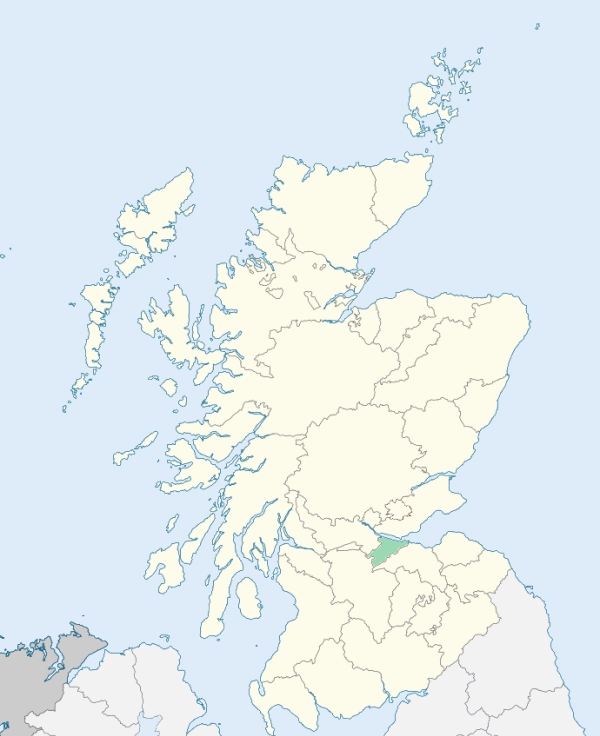
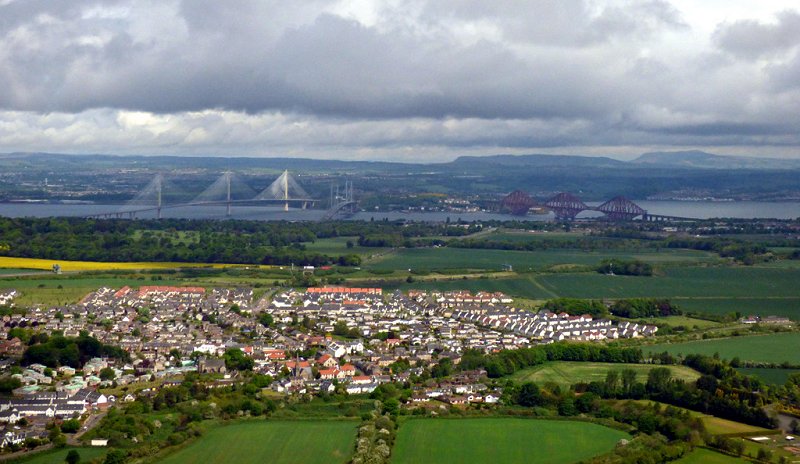
Kirkliston is a parish bisected by the River Almond, having the part on the left side of that stream in Linlithgowshire, and the part on the right side in Edinburghshire. It is bounded by the parishes of Abercorn, Dalmeny, Cramond, Corstorphine, Ratho, Kirknewton, Uphall, and Ecclesmachan. (1867: The Imperial Gazetteer of Scotland, by John Marius Wilson).
Kirkliston, Newbridge, Niddry, Winchburgh
Foxhall, Newliston
The parish of Kirkliston had a detached part in the county of Edinburgh which has been transferred to the parish of Currie. Further, the main portion of Kirkliston parish was situated partly in the county of Edinburgh and partly in the county of Linlithgow. On 7th July 1891 the Boundary Commissioners issued a Draft Order by which they proposed to transfer the Edinburgh portion of Kirkliston parish to the parish of Ratho, the county boundary being unaltered. On 12th November 1891, however, they intimated their intention of issuing no final Order, and accordingly the main portion of the parish remains as hitherto divided between the two counties mentioned. See affected properties and landholders. (1892: Boundary of counties and parishes in Scotland as settled by the Boundary Commissioners under the Local Government Act, 1889, by Hay Shennan)
PRE-REFORMATION GOVERNANCE:
POST-REFORMATION GOVERNANCE:
The church, which belonged to the Templars, dates from the 12th century.
Disjoined Quoad Sacra Parishes:
Winchburgh. Disjoined from Kirkliston and Dalmeny, and erected into a parish quoad sacra by Court of Teinds, 27 May 1904. Church built in 1891.
Includes ministers, licentiates, assistants, readers, and clerks.
Kirkliston (QO)
Winchburg (QS)
(1928: Fasti Ecclesiæ Scoticanæ, by Hew Scott, D. D.)
Parish registers turned over to the Registrar-General, as a result of the Registration of Births, Deaths, and Marriages (Scotland) Act of 1854. The letters B. D. and M. indicate Births (or Baptisms), Deaths (or Burials), and Marriages (or Proclamations of Banns) respectively. Numbers indicate separate volumes or books. Note: These records are by no means complete or without damage; consult the Detailed List of the Old Parochial Registers of Scotland (1872) to learn more about the condition of the records.
| OPR and RD Numbers | |||
|---|---|---|---|
| Date Range | Name | Number | Type |
| 1675-1854 | Kirkliston | 667 | OPR |
| 1855-1971 | Kirkliston | 667 | RD |
| 1972-2002 | Kirkliston | 702 | RD |
| 2009 | City of Edinburgh, Kirkliston | 742 | RD |
| 2026 | West Lothian Council; Winchburg Community Council | ||
(2009: Parishes and Registration Districts of Scotland - Old and New, National Records of Scotland)
Local community councils (2026) are provided as a potential source of additional information for settlements within the original boundaries of the parish. (Source)
Statistics from informal and official censuses
Anderson, Black, Borthwick, Brown, Forrest, Gray, Johnston, Meikle, Scott, Smith
Note: Names appearing in research materials, other than censuses. Simple names (First name, surname only) have been omitted unless they appear associated with large properties. All women's names, and men's names with occupations, military ranks, or peerage titles are included.
By Mr John Muckarsie, Assistant to the Reverend Mr James Lindsay.
"There are 1504 souls in the parish, of whom 324 are farmers, 352 cottagers, 111 day-labourers, 150 widows, 38 innkeepers, and 503 mechanics. There are 575 males, 646 females, 352 families, 283 children under 9 years, and 209 Dissenters.
The whole people may be divided into two classes, farmers composing the one, and mechanics and servants, the other. The former being almost wholly on the same level, live together in the most intimate habits of friendship and hospitality. From the increasing civilization of manners, the fashion of the times, and other accidental causes, they have, within the last 40 years, entirely departed from the pernicious custom of having their meetings for business or amusement in the public-houses of the parish. They now assemble together in the family style, and conduct their entertainments with the sobriety and delicacy becoming family manners. The morals of the common people have continued nearly in the same footing for many years. The only fact which constitutes a difference between the people of this rank in this and the greater number of country parishes in Scotland, is the extreme difficulty of rising above their humble condition. The equality of the farms, and the want of manufactures, afford no hope to servants and mechanics of becoming masters in their several professions."
(This section contains excerpts, at times restructured or paraphrased, from an article appearing in Statistical Account of Scotland, Sir John Sinclair, 1791-1799)
Primary Sources:
Statistical Account of Scotland (1791-1799), Volume 10, p. 68
New Statistical Account of Scotland (1834-1845), Volume 2, Section I, p. 68
See Parish Page Sources for all source information and links.