
Plaidwerx


Features: Scottish Parishes » Historic Shires » Edinburghshire » Kirknewton & East Calder

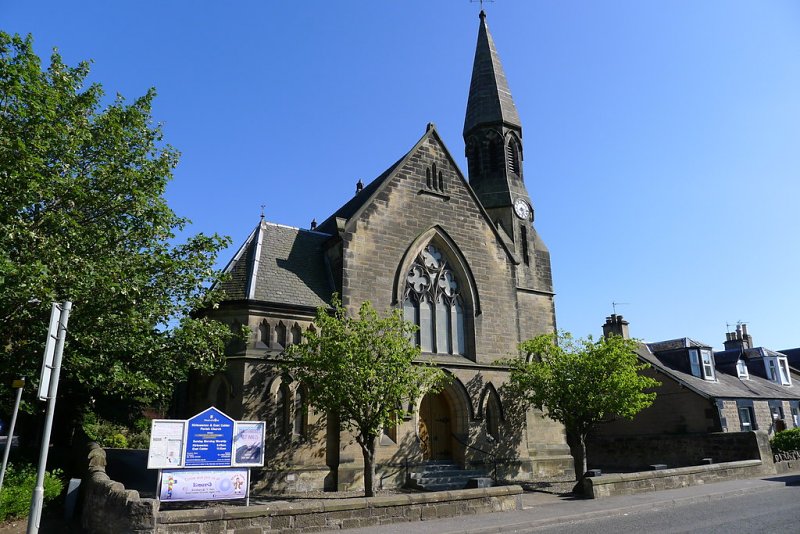
Kirknewton and East Calder Parish Church by Tim Heaton
Kirknewton and East Calder Parish Church © 2018, Tim Heaton

KIRKNEWTON & EAST CALDER PARISH

TABLE OF CONTENTS


ALTERNATE NAMES AND SPELLING:

  • Newton (Kirknewton)
  • Calder Clere (East Calder)

LOCATION

Location Description:

Kirknewton and East Calder is a united parish on the west side of Edinburghshire. It is bounded on the north-west by Linlithgowshire, and on other sides by the parishes of Kirkliston, Ratho, Currie, and Mid-Calder. (1867: The Imperial Gazetteer of Scotland, by John Marius Wilson).

Shire, District, and Region Timeline:

  • Shire: Edinburghshire (Before 1707)
  • County: Edinburgh (After 1707)
  • District: Edinburghshire (Before 1930)
  • County: Midlothian (1947)
  • Landward District: East Calder (1930-1975)
  • Region: Lothian (1975-1996)
  • District: West Lothian (1975-1996)

Cities, Towns, Villages, and Hamlets:

East Calder, Kirknewton, Oakbank, Wilkieston or Wilkinston

Estates:

Calderhall, Hillhouse, Meadowbank House, Ormiston


PARISH TIMELINE

PRE-REFORMATION GOVERNANCE:

  • Diocese: St Andrews
  • Deanery: Linlithgow

POST-REFORMATION GOVERNANCE:

  • Synod: Lothian and Tweeddale
  • Presbytery: Linlithgow

PAROCHIAL OVERVIEW:

Kirknewton. Originally in the Presbytery of Edinburgh, and annexed by the General Assembly July 1591 to Linlithgow.
East Calder, or Calder-Clere. So named from Rudolph de Clere, an early owner, to distinguish it from the adjacent Calder-Comitis belonging to the Earl of Fife. The church was dedicated to St Cuthbert, and belonged to the Abbey of Kelso. The parishioners petitioned the Presbytery, 14 July 1641, to be disjoined from Mid Calder and erected into a parish; united to Kirknewton by the Commissioners of Teinds, 23 January 1751.

CHURCH OF SCOTLAND CLERGY:

Includes ministers, licentiates, assistants, readers, and clerks.

Kirknewton (QO)

  • James Mowbray, 1572
  • James Hamilton, 1573
  • John Tod, 1576
  • Andrew Balfour, 1613
  • James Laing, 1625
  • John Colvill, 1648
  • William Alison, 1663
  • Charles Lumsden, 1666
  • John Wilkie, 1669
  • James Oliphant, 1672
  • James Waugh, 1673
  • John Alexander, 1683
  • William Hamilton, 1689
  • John Bannerman, 1689
  • James Anderson, 1691
  • John Thorburn, 1699
  • Alexander Bryce, 1745
  • William Cameron, 1786
  • Alexander Lockhart Simpson, 1812
  • Henry Wallis Smith, 1862
  • Arthur Gordon, 1886
  • George Gardiner, 1889

East Calder (QO)

  • Samuel Wardlaw, 1582
  • John Spottiswood, 1594
  • John Brown, 1596
  • Robert Gilmour, 1610
  • John Tennent, 1617
  • John Dunlop, 1642
  • Andrew Kinnear, 1649
  • Edward Kinnear, 1663
  • James Brown, 1665
  • John Kinnaird (Kinnear), 1694
  • Alexander Douglas, 1725

(1928: Fasti Ecclesiæ Scoticanæ, by Hew Scott, D. D.)


RECORDS

Parochial Registers:

Parish registers turned over to the Registrar-General, as a result of the Registration of Births, Deaths, and Marriages (Scotland) Act of 1854. The letters B. D. and M. indicate Births (or Baptisms), Deaths (or Burials), and Marriages (or Proclamations of Banns) respectively. Numbers indicate separate volumes or books. Note: These records are by no means complete or without damage; consult the Detailed List of the Old Parochial Registers of Scotland (1872) to learn more about the condition of the records.

  • (1) B. 1642-1764; M. 1642-1756; D. 1642-1739 (Kirknewton)
  • (2) B. 1642-1764; M. 1704-1761; D. 1708-47 (East Calder)
  • (3) B. 1766-1819; M. 1773-1819 (Kirknewton and East Calder)
  • (4) B. 1820-54; M. 1816-54; D. 1829-54

OPR and RD Numbers
Date RangeNameNumberType
1642-1854Kirknewton and East Calder690OPR
1855-1922Kirknewton and East Calder690RD
1923-1930Kirknewton690RD
1931-1971East Calder690RD
1972-2002East Calder770RD
2003-2008East Calder, West Lothian770RD
2009West Lothian, East Calder770RD
2026(East Calder) West Lothian Council; East Calder Community Council
2026(Kirknewton) West Lothian Council; Kirknewton Community Council

(2009: Parishes and Registration Districts of Scotland - Old and New, National Records of Scotland)

Local community councils (2026) are provided as a potential source of additional information for settlements within the original boundaries of the parish. (Source)

Population:

Statistics from informal and official censuses

  • 1755: 1,157
  • 1792: 812
  • 1801: 1,071
  • 1811: 1,300
  • 1821: 1,513
  • 1831: 1,445
  • 1841: 1,441
  • 1861: 1,549
  • 1881: 2,861
  • 1901: 3,221
  • 1911: 2,873

RESIDENTS


Common Surnames:

Brown, Cunningham, Hamilton, Innes, Millar, Morrison, Reid, Smith, Stewart, Turnbull

Land-owners, teachers, and other professionals:

Note: Names appearing in research materials, other than censuses. Simple names (First name, surname only) have been omitted unless they appear associated with large properties. All women's names, and men's names with occupations, military ranks, or peerage titles are included.

  • Alexander CROIL, Esq. of Linnburn
  • George Shalto DOUGLAS, The Earl of Morton
  • Henry David ERSKINE, Earl of Buchan
  • James GILLESPIE, Esq. of Burnhouse
  • George GLENDINNING, Esq. of Millrigg and Overshiel
  • Humphrey GRAHAM, Esq. of Stewart Hill
  • Stuart Bayley HARE, Esq. of Calderhall
  • Alexander JOHNSTON, Esq. of Hillhouse
  • Alexander MACONOCHIE, Esq. of Meadowbank
  • Archibald PRIMROSE, Earl of Rosebery
  • William SWANSTON, Esq. of Little-Vantage
  • Archibald WILKIE, Esq. of Ormiston Hill

Other residents:

By the Reverend Mr William Cameron.
"According to Dr Webster, the population in 1755 was 1157. In 1792 there were 812 souls, of whom 395 were males and 417 were females; 113 were under 6 years of age. There were 50 farmers, 4 masons, 4 house carpenter, 4 tailors, 4 smiths, 67 single male servants, and 42 single female servants.

The cause of depopulation here is chiefly owing to the near attraction of Edinburgh, to a monopoly of farms, and the use of two-horse ploughs, (by which means the farmer works with about half the number of servants her formerly employed), and the laying down so much ground in grass for hay, which, when the soil answers, is judged one of the most profitable crops."
(This section contains excerpts, at times restructured or paraphrased, from an article appearing in Statistical Account of Scotland, Sir John Sinclair, 1791-1799)


NOTES:

Primary Sources:
Statistical Account of Scotland (1791-1799), Volume 9, p. 407
New Statistical Account of Scotland (1834-1845), Volume 1, p. 433

See Parish Page Sources for all source information and links.
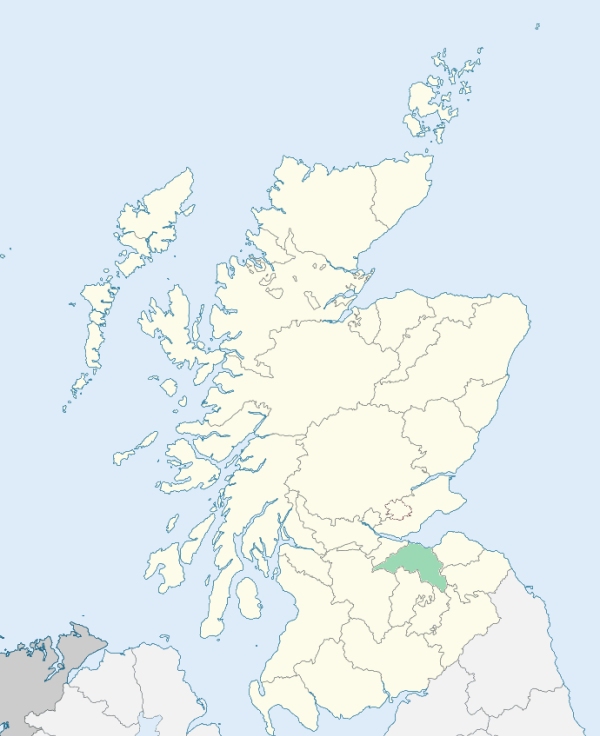

Photo credits: (Featured) Kirknewton and East Calder Parish Church, © 2018 Tim Heaton, used under Creative Commons License CC BY-SA 2.0, (Related Resources) Edinburghshire Locator Map, © 2025, Elianfoo, used under Creative Commons License CC BY-SA 4.0.
Related Resources
Map of Scotland with Edinburghshire highlighted
Location of Edinburghshire
See more maps at Wikimedia Commons
Glossary
  • Burghs:
  • Royal - Towns on royal lands
  • Regality - Towns granted to noblemen/landowners
  • Barony - Towns granted to tenant-in-chief (laird)
  • Police - Towns with elected officials
  • Small - Population under 20,000
  • Large - Population over 20,000
  •  
  • Chapel-of-Ease: Small church for those living far from the main church
  • Collegiate church: See What is a Collegiate Church?
  • Commune kirk: Owned by a larger church
  • Court of Teinds: Controlled funds for support of clergy
  •  
  • Friars:
  • Black - Dominican
  • Grey - Franciscan
  • Red - Trinitarian
  • White - Carmelite
  •  
  • Iron chapel: Building made of corrugated galvanized iron
  •  
  • Landward District: Rural part of a district
  •  
  • Mensal: Source of income to support clergy member (Roman Catholic)
  •  
  • OPR: Old Parochial Register
  •  
  • Pre-Reformation: Before 1560
  • Prebend: Source of income to support a clergy member
  •  
  • QO: Quoad Omnia - Civil and church control
  • QS: Quoad Sacra - Church control only
  •  
  • RD: Registration District - Civil control
  •  
  • Tryst: Large-scale market or fair, particularly for livestock
  •