Pennycook, Pennycuick, Penicoc
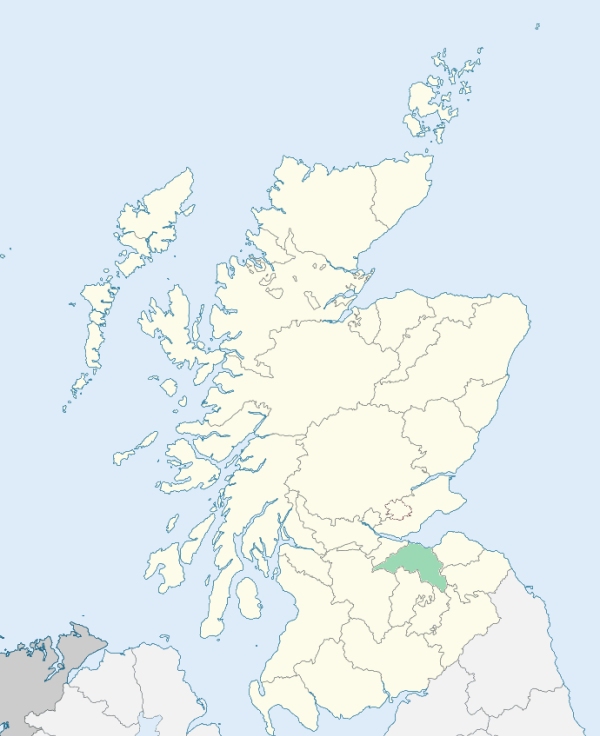
Penicuik is a parish in the middle of the southern verge of Edinburghshire. It is bounded by Peeblesshire, and by the parishes of Kirknewton, Currie, Colinton, Glencross, and Lasswade. (1867: The Imperial Gazetteer of Scotland, by John Marius Wilson).
Bavelaw, Cresswell, Howgate, Kirkhill, Leadburn, Ninemileburn, Penicuik, Valleyfield
Newhall
PRE-REFORMATION GOVERNANCE:
POST-REFORMATION GOVERNANCE:
The church was dedicated to St Mungo.
Includes ministers, licentiates, assistants, readers, and clerks.
(1928: Fasti Ecclesiæ Scoticanæ, by Hew Scott, D. D.)
Parish registers turned over to the Registrar-General, as a result of the Registration of Births, Deaths, and Marriages (Scotland) Act of 1854. The letters B. D. and M. indicate Births (or Baptisms), Deaths (or Burials), and Marriages (or Proclamations of Banns) respectively. Numbers indicate separate volumes or books. Note: These records are by no means complete or without damage; consult the Detailed List of the Old Parochial Registers of Scotland (1872) to learn more about the condition of the records.
| OPR and RD Numbers | |||
|---|---|---|---|
| Date Range | Name | Number | Type |
| 1654-1854 | Penicuik | 697 | OPR |
| 1855-1956 | Penicuik | 697 | RD |
| 1957-1971 | Penicuik and Glencorse | 697 | RD |
| 1972-2006 | Penicuik and Glencorse | 765 | RD |
| 2009 | Midlothian | 765 | RD |
| 2026 | Midlothian Council; Penicuik and District Community Council, Howgate Community Council | ||
(2009: Parishes and Registration Districts of Scotland - Old and New, National Records of Scotland)
Local community councils (2026) are provided as a potential source of additional information for settlements within the original boundaries of the parish. (Source)
Statistics from informal and official censuses
Brown, Henderson, Johnston, Robertson, Scott, Smith, Stewart, Tait, Thomson, Wilson
Note: Names appearing in research materials, other than censuses. Simple names (First name, surname only) have been omitted unless they appear associated with large properties. All women's names, and men's names with occupations, military ranks, or peerage titles are included.
By the Reverend Mr Thomas M'Courty.
"In 1755 the number of souls was 890; in 1772 it was 1132. In 1793 there were 1721 individuals, of whom 622 were below 8 years of age; there were 403 families. The chief cause of the increase in population is the erection of a cotton mill below the village, and the spirit with which two paper mills have been carried on for some time past. The cotton mill, at present, employs about 500 hands, though sometimes more.
The people are of various sizes. They are like those of other parishes, many of them good, and some of them bad. A murmuring discontented spirit, and disposition to censure public measures, both in church and state, too often appears. Within these twenty years past there has been a very great alteration both in their dress and food. The young people especially are very expensive as to articles of clothes. There is now more flesh meat eaten here in one week than was formerly in six months; and tea, that very expensive article, is frequently drunk even amongst the lowest of the people."
(This section contains excerpts, at times restructured or paraphrased, from an article appearing in Statistical Account of Scotland, Sir John Sinclair, 1791-1799)
Primary Sources:
Statistical Account of Scotland (1791-1799), Volume 10, p. 419
New Statistical Account of Scotland (1834-1845), Volume 1, p. 29
See Parish Page Sources for all source information and links.