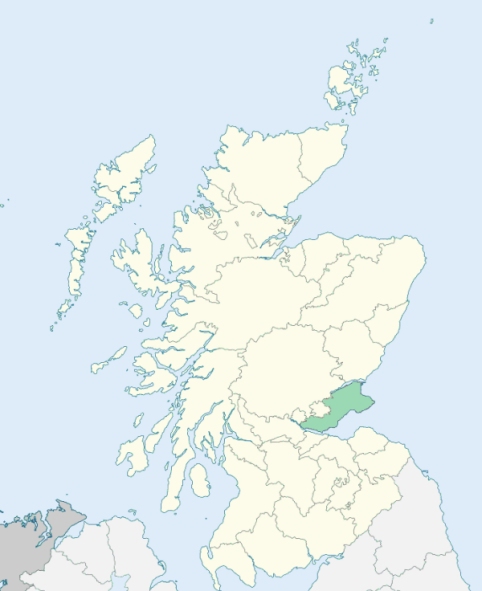
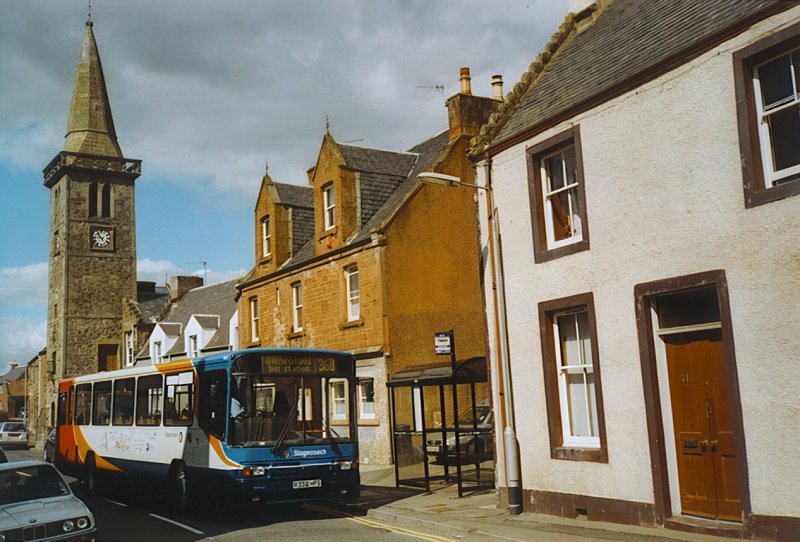
Strathmiglo is a parish on the north-west border of Fife. It is bounded by the counties of Kinross and Perth, and by the parishes of Auchtermuchty and Falkland. (1867: The Imperial Gazetteer of Scotland, by John Marius Wilson).
Bellfield, Cowiefauld, Edensbank, Edenshead, Gateside, Masonhall, Strathmiglo
Whereas the parish of Abernethy is situated partly in the county of Fife and partly in the county of Perth, the parts in the county of Fife adjoining the parishes of Newburgh and Strathmiglo:
I. So much of the parish of Abernethy as lies to the east and south of the east march of the farms and lands of Pitmedden shall cease to be part of the parish of Abernethy, and shall form part of the parish of Newburgh and of the county of Fife.
II. So much of the parish of Abernethy as lies to the east of the west march of the lands of Nochnarrie, and so much of the said parish as lies to the east of the west march of the lands of Pitlour shall cease to be part of the parish of Abernethy, and shall form part of the parish of Strathmiglo and of the county of Fife.
III. The remainder of the parish of Abernethy shall be included in and shall form part of the county of Perth.
See affected properties and landholders. (1892: Boundary of counties and parishes in Scotland as settled by the Boundary Commissioners under the Local Government Act, 1889, by Hay Shennan)
PRE-REFORMATION GOVERNANCE:
POST-REFORMATION GOVERNANCE:
The church of Strathmiglo was dedicated to St Martin. Its parish was a prebend of Dunkeld. At Gateside, within the bounds, there was a chapel of St Mary, with Our Lady's Well beside it. (1928: Fasti Ecclesiæ Scoticanæ, by Hew Scott, D. D.)
Includes ministers, licentiates, assistants, readers, and clerks.
(1928: Fasti Ecclesiæ Scoticanæ, by Hew Scott, D. D.)
Parish registers turned over to the Registrar-General, as a result of the Registration of Births, Deaths, and Marriages (Scotland) Act of 1854. The letters B. D. and M. indicate Births (or Baptisms), Deaths (or Burials), and Marriages (or Proclamations of Banns) respectively. Numbers indicate separate volumes or books. Note: These records are by no means complete or without damage; consult the Detailed List of the Old Parochial Registers of Scotland (1872) to learn more about the condition of the records.
| OPR and RD Numbers | |||
|---|---|---|---|
| Date Range | Name | Number | Type |
| 1702-1854 | Strathmiglo | 457 | OPR |
| 1855-1901 | Strathmiglo | 457 | RD |
| 1902-1967 | Strathmiglo | 457a | RD |
| 1902-1967 | Thornton | 457b | RD |
| 2009 | (Strathmiglo) Fife, Auchtermuchty | 418 | RD |
| 2009 | (Thornton) Fife, Glenrothes | 420 | RD |
| 2026 | (Strathmiglo) Fife Council; Auchtermuchty and Strathmiglo Community Council | ||
| 2026 | (Thornton) Fife Council; Thornton Community Council | ||
(2009: Parishes and Registration Districts of Scotland - Old and New, National Records of Scotland)
Local community councils (2026) are provided as a potential source of additional information for settlements within the original boundaries of the parish. (Source)
Statistics from informal and official censuses
Brown, Herd, Menzies, Miller, Morrison, Robertson, Thomson, Wallace, Williamson, Young
Note: Names appearing in research materials, other than censuses. Simple names (First name, surname only) have been omitted unless they appear associated with large properties. All women's names, and men's names with occupations, military ranks, or peerage titles are included.
By the Reverend Mr George Lyon.
"In the year 1754, when I was ordained minister of the parish, there were about 1100 persons in it, and this year (1790) there are about 980, of whom about 470 are males, and 510 are females. There are 26 farmers, whose families may consist of 182 persons in all; about 50 manufacturers, 46 handicraftsmen, 24 apprentices, 29 household and 50 labouring servants, 4 merchants, and 110 inhabitants in the town of Strathmiglo. There are about 266 born in other districts of parishes in Scotland. About 740 are of the Established Church, about 228 Seceders, and 2 Episcopalians. None have died from want, no murders or suicides have been committed, few have emigrated, and none have been banished; if any have left the parish, it was not for want of employment. There are about 245 inhabited houses. A few are uninhabited.
The people are generally of the middle size. The tallest man I ever heard of, and whom I knew, was about 6 feet 5. They are in general disposed to industry and economy. No manufactures are carried on, except by individuals. They are not fond of a seafaring or military life. The people are as much disposed to humane and generous actions, as others in their circumstances generally are. On the whole, they enjoy the comforts and advantages of society, and seem contented."
(This section contains excerpts, at times restructured or paraphrased, from an article appearing in Statistical Account of Scotland, Sir John Sinclair, 1791-1799)
Primary Sources:
Statistical Account of Scotland (1791-1799), Volume 4, p. 400
New Statistical Account of Scotland (1834-1845), Volume 9, Section I, p. 775
See Parish Page Sources for all source information and links.