Gifford, St Bathan's
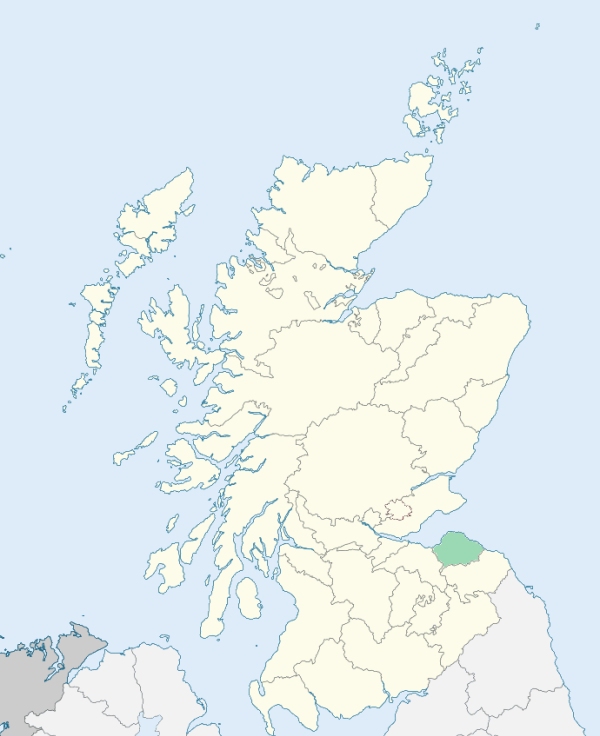
Yester is a parish in Haddingtonshire. It is bounded on the south by Berwickshire, and on other sides by the parishes of Humbie, Bolton, Haddington, and Garvald. (1867: The Imperial Gazetteer of Scotland, by John Marius Wilson).
Gifford, Long Yester, Longnewton, Yester
Newton Hall
PRE-REFORMATION GOVERNANCE:
POST-REFORMATION GOVERNANCE:
The church, dedicated in 1241 to St Bathan, was made collegiate by Sir William de Haya of Locherworth and Yester, in 1420. It retained the name of St Bathan's till about 1675. A church was built at Gifford in 1708.
Includes ministers, licentiates, assistants, readers, and clerks.
(1928: Fasti Ecclesiæ Scoticanæ, by Hew Scott, D. D.)
Parish registers turned over to the Registrar-General, as a result of the Registration of Births, Deaths, and Marriages (Scotland) Act of 1854. The letters B. D. and M. indicate Births (or Baptisms), Deaths (or Burials), and Marriages (or Proclamations of Banns) respectively. Numbers indicate separate volumes or books. Note: These records are by no means complete or without damage; consult the Detailed List of the Old Parochial Registers of Scotland (1872) to learn more about the condition of the records.
| OPR and RD Numbers | |||
|---|---|---|---|
| Date Range | Name | Number | Type |
| 1654-1854 | Yester, or Gifford | 725 | OPR |
| 1855-1967 | Yester | 725 | RD |
| 2009 | East Lothian, Haddington | 722 | RD |
| 2026 | East Lothian Council; Gifford Community Council | ||
(2009: Parishes and Registration Districts of Scotland - Old and New, National Records of Scotland)
Local community councils (2026) are provided as a potential source of additional information for settlements within the original boundaries of the parish. (Source)
Statistics from informal and official censuses
Baillie, Brown, Dickson, Gray, Hogg, King, Robertson, Thomson, White, Wood
Note: Names appearing in research materials, other than censuses. Simple names (First name, surname only) have been omitted unless they appear associated with large properties. All women's names, and men's names with occupations, military ranks, or peerage titles are included.
By the Reverend Mr James Innes.
"At present there are about 800 in the parish, from 5 years of age to 90; the number of males and females being nearly equal. All the inhabitants are of the Established Church, except 10 Seceders.
There are 18 farmers, a good many carpenters, masons, and weavers, who have all plenty of work through the season, and live very comfortably, and 1 physician. There are 18 male and 22 female household servants; 30 female, and 80 male labouring servants, most of which last are married and have families. There is not one lawyer or attorney in the whole parish; and the people make it their study to keep their affairs as much out of the hands of such men as possible, referring all their differences to be determined by the arbitration of neighbours.
The people are in general very industrious, having plenty of all kinds of labour. Their size varies from 5 feet 5 inches to 6 feet 2 inches. There are no manufactures in the parish except a bleach-field, which employs about 15 hands in the summer."
(This section contains excerpts, at times restructured or paraphrased, from an article appearing in Statistical Account of Scotland, Sir John Sinclair, 1791-1799)
Primary Sources:
Statistical Account of Scotland (1791-1799), Volume 1, p. 342
New Statistical Account of Scotland (1834-1845), Volume 2, Section II, p. 153
See Parish Page Sources for all source information and links.