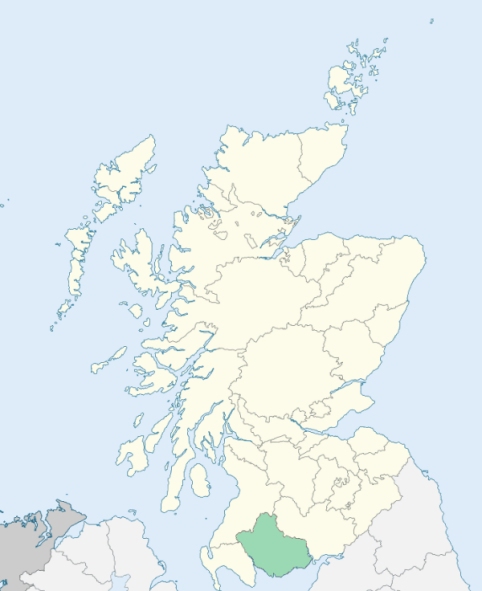
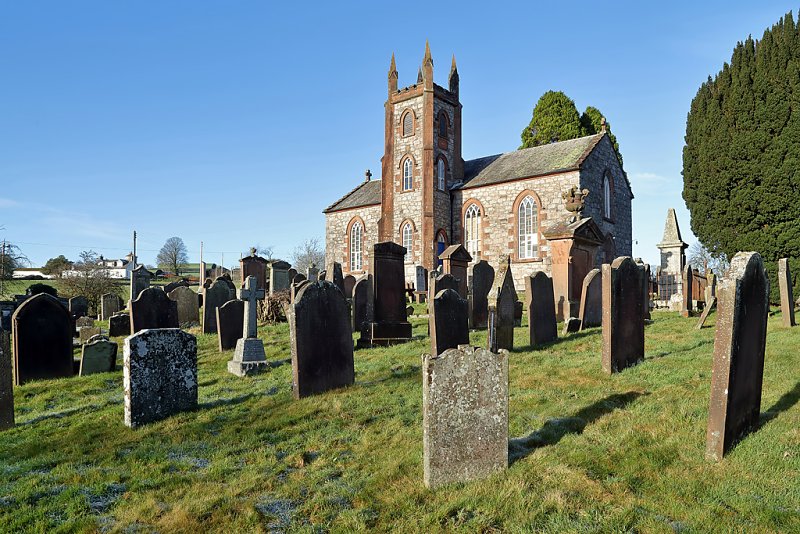
Kells is a parish in Kirkcudbrightshire. It forms the south-western part of the Glenkens, and is bounded by Carsphairn, Dalry, Balmaclellan, Parton, Balmaghie, Girthon, and Minnigaff. (1867: The Imperial Gazetteer of Scotland, by John Marius Wilson).
Kells, Mossdale, New Galloway
Garroch, Knocknalling
PRE-REFORMATION GOVERNANCE:
POST-REFORMATION GOVERNANCE:
The church of Kells was rebuilt in 1745, and again in 1822.
Includes ministers, licentiates, assistants, readers, and clerks.
(1928: Fasti Ecclesiæ Scoticanæ, by Hew Scott, D. D.)
Parish registers turned over to the Registrar-General, as a result of the Registration of Births, Deaths, and Marriages (Scotland) Act of 1854. The letters B. D. and M. indicate Births (or Baptisms), Deaths (or Burials), and Marriages (or Proclamations of Banns) respectively. Numbers indicate separate volumes or books. Note: These records are by no means complete or without damage; consult the Detailed List of the Old Parochial Registers of Scotland (1872) to learn more about the condition of the records.
| OPR and RD Numbers | |||
|---|---|---|---|
| Date Range | Name | Number | Type |
| 1698-1854 | Kells | 868 | OPR |
| 1855-1856 | Kells, New Galloway Burgh | 868-1 | RD |
| 1855-1856 | Kells, Landward | 868-2 | RD |
| 1857-1968 | Kells | 868 | RD |
| 2009 | Dumfries and Galloway, Dalry | 850 | RD |
| 2026 | Dumfries and Galloway Council; Royal Burgh of New Galloway and Kells Parish Community Council | ||
(2009: Parishes and Registration Districts of Scotland - Old and New, National Records of Scotland)
Local community councils (2026) are provided as a potential source of additional information for settlements within the original boundaries of the parish. (Source)
Statistics from informal and official censuses
Brown, Byers, Carson, Ferguson, Johnstone, Millar, Murray, Robb, Smith, Wilson
Note: Names appearing in research materials, other than censuses. Simple names (First name, surname only) have been omitted unless they appear associated with large properties. All women's names, and men's names with occupations, military ranks, or peerage titles are included.
By the Reverend Mr John Gillespie.
"Inhabited houses are at present 180; 73 of which are in the town of New Galloway. The number of souls at present is 869, of whom 438 are males, 431 are females. The people are mostly of the Established Church, there being only 2 Seceders.
There are 32 farmers, 9 wrights, 3 smiths, 7 tailors, 13 weavers, 7 shoemakers, 4 masons, 2 millers, 2 dyers, 2 tanners, and 7 apprentices. There are 36 male labouring servants, and 47 female labouring servants. There is 1 surgeon, formerly 2. There is a tannery in New Galloway.
Some families emigrated to America immediately before the rebellion of the colonies. Some young people, both males and females, leave the parish as servants. Several young men of spirit go to the West Indies as planters and merchants. Some go to England to push their fortunes, as peddlers. Several return from the West Indies, after 16 or 17 years, with genteel fortunes; and some young men choose a seafaring life.
The people are of the common size, between 5 feet 7 inches, and 6 feet, rather stronger made, and of a more rosy and better complexion than those in low country; owing, perhaps, to their not being accustomed to such hard labour, to their living better, and eating more animal food. There is no part of Scotland where the poor live better, or eat so much animal food, as in this moor country. The people in general are frugal and industrious, and manufacture most of the woollen and linen cloth used by them. They are fond of music, dancing, and other social amusements."
(This section contains excerpts, at times restructured or paraphrased, from an article appearing in Statistical Account of Scotland, Sir John Sinclair, 1791-1799)
Primary Sources:
Statistical Account of Scotland (1791-1799), Volume 4, p. 259
New Statistical Account of Scotland (1834-1845), Volume 4, Section II, p. 108
See Parish Page Sources for all source information and links.