Carmannoc
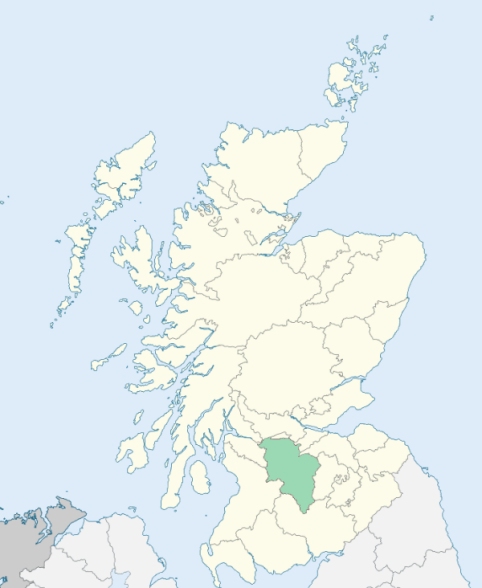
Carmunnock is a parish in the south-west corner of the lower ward of Lanarkshire. An annexation to it comprises portions of the parishes of East Kilbride and Cathcart. It is bounded by Renfrewshire and by the parishes of East Kilbride, Cambuslang, and Rutherglen. (1867: The Imperial Gazetteer of Scotland, by John Marius Wilson).
Busby, Carmunnock, Castlemilk
PRE-REFORMATION GOVERNANCE:
POST-REFORMATION GOVERNANCE:
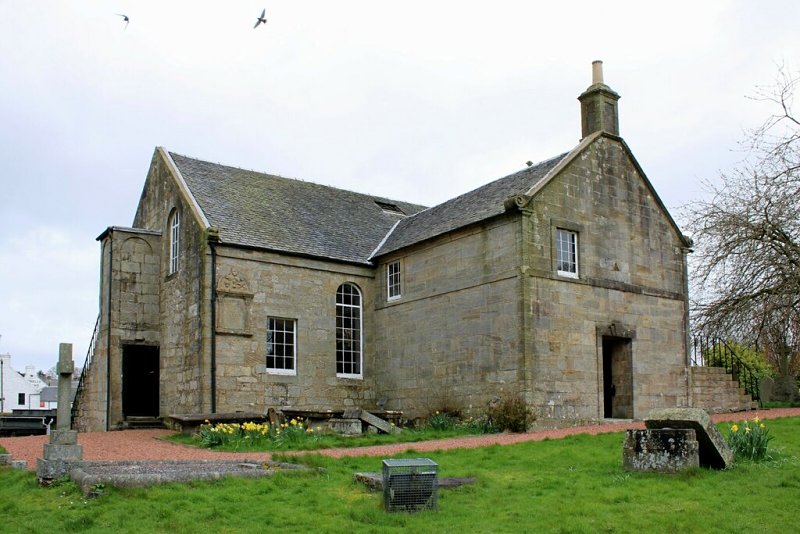
The church of Carmunnock belonged to the Abbey of Paisley. In March 1596 this parish was severed by the General Assembly from the Presbytery of Hamilton and joined to that of Glasgow.
Includes ministers, licentiates, assistants, readers, and clerks.
(1928: Fasti Ecclesiæ Scoticanæ, by Hew Scott, D. D.)
Parish registers turned over to the Registrar-General, as a result of the Registration of Births, Deaths, and Marriages (Scotland) Act of 1854. The letters B. D. and M. indicate Births (or Baptisms), Deaths (or Burials), and Marriages (or Proclamations of Banns) respectively. Numbers indicate separate volumes or books. Note: These records are by no means complete or without damage; consult the Detailed List of the Old Parochial Registers of Scotland (1872) to learn more about the condition of the records.
| OPR and RD Numbers | |||
|---|---|---|---|
| Date Range | Name | Number | Type |
| 1653-1854 | Carmunnock | 631 | OPR |
| 1855-1968 | Carmunnock | 631 | RD |
| 2005-2008 | Carmunnock, South Lanarkshire | 573 | RD |
| 2009 | South Lanarkshire, Carmunnock | 573 | RD |
| 2026 | Glasgow City Council; Carmunnock Community Council | ||
(2009: Parishes and Registration Districts of Scotland - Old and New, National Records of Scotland)
Local community councils (2026) are provided as a potential source of additional information for settlements within the original boundaries of the parish. (Source)
Statistics from informal and official censuses
Brown, Crawford, Fleming, Gemmell, Gilmour, Shearer, Strang, Twaddle, Wilson, Young
Note: Names appearing in research materials, other than censuses. Simple names (First name, surname only) have been omitted unless they appear associated with large properties. All women's names, and men's names with occupations, military ranks, or peerage titles are included.
By the Reverend Mr Adam Forman.
"The number of families, including individuals, who have separate dwelling houses, amounts to 133. There are 260 males, and 310 females; so that the number of souls in the parish, is 570. Of these, there are 115 children under 10 years of age.
In the parish, there are 15 weavers, 8 masons, who at the same time are employed as wrights; these occupations being in this place considered as connected. There are 6 shoemakers, 2 tailors, 10 day-labourers, 3 millers, 1 carrier, 1 cooper, 3 gardeners, 1 smith, 36 men-servants, and 42 women-servants.
The whole of this parish is connected by inter-marriages; and this, for many ages past, as appears from the public registers, which has uniformly been kept. From accurate enquiry, it has been found, that there are not above 15 persons, and these chiefly servants, who have no fixed residence, who cannot claim alliance with the whole parish; so that when an individual connects himself by marriage, he may consider himself as having gained above 500 relations at once, by such affinity.
It is but just to say, that the greater part of this parish, are decent in their morals; sober, honest, and industrious; and that there is no instance of any person having suffered any capital punishment."
(This section contains excerpts, at times restructured or paraphrased, from an article appearing in Statistical Account of Scotland, Sir John Sinclair, 1791-1799)
Primary Sources:
Statistical Account of Scotland (1791-1799), Volume 18, p. 158
New Statistical Account of Scotland (1834-1845), Volume 6, p. 597
See Parish Page Sources for all source information and links.