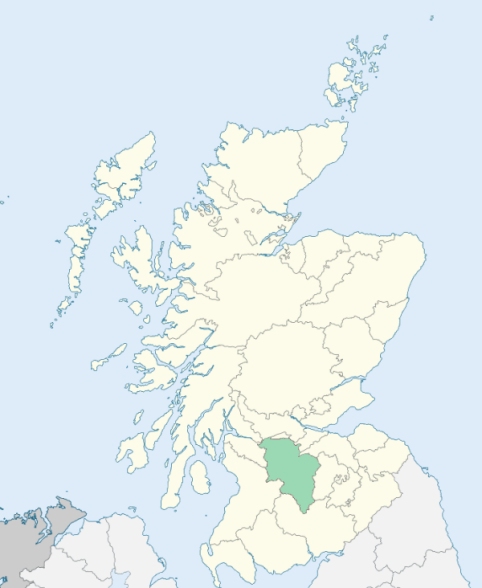
Pettinain is a parish in the upper ward of Lanarkshire. It is bounded by Carstairs, Carnwath, Libberton, Covington, Carmichael, and Lanark. (1867: The Imperial Gazetteer of Scotland, by John Marius Wilson).
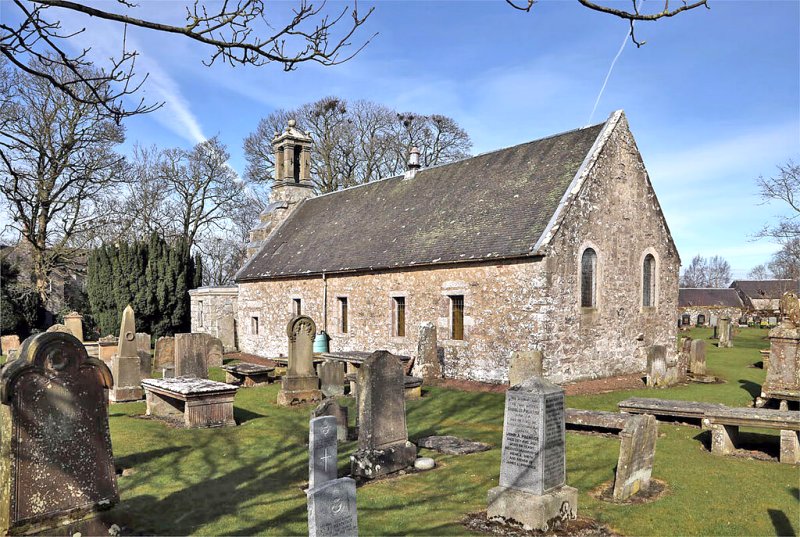
Grange, Pettinain
PRE-REFORMATION GOVERNANCE:
POST-REFORMATION GOVERNANCE:
The church of Pettinain belonged to the Abbey of Dryburgh.
Includes ministers, licentiates, assistants, readers, and clerks.
Parish (QO)
(1928: Fasti Ecclesiæ Scoticanæ, by Hew Scott, D. D.)
Parish registers turned over to the Registrar-General, as a result of the Registration of Births, Deaths, and Marriages (Scotland) Act of 1854. The letters B. D. and M. indicate Births (or Baptisms), Deaths (or Burials), and Marriages (or Proclamations of Banns) respectively. Numbers indicate separate volumes or books. Note: These records are by no means complete or without damage; consult the Detailed List of the Old Parochial Registers of Scotland (1872) to learn more about the condition of the records.
| OPR and RD Numbers | |||
|---|---|---|---|
| Date Range | Name | Number | Type |
| 1689-1854 | Pettinain | 653 | OPR |
| 1855-1968 | Pettinain | 653 | RD |
| 2009 | South Lanarkshire, Lanark | 583 | RD |
| 2026 | South Lanarkshire Council; Pettinain Community Council | ||
(2009: Parishes and Registration Districts of Scotland - Old and New, National Records of Scotland)
Local community councils (2026) are provided as a potential source of additional information for settlements within the original boundaries of the parish. (Source)
Statistics from informal and official censuses
Ballantyne, Brown, Campbell, Core, Hamilton, Kerr, Prentice, Taylor, Watson, Young
Note: Names appearing in research materials, other than censuses. Simple names (First name, surname only) have been omitted unless they appear associated with large properties. All women's names, and men's names with occupations, military ranks, or peerage titles are included.
By the Reverend Mr James Ferguson.
"At the present time (May 1792) the total number of persons is 409, of whom there are 180 males, and 206 females; 94 are under 10 years of age. The number of families is 77. In the village there are 26 families and 110 persons.
The great part of the people are employed in farming, or in occupations relative to it. At present, the number of farmers is 14; the servants which they usually employ, are about 60. Besides these, there is a considerable number of persons who have small possessions of land, and who follow, at the same time, some other employment. There are, likewise a few tradesmen, such as are usually employed in the country; wrights, masons, weavers, and shoemakers. Of these the weavers are the most numerous, amounting, with journeymen and apprentices, to 11 or 12.
A considerable quantity of meal, as well as of butter and cheese, is usually sent to market from this parish. Formerly it was the practice to send the meal to Carluke, or farther, in its way to Glasgow. Of late a great part of it has been sold at Lanark, where the demand was much increased since the erection of a cotton-works.
The people, upon the whole, may be said to live comfortably in their situation. They are industrious and sober, and in general, pay a commendable regard to religious institutions. There has only been one or two seceders in the parish for many years past. There are 3 alehouses, which are so little frequented, that the industry, or morals of the people, do not appear to be, in any considerable degree, hurt by them. No person belonging to the parish has been prosecuted for any capital crime, within the memory of the oldest inhabitant."
(This section contains excerpts, at times restructured or paraphrased, from an article appearing in Statistical Account of Scotland, Sir John Sinclair, 1791-1799)
Primary Sources:
Statistical Account of Scotland (1791-1799), Volume 12, p. 28
New Statistical Account of Scotland (1834-1845), Volume 6, p. 535
See Parish Page Sources for all source information and links.