Borrowstownness, Borrowstounness
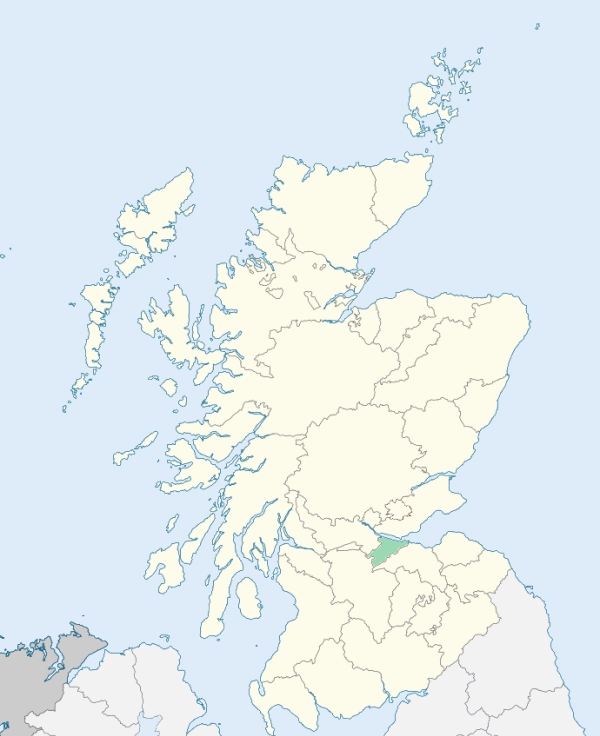
Bo'ness is a parish in the north-west corner of Linlithgowshire. It is bounded by Stirlingshire, the Firth of Forth, and the parishes of Carriden and Linlithgow. (1867: The Imperial Gazetteer of Scotland, by John Marius Wilson).
Bo'ness, Borrowstown or Burwardstoun, Cowdenhill, Kinneil, Newton or Newtown
PRE-REFORMATION GOVERNANCE:
POST-REFORMATION GOVERNANCE:
Borrowstounness. The parish was erected by Parliament, 9 March 1649.
Kinneil. Belonged to Abbey of Holyrood; united to Borrowstounness by Parliament, 23 December 1669. A mere fragment of the ancient church of St Katherine is extant.
Includes ministers, licentiates, assistants, readers, and clerks.
Bo'ness (QO)
Kinneil (QO)
(1928: Fasti Ecclesiæ Scoticanæ, by Hew Scott, D. D.)
Parish registers turned over to the Registrar-General, as a result of the Registration of Births, Deaths, and Marriages (Scotland) Act of 1854. The letters B. D. and M. indicate Births (or Baptisms), Deaths (or Burials), and Marriages (or Proclamations of Banns) respectively. Numbers indicate separate volumes or books. Note: These records are by no means complete or without damage; consult the Detailed List of the Old Parochial Registers of Scotland (1872) to learn more about the condition of the records.
| OPR and RD Numbers | |||
|---|---|---|---|
| Date Range | Name | Number | Type |
| 1648-1854 | Borrowstounness | 663 | OPR |
| 1855-1895 | Bo'ness | 663 | RD |
| 1896-1946 | Bo'ness | 663-1 | RD |
| 1896-1946 | Carriden | 663-2 | RD |
| 1947-1971 | Bo'ness and Carriden | 663 | RD |
| 1972-2003 | Bo'ness and Carriden | 700 | RD |
| 2004-2008 | Bo'ness and Carriden, West Lothian | 700 | RD |
| 2009 | West Lothian, Bo'ness and Carriden | 700 | RD |
| 2026 | Falkirk Council; Bo'ness Community Council | ||
(2009: Parishes and Registration Districts of Scotland - Old and New, National Records of Scotland)
Local community councils (2026) are provided as a potential source of additional information for settlements within the original boundaries of the parish. (Source)
Statistics from informal and official censuses
Brown, Grant, Hamilton, Johnston, Miller, Robertson, Smith, Snedden, Thomson, White
Note: Names appearing in research materials, other than censuses. Simple names (First name, surname only) have been omitted unless they appear associated with large properties. All women's names, and men's names with occupations, military ranks, or peerage titles are included.
By the Reverend Mr Robert Rennie.
"The present population of the town is 2613, the country 565, total 3178 souls. In the parish, there are 293 dissenters, including all sectaries and their children.
Of mechanics in the town of Borrowstownness, exclusive of Journeymen and Apprentices, there are 11 bakers, 5 barbers, 7 blacksmiths, 3 butchers, 2 clock and watch-makers, 3 coopers, 3 masons and slaters, 10 tailors, 15 shoemakers, 6 weavers, 15 joiners, glaziers, cart-wrights &c., 1 surgeon, and 1 writer.
Ship-building has been carried on pretty extensively for 40 years. There are 2 builders at present, who employ from 30 to 40 men constantly. The shipping belonging to the town employ about 170 men and boys. A pottery was begun in 1784; at present it employs nearly 40 persons, including men, boys, and girls. A soap manufacture employs 6 men. Many of the women in this town, and the country around, earn a comfortable subsistence by spinning silk. The salt-works employs about 30 salters and labourers.
It appears, as far as the writer of this account has had an opportunity to learn, that the natives of the town and parish of Bo-ness, are fond of a seafaring life. Many able-bodied seamen from this place, are at present in his Majesty's service; and are distinguished for their sobriety, courage, and loyalty. Adventurers from the place, are also to be found in the most distant parts of the globe.
The inhabitants of the town are in general sober and industrious, and support a respectable character. The inferior ranks are quiet and regular; the superior ranks well-bred, hospitable, and public-spirited. Though indulgence over the glass, a characteristic of the present age, is too frequent, intemperance or rioting is seldom to be seen on the streets."
(This section contains excerpts, at times restructured or paraphrased, from an article appearing in Statistical Account of Scotland, Sir John Sinclair, 1791-1799)
Primary Sources:
Statistical Account of Scotland (1791-1799), Volume 18, p. 423
New Statistical Account of Scotland (1834-1845), Volume 2, Section I, p. 120
See Parish Page Sources for all source information and links.