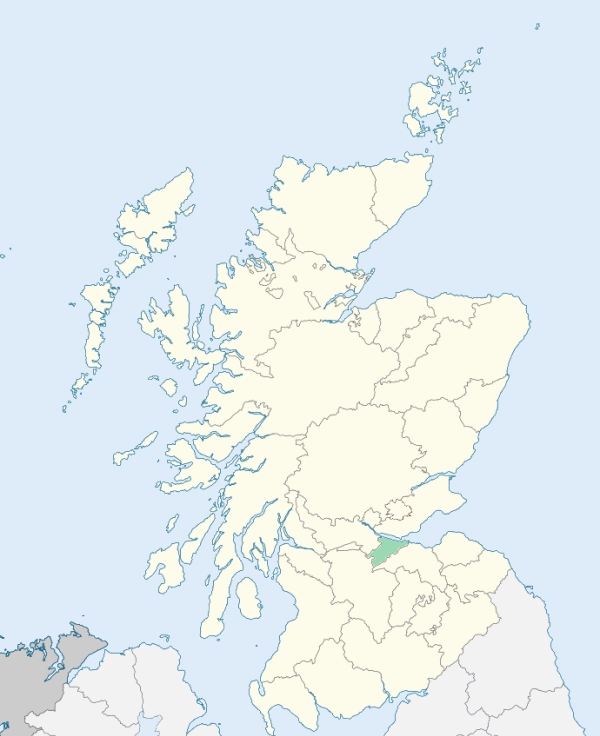
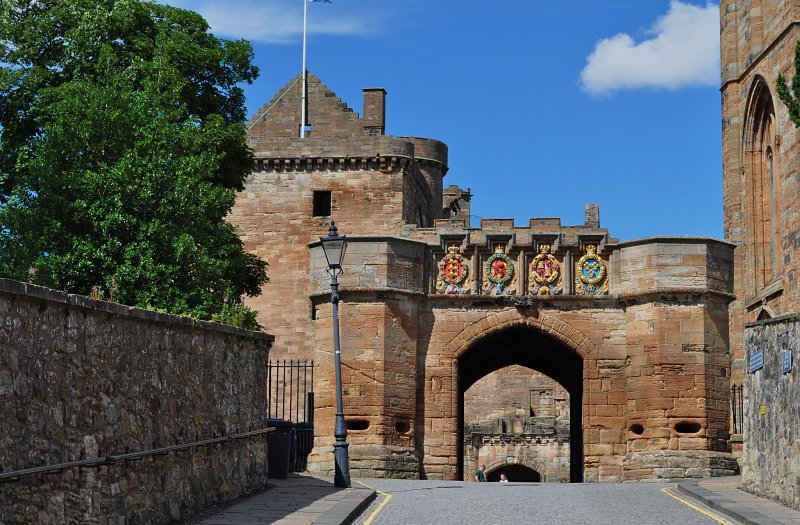
Linlithgow is a parish in Linlithgowshire. It is bounded on the west by Stirlingshire, and on other sides by the parishes of Bo'ness, Carriden, Abercorn, Ecclesmachan, Uphall, Bathgate, and Torphichen. (1867: The Imperial Gazetteer of Scotland, by John Marius Wilson).
Kingscavil, Linlithgow, Linlithgow Bridge, Ochiltree
Bonnytoun, Carrubber, Champfleurie
The parish of Ecclesmachan had one detached part separated from the main portion of the parish by part of the parish of Linlithgow. The two parts of Ecclesmachan were united by transferring to that parish the intervening portion of Linlithgow. The parish of Ecclesmachan receives a further accession of territory by which the western portion of the detached part of Dalmeny is transferred to Ecclesmachan. See affected properties and landholders. (1892: Boundary of counties and parishes in Scotland as settled by the Boundary Commissioners under the Local Government Act, 1889, by Hay Shennan)
PRE-REFORMATION GOVERNANCE:
POST-REFORMATION GOVERNANCE:
Linlithgow. The church, previous to the Reformation belonged to the Priory of St Andrews, and was dedicated to St Michael.
Binny, or Binning. United with Linlithgow about 1564.
Includes ministers, licentiates, assistants, readers, and clerks.
(1928: Fasti Ecclesiæ Scoticanæ, by Hew Scott, D. D.)
Parish registers turned over to the Registrar-General, as a result of the Registration of Births, Deaths, and Marriages (Scotland) Act of 1854. The letters B. D. and M. indicate Births (or Baptisms), Deaths (or Burials), and Marriages (or Proclamations of Banns) respectively. Numbers indicate separate volumes or books. Note: These records are by no means complete or without damage; consult the Detailed List of the Old Parochial Registers of Scotland (1872) to learn more about the condition of the records.
| OPR and RD Numbers | |||
|---|---|---|---|
| Date Range | Name | Number | Type |
| 1613-1854 | Linlithgow | 668 | OPR |
| 1855-1868 | Linlithgow Burgh | 668-1 | RD |
| 1855-1868 | Linlithgow Landward | 668-2 | RD |
| 1869-1971 | Linlithgow | 668 | RD |
| 1972-2002 | Linlithgow | 703 | RD |
| 2003-2008 | Linlithgow, West Lothian | 777 | RD |
| 2009 | West Lothian, Linlithgow | 777 | RD |
| 2026 | West Lothian Council; Linlithgow and Linlithgow Bridge Community Council Bridgend Community Counci Philpstoun Community Councill | ||
(2009: Parishes and Registration Districts of Scotland - Old and New, National Records of Scotland)
Local community councils (2026) are provided as a potential source of additional information for settlements within the original boundaries of the parish. (Source)
Statistics from informal and official censuses
Aitken, Anderson, Brown, Dickson, Downie, Duncan, Morrison, Smith, Steel, Wilson
Note: Names appearing in research materials, other than censuses. Simple names (First name, surname only) have been omitted unless they appear associated with large properties. All women's names, and men's names with occupations, military ranks, or peerage titles are included.
By the Reverend Mr James Dobie.
"From the incumbent's survey in 1792-3, the number of souls in town was 2282, the number in the country, 939. The number of dissenters in the parish is about 430.
Though Linlithgow has not that appearance, a good deal of business is transacted in it. The people in general are sober and industrious, plying their occupations chiefly within doors, or on the side of the loch. The manufacture of leather is the most extensive and advantageous carried on here. There are employed in it 17 tanners, 18 curriers, and 13 tawers, amounting in all to 48. Shoemaking forms a chief branch of the trade here. It employs about 100 persons; and the number of pairs made annually is computed at 24,000. Considerable quantities were formerly exported to America.
Wool is imported from Northumberland, and 24 inhabitants are employed in combing it. There is 1 carpet-weaver, and 23 stocking-frames; of these, 10 are employed by a company at Glasgow. One stocking-weaver has 6 frames constantly at work, and produced last year 2200 pairs. Two tambour factories were lately erected here. One employed 26 girls; 50 are engaged at the other.
In 1786, the calico-printing business was begun upon the river Avon, and carried on to a considerable extent, till towards the close of the year 1792. The number of persons then employed in it was 200; but they are now reduced one half. The brewery at Bonnyton employs 24 men all the year, 3 female labourers, and 3 female house servants. There are several bakers and four corn mills."
(This section contains excerpts, at times restructured or paraphrased, from an article appearing in Statistical Account of Scotland, Sir John Sinclair, 1791-1799)
Primary Sources:
Statistical Account of Scotland (1791-1799), Volume 14, p. 547
New Statistical Account of Scotland (1834-1845), Volume 2, Section I, p. 169
See Parish Page Sources for all source information and links.