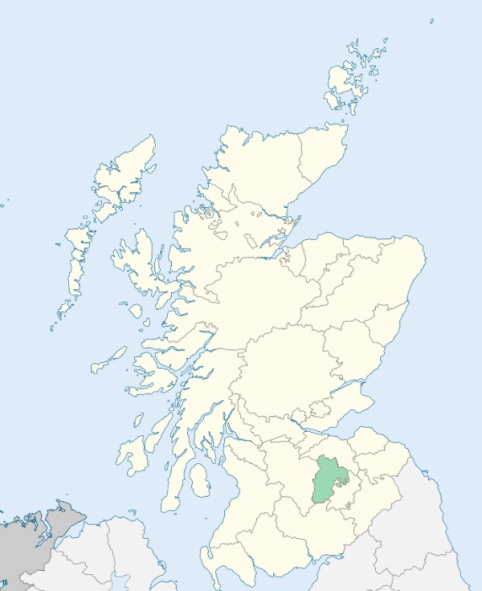
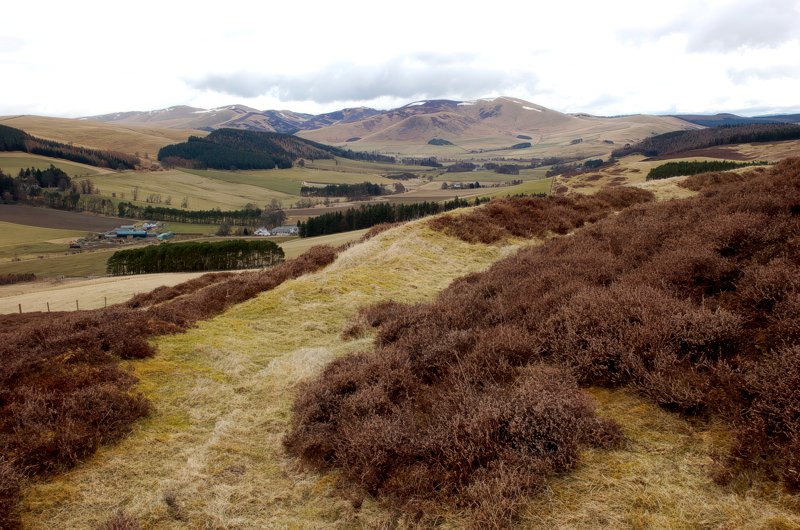
Glenholm is part of the united parish of Broughton, Glenholm, and Kilbucho in Peeblesshire. Along one-half of its eastern boundary it is traced and enlivened by the River Tweed, and along its northern boundary it is separated from the parish of Stobo by Biggar Water. Nowhere does it touch Broughton except at its north-west angle but, over two-thirds of its length, it marches with Kilbucho. (1867: The Imperial Gazetteer of Scotland, by John Marius Wilson).
Glenholm
PRE-REFORMATION GOVERNANCE:
POST-REFORMATION GOVERNANCE:
The church was dedicated to St Cuthbert. The parish was united to Broughton by the Commissioners of Teinds, 28 May 1794.
Includes ministers, licentiates, assistants, readers, and clerks.
(1928: Fasti Ecclesiæ Scoticanæ, by Hew Scott, D. D.)
Parish registers turned over to the Registrar-General, as a result of the Registration of Births, Deaths, and Marriages (Scotland) Act of 1854. The letters B. D. and M. indicate Births (or Baptisms), Deaths (or Burials), and Marriages (or Proclamations of Banns) respectively. Numbers indicate separate volumes or books. Note: These records are by no means complete or without damage; consult the Detailed List of the Old Parochial Registers of Scotland (1872) to learn more about the condition of the records.
| OPR and RD Numbers | |||
|---|---|---|---|
| Date Range | Name | Number | Type |
| 1757-1854 | Glenholm | 761 | OPR |
| 1855-1869 | Glenholm | 761 | RD |
| 1870-1920 | Kilbucho, Broughton and Glenholm | 761 | RD |
| 1921-1967 | Broughton, Glenholm and Kilbucho | 758 | RD |
| 2009 | Scottish Borders, Peebles | 801 | RD |
| 2026 | Scottish Borders Council; Upper Tweed Community Council | ||
(2009: Parishes and Registration Districts of Scotland - Old and New, National Records of Scotland)
Local community councils (2026) are provided as a potential source of additional information for settlements within the original boundaries of the parish. (Source)
Statistics from informal and official censuses
Brown, Bryden, Clark, Cranston, Grieve, Hislop, Home, MacKay, Robertson, Turner
Note: Names appearing in research materials, other than censuses. Simple names (First name, surname only) have been omitted unless they appear associated with large properties. All women's names, and men's names with occupations, military ranks, or peerage titles are included.
By the Reverend Mr Bernard Haldan.
"At present there are 300 souls: was the account to be taken in the summer season, it would amount to some more, by the additional number of maid servants, hired for the purpose of milking ewes, and an addition of herds. Of the above 300, 135 are males, 165 are females, 76 are under the age of 10.
There are 10 handicraftsmen, 42 male servants, 24 female servants, 3 students at the University of Edinburgh, 14 Seceders, 2 persons who were born in Jamaica, 158 who were born in other parishes in Scotland, 44 married men, including widowers, and 18 bachelors, reckoning them from 20 years and upwards. None have been obliged to leave the parish for want of employment. There are 55 inhabited houses."
(This section contains excerpts, at times restructured or paraphrased, from an article appearing in Statistical Account of Scotland, Sir John Sinclair, 1791-1799)
Primary Sources:
Statistical Account of Scotland (1791-1799), Volume 4, p. 429
New Statistical Account of Scotland (1834-1845), Volume 3, Section II, p. 78
See Parish Page Sources for all source information and links.