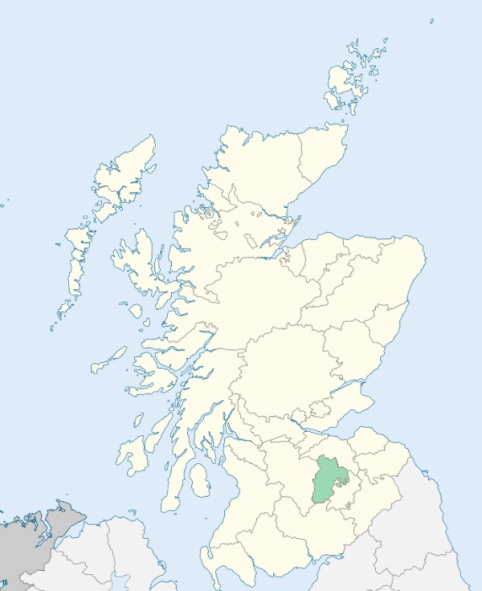
Broughton is part of the modern united parish of Broughton, Glenholm, and Kilbucho in the west side of Peeblesshire. It is bounded on the west by Lanarkshire, and on other sides by the parishes of Skirling, Kirkurd, Stobo, and Drumelzier. The three parishes which it comprises form a compact whole, all traversed by streams from lines of watershed to the valley of Biggar Water and the River Tweed - Glenholm in the south, with a north-eastward descent, Kilbucho in the middle, with an east-north-eastward descent, and Broughton in the north, with a southward descent, and the mutual border of Kilbucho and Broughton, along the valley of Biggar Water, with an eastward descent. (1867: The Imperial Gazetteer of Scotland, by John Marius Wilson).
Broughton, Rachan Mill
Mossfennan House, Quarter
PRE-REFORMATION GOVERNANCE:
POST-REFORMATION GOVERNANCE:
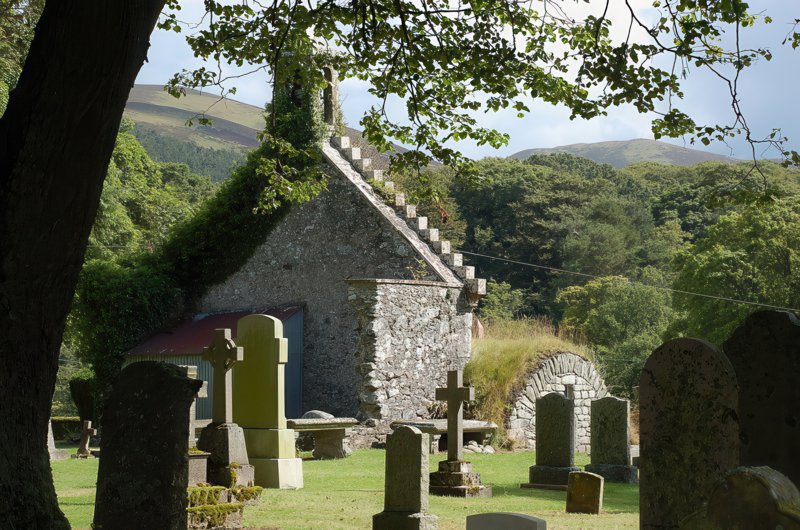
The church was dedicated to St Muireach.
Includes ministers, licentiates, assistants, readers, and clerks.
(1928: Fasti Ecclesiæ Scoticanæ, by Hew Scott, D. D.)
Parish registers turned over to the Registrar-General, as a result of the Registration of Births, Deaths, and Marriages (Scotland) Act of 1854. The letters B. D. and M. indicate Births (or Baptisms), Deaths (or Burials), and Marriages (or Proclamations of Banns) respectively. Numbers indicate separate volumes or books. Note: These records are by no means complete or without damage; consult the Detailed List of the Old Parochial Registers of Scotland (1872) to learn more about the condition of the records.
| OPR and RD Numbers | |||
|---|---|---|---|
| Date Range | Name | Number | Type |
| 1697-1854 | Broughton | 758 | OPR |
| 1855-1869 | Broughton | 758 | RD |
| 1870-1920 | Kilbucho, Broughton and Glenholm | 758 | RD |
| 1921-1967 | Broughton, Glenholm and Kilbucho | 758 | RD |
| 1968-1971 | Broughton | 758 | RD |
| 1972-1995 | Broughton | 803 | RD |
| 2009 | Scottish Borders, Peebles | 801 | RD |
| 2026 | Scottish Borders Council; Upper Tweed Community Council | ||
(2009: Parishes and Registration Districts of Scotland - Old and New, National Records of Scotland)
Local community councils (2026) are provided as a potential source of additional information for settlements within the original boundaries of the parish. (Source)
Statistics from informal and official censuses
Aitken, Crawford, Ferguson, Graham, Masterton, Nicolson, Noble, Ritchie, Smith, Watson
Note: Names appearing in research materials, other than censuses. Simple names (First name, surname only) have been omitted unless they appear associated with large properties. All women's names, and men's names with occupations, military ranks, or peerage titles are included.
By the Reverend Mr Thomas Gray.
"The present state of population is 264. There are 142 males, and 122 females. In the village of Broughton there are 20 dwelling houses, which contain 36 people, and 61 children. In the country part of the parish 167 reside, which, with the 97 that live in the village, make up 264 souls, the amount of the present population. The people in this parish are well affected to the present establishment; and the ordination of the incumbent, there was not one Seceder in the whole parish; there are now 8 who were Seceders from the Church before they came into this parish.
There are 12 farmers in the parish, and they employ in husbandry 28 male servants, and 23 females. There are 4 weavers in the parish, 4 wrights, 1 tailor, 1 smith, 1 miller, 2 shoemakers, and 3 shopkeepers."
(This section contains excerpts, at times restructured or paraphrased, from an article appearing in Statistical Account of Scotland, Sir John Sinclair, 1791-1799)
Primary Sources:
Statistical Account of Scotland (1791-1799), Volume 7, p. 156
New Statistical Account of Scotland (1834-1845), Volume 3, Section II, p. 78
See Parish Page Sources for all source information and links.