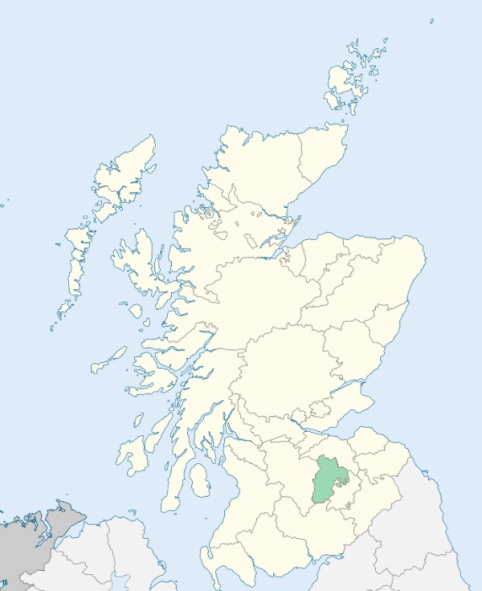
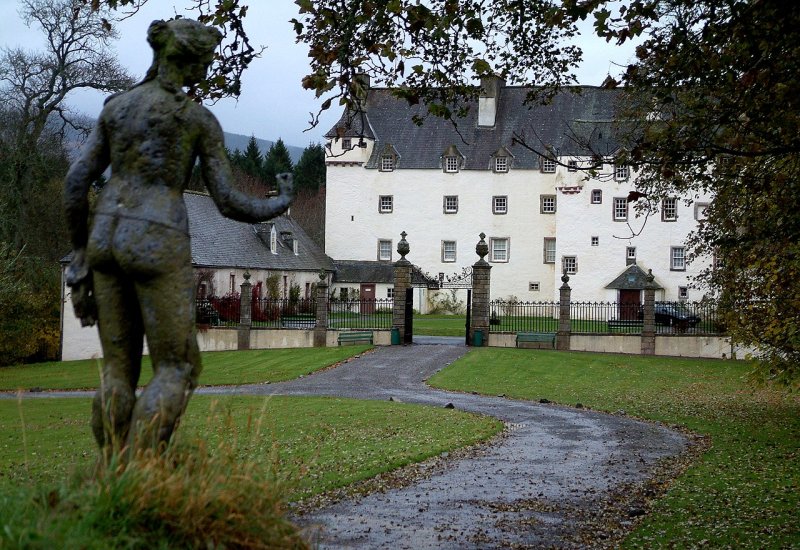
Traquair is a parish on the south-east border of Peeblesshire. It is bounded on the north by the River Tweed, which divides it from Peebles and Innerleithen, on the west by Peebles and Selkirkshire, and on other sides by Selkirkshire. (1867: The Imperial Gazetteer of Scotland, by John Marius Wilson).
Grieston, Howford, Kailzie, Traquair
Cardrona, Glen
The parish of Yarrow, in the county of Selkirk, had a detached part situated in the Tweed valley south of Cardrona, and nearly surrounded by the Peeblesshire parish of Traquair. Another part of the parish of Yarrow, situated in the Tweed valley north of Minchmuir, was almost detached from the main portion of the parish. Both these areas have been transferred to the parish of Traquair and to the county of Peebles. See affected properties and landholders. (1892: Boundary of counties and parishes in Scotland as settled by the Boundary Commissioners under the Local Government Act, 1889, by Hay Shennan)
PRE-REFORMATION GOVERNANCE:
POST-REFORMATION GOVERNANCE:
Traquair. The church, dedicated to St Bride, was a mensal church of Glasgow.
Kailzie, or Hope Kailzie. Previous to the Reformation the church, dedicated to the Virgin Mary, belonged to the Abbey of Kelso. The parish was suppressed by the Commissioners for Plantation of Kirks between 22 May and 5 August 1674, and united to Traquair, Peebles, and Innerleithen.
Disjoined Quoad Sacra Parishes:
Walkerburn. In 1876 Walkerburn became a chapel-of-ease, and on 2 July 1883 it was erected into a parish quoad sacra by the Court of Teinds. Disjoined from the parishes of Innerleithen and Traquair.
Includes ministers, licentiates, assistants, readers, and clerks.
Traquair (QO)
Walkerburn (QS)
(1928: Fasti Ecclesiæ Scoticanæ, by Hew Scott, D. D.)
Parish registers turned over to the Registrar-General, as a result of the Registration of Births, Deaths, and Marriages (Scotland) Act of 1854. The letters B. D. and M. indicate Births (or Baptisms), Deaths (or Burials), and Marriages (or Proclamations of Banns) respectively. Numbers indicate separate volumes or books. Note: These records are by no means complete or without damage; consult the Detailed List of the Old Parochial Registers of Scotland (1872) to learn more about the condition of the records.
| OPR and RD Numbers | |||
|---|---|---|---|
| Date Range | Name | Number | Type |
| 1694-1854 | Traquair | 771 | OPR |
| 1855-1967 | Traquair | 771 | RD |
| 2009 | Scottish Borders, Peebles | 801 | RD |
| 2026 | Scottish Borders Council; Innerleithen and District Community Council | ||
(2009: Parishes and Registration Districts of Scotland - Old and New, National Records of Scotland)
Local community councils (2026) are provided as a potential source of additional information for settlements within the original boundaries of the parish. (Source)
Statistics from informal and official censuses
Brown, Brunton, Henderson, Hogg, Melrose, Murray, Nicol, Reid, Scott, Wilson
Note: Names appearing in research materials, other than censuses. Simple names (First name, surname only) have been omitted unless they appear associated with large properties. All women's names, and men's names with occupations, military ranks, or peerage titles are included.
By the Reverend Mr John Walker.
"The whole souls in the parish at present are 446, of whom 118 are under 10 years of age. There are 12 Seceders, mostly of the Antiburgher congregation, and 3 Roman Catholics.
The whole inhabitants of the parish are employed in agriculture, except the few following: 6 weavers, 5 joiners, 1 blacksmith and an apprentice, 2 masons, 1 skinner and an apprentice, 1 shoemaker; the whole of whom are employed by the inhabitants, except the skinner, who exports dressed skins to Edinburgh. There are, besides, 5 tailors, who are likewise employed by the inhabitants.
The people of the parish are sober, and industrious, and are generous, and humane, when called to the exertion of these qualities. They enjoy, in a considerable degree, the comforts and advantages of civilized life. No instances are known of any being banished from the parish, nor of any who have left it for misconduct of any kind. There is not one of them but what is a native of Scotland."
(This section contains excerpts, at times restructured or paraphrased, from an article appearing in Statistical Account of Scotland, Sir John Sinclair, 1791-1799)
Primary Sources:
Statistical Account of Scotland (1791-1799), Volume 12, p. 369
New Statistical Account of Scotland (1834-1845), Volume 3, Section II, p. 36
See Parish Page Sources for all source information and links.