Dunkeld and Dowally
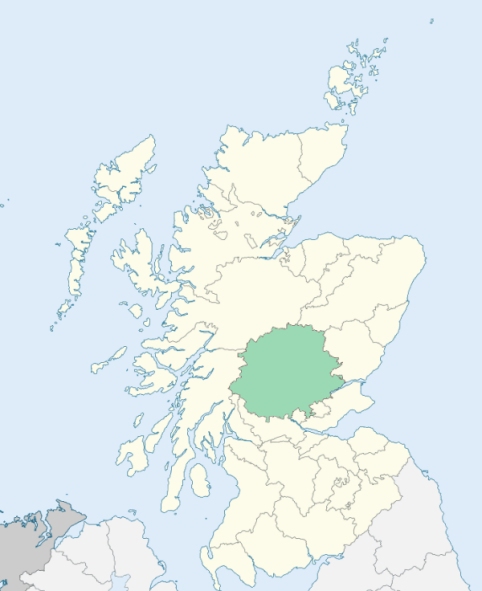
Dunkeld is a small district of the character of a parish in the Strathtay division of Perthshire. It lies on the left bank of the Tay, and is nearly surrounded by the parish of Caputh. (1867: The Imperial Gazetteer of Scotland, by John Marius Wilson)
Birnam, Burnbane, Countlick, Dowally, Dunkeld, Kindallachan
The parish of Dunkeld and Dowally had two detached parts:
No. 1. Dalcapon, nearly surrounded by the parish of Logierait
No. 2. Dowally, being the old parish of Dowally
(a.) Dunkeld and Dowally detached No. 1 was transferred to the parish of Logierait.
(b.) Part of the parish of Caputh was annexed to Dunkeld and Dowally, and in this way the main portion and detached No. 1 of the parish of Dunkeld and Dowally were united. See affected properties and landholders. (1892: Boundary of counties and parishes in Scotland as settled by the Boundary Commissioners under the Local Government Act, 1889, by Hay Shennan)
PRE-REFORMATION GOVERNANCE:
POST-REFORMATION GOVERNANCE:
The parishes of Dunkeld and Dowally were united before the middle of the seventeenth century. It is unclear at what point they were disjoined. From a very early time Dunkeld was the seat of a richly endowed Celtic Abbey. Like other monasteries of that period, the Abbey of Dunkeld fell under the sway of a powerful landed family, whose chiefs succeeded one another as hereditary abbots. The vicarage of Dunkeld was, until the time of the Reformation, a very small parish. Its bounds reached but a short way beyond the limits of the little cathedral town. There was, moreover, no parish church. In 1560 the cathedral was made the church of the parish. In the town of Dunkeld, Robert of Carney, one of the bishops, built a chapel of St Ninian in 1420. In 1510 Bishop George Broun also founded there a hospital of St George. Besides these, Dunkeld had a chapel of the Holy Trinity. On St Columba's day the town kept a yearly fair in honour of the patron saint.
Includes ministers, licentiates, assistants, readers, and clerks.
(1928: Fasti Ecclesiæ Scoticanæ, by Hew Scott, D. D.)
Parish registers turned over to the Registrar-General, as a result of the Registration of Births, Deaths, and Marriages (Scotland) Act of 1854. The letters B. D. and M. indicate Births (or Baptisms), Deaths (or Burials), and Marriages (or Proclamations of Banns) respectively. Numbers indicate separate volumes or books. Note: These records are by no means complete or without damage; consult the Detailed List of the Old Parochial Registers of Scotland (1872) to learn more about the condition of the records.
| OPR and RD Numbers | |||
|---|---|---|---|
| Date Range | Name | Number | Type |
| 1672-1854 | Dunkeld | 349 | OPR |
| 1855-1931 | Dunkeld | 349 | RD |
| 1932-1953 | Dunkeld and Birnam | 349 | RD |
| 1954-1971 | Dunkeld | 349 | RD |
| 1972-2003 | Dunkeld | 388 | RD |
| 2004-2009 | Perth and Kinross, Dunkeld | 388 | RD |
| 2026 | Perth and Kinross Council; Dunkeld and Birnam Community Council | ||
(2009: Parishes and Registration Districts of Scotland - Old and New, National Records of Scotland)
Local community councils (2026) are provided as a potential source of additional information for settlements within the original boundaries of the parish. (Source)
Statistics from informal and official censuses
Anderson, Cameron, Campbell, Clyde, Douglas, Gourlay, Jack, Robertson, Scott, Stewart
Note: Names appearing in research materials, other than censuses. Simple names (First name, surname only) have been omitted unless they appear associated with large properties. All women's names, and men's names with occupations, military ranks, or peerage titles are included.
Compiled from authentic materials, by Sir John Sinclair, compiler of the Statitistical Account of Scotland.
"By an accurate list taken in 1789, (and there is no reason to believe that they have either increased or diminished materially since that time), they amounted to 1086 souls. Of these 589 were males, and 497 were females. There were 1 surgeon, 1 apothecary, 2 writers, 24 merchants and manufacturers, 2 distillers, 1 supervisor, 50 household servants, 2 curriers, 2 saddlers, 12 carters, 20 shoemakers, 2 butchers, 2 tanners, 2 candlemakers, 60 weavers, 2 brewers, 14 tailors, 3 watchmakers, 4 bakers, 12 masons, 12 keepers of inns and ale-houes, 2 glovers and tawers, 1 wheelwright, 31 apprentices, and 1 piper. There are 1020 of the Established Church, 60 Independents, 5 of the Church of England, and 1 Roman Catholic.
The inhabitants are active, industrious, and spirited. Equally observant as their neighbours of the forms of religion, they are not inferior in the fruits of it spirit. Sufficiently enlightened as to the extent of a subject's privileges and claims, it is believed that not one native of Dunkeld is seditious in principle, or disposed to turbulence in conduct. Their sympathy for the distressed is peculiarly prompt and lively; and they practice eminently the good deeds of charity. They are distinguished by a frank and open-hearted civility to strangers. No one ever resorted to Dunkeld, whether as an invalid, for the recovery of his health, or as a traveler, on an excursion of amusement, without experiencing that they were a hospitable and obliging people."
(This section contains excerpts, at times restructured or paraphrased, from an article appearing in Statistical Account of Scotland, Sir John Sinclair, 1791-1799)
Primary Sources:
Statistical Account of Scotland (1791-1799), Volume 20, p. 410
New Statistical Account of Scotland (1834-1845), Volume 10, p. 958
See Parish Page Sources for all source information and links.