Laggan Mo Chaid, Laggan Mochaid, Logie Mahedd
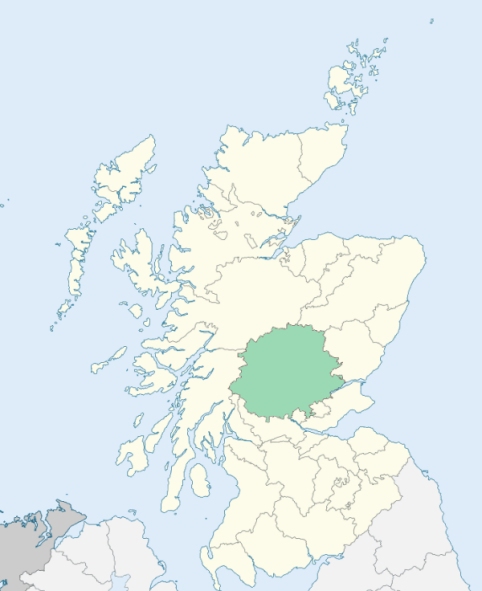
Logierait is a large, dispersed parish in the north of Perthshire. Part of it is surrounded on all sides, to a depth of many miles, by the parish of Fortingall. The nearest other part of the parish to this is a detached section, 11½ miles to the east, surrounded on all sides by the parish of Dull, and parts of the scattered parish of Weem. The next part of the parish is surrounded on all sides by Dull, and runs parallel to the former part at generally a mile's distance. The fourth and chief part of the parish, or its main body, lies at the nearest point ½ mile east of the part just noticed, and 14 miles in a straight line east of the part in Rannoch. It lies between the rivers Tay and Tummel, measuring 6 miles along the Tummel, and is bounded by Moulin, by part of Dowally, Strathardle in Kirkmichael, Dunkeld, and Little Dunkeld. (1867: The Imperial Gazetteer of Scotland, by John Marius Wilson).
Aberfeldy, Ballechin, Ballenluig or Ballinluig, Balinloan, Ballimore, Ballyallanach, Logierait, Pitnacree, Tulloch
Ballechin, Croftinloan, Dall, Donavourd, Dunalastair, Dunfallandy, Eastertyre, Edradynate, Farskally, Fonab, Grantully, Killiechassie, Pitnacree
The parish of Logierait had five detached parts:
No. 1. North of Loch Glassie and of the main portion of the parish of Weem
No. 2. Edradynate, in Strathtay
No. 3. Dall, on the south shore of Loch Rannoch
No. 4 Lochgarry House, north of the Tummel, a little to the east of Kinloch Rannoch
No. 5. Killichassie and Aberfeldy
a.) The part of Logierait detached No. 5 which lay south of the River Tay was transferred to the parish of Dull.
(b.) Logierait detached No. 3 and Logierait detached No. 4 were transferred to the parish of Fortingall.
(c.) The part of Logierait which consisted of the estate of Fonab was transferred to the parish of Moulin.
(d.) Logierait detached No. 1, Logierait detached No. 2, and the part of Logierait detached No. 5 which lay north of the River Tay were transferred to the parish of Weem.
(e.) The Grandtully district of Dull was annexed to Logierait. It consisted of the part of Dull which lay east of Weem detached No. 10, and on the right bank of the River Tay.
(f.) Dunkeld & Dowally detached No. 1 was annexed to Logierait.
(g.) Moulin detached No. 1 was annexed to Logierait.
(h.) Weem detached No. 10 was annexed to Logierait.
See affected properties and landholders. (1892: Boundary of counties and parishes in Scotland as settled by the Boundary Commissioners under the Local Government Act, 1889, by Hay Shennan)
PRE-REFORMATION GOVERNANCE:
POST-REFORMATION GOVERNANCE:
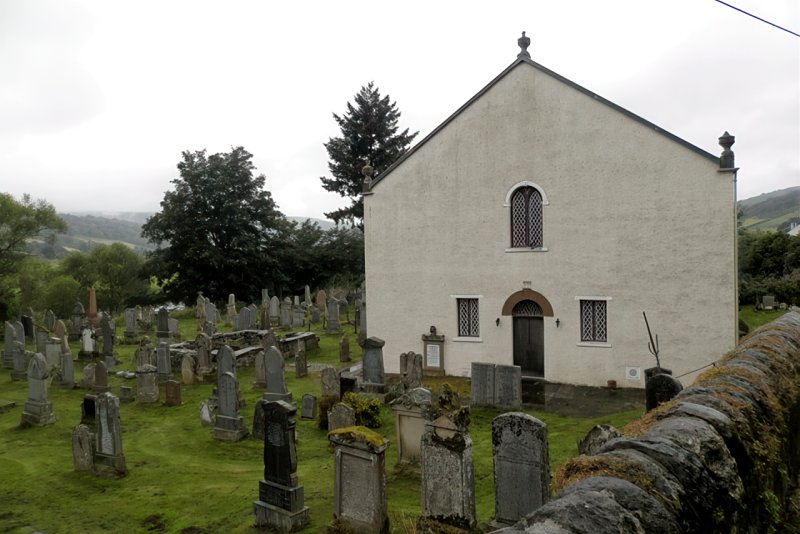
The church of Logierait was dedicated to St Chad. It belonged to the abbey of Scone. A fair held at Logierait was termed Feill Chaid (Chad's Fair). There is a mission chapel within the bounds at Strathtay.
Includes ministers, licentiates, assistants, readers, and clerks.
(1928: Fasti Ecclesiæ Scoticanæ, by Hew Scott, D. D.)
Parish registers turned over to the Registrar-General, as a result of the Registration of Births, Deaths, and Marriages (Scotland) Act of 1854. The letters B. D. and M. indicate Births (or Baptisms), Deaths (or Burials), and Marriages (or Proclamations of Banns) respectively. Numbers indicate separate volumes or books. Note: These records are by no means complete or without damage; consult the Detailed List of the Old Parochial Registers of Scotland (1872) to learn more about the condition of the records.
| OPR and RD Numbers | |||
|---|---|---|---|
| Date Range | Name | Number | Type |
| 1650-1854 | Logierait | 376 | OPR |
| 1855-1971 | Logierait | 376 | RD |
| 1972-2003 | Logierait | 386 | RD |
| 2009 | Perth and Kinross, Logierait | 386 | RD |
| 2026 | Perth and Kinross; Mid Atholl, Strathtay and Grandtully Community Council | ||
(2009: Parishes and Registration Districts of Scotland - Old and New, National Records of Scotland)
Local community councils (2026) are provided as a potential source of additional information for settlements within the original boundaries of the parish. (Source)
Statistics from informal and official censuses
Cameron, Campbell, Duff, Forbes, Fraser, Menzies, Reid, Robertson, Scott, Stewart
Note: Names appearing in research materials, other than censuses. Simple names (First name, surname only) have been omitted unless they appear associated with large properties. All women's names, and men's names with occupations, military ranks, or peerage titles are included.
By the Reverend Mr Thomas Bisset.
"The population of the parish of Logierait in 1791 was 2200, of which 2000 were resident in the country, and about 200 in the village of Logierait. There were 200 farmers, 60 artisans with their apprentices, 10 fishermen with occasional servants, 50 male servants hired for the year, 280 female servants, and 100 day-labourers. There were 1800 persons belonging to the Established Church, 390 to the Episcopal communion, and 10 Roman Catholics.
The general character of the people of this parish is sufficiently respectable. The virtues of humanity, frugality, and industry, the best ornaments of human nature, flourish among them. In an inland place, such as this, there are few temptations to a seafaring life. In winter, the women sit closely at their wheels; in summer, they are employed in field work. The men labour hard in spring, summer, and harvest; in winter they enjoy some relaxation.
The ordinary stature of the men, in this parish, is about 5 feet and a half; none exceed 6 feet 2 inches. The modes of dress, and of living, in general, have altered and improved within these last 20 years. No part of the old highland dress is retained, except the philabeg, and the tartan hose. Many of the young men wear watches. Many of the young women have printed cotton gowns, and duffle cloaks. The language spoken here, is a corrupted dialect of the Gaelic. The Saxon dialect of the lowlands is, however, pretty generally understood here.
In this parish, and in the neighbourhood, a variety of superstitious practices still prevail among the vulgar, which may be in part the remains of ancient idolatry, or of the corrupted Christianity of the Romish church, and partly, perhaps, the result of the natural hopes and fears of the human mind, in a state of simplicity and ignorance. Lucky and unlucky days are by many anxiously observed. That day of the week upon which the 14th of May happens to fall, for instance, is esteemed unlucky through all the remainder of the year; none marry, or begin any serious business upon it. None choose to marry in January or May; or to have their banns proclaimed in the end of one quarter of the year, and to marry in the beginning of the next. Some things are to be done before the full moon; others after. Recourse is often had to charms, for the cure of diseases of horses and cows, no less than in the human species."
(This section contains excerpts, at times restructured or paraphrased, from an article appearing in Statistical Account of Scotland, Sir John Sinclair, 1791-1799)
Primary Sources:
Statistical Account of Scotland (1791-1799), Volume 5, p. 75
New Statistical Account of Scotland (1834-1845), Volume 10, p. 685
See Parish Page Sources for all source information and links.