Kirkmichael in Strathardail
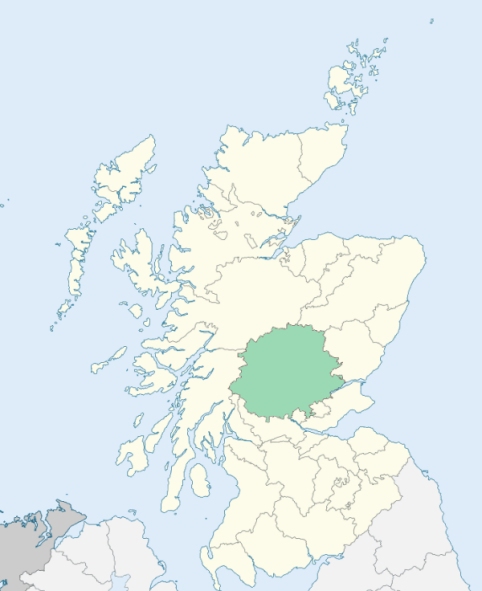
Kirkmichael is a parish at the north-eastern extremity of Perthshire. It is bounded by the counties of Aberdeen and Forfar, and by the parishes of Rattray, Caputh, Bendochy, Blairgowrie, Clunie, Dunkeld, Logierait, Dowally, Moulin, and Blair Atholl. (1867: The Imperial Gazetteer of Scotland, by John Marius Wilson).
Ballintuim, Bridge of Cally, Glenshee, Glenshee, Kirkmichael, Spittal of Glenshee
Ashintully, Balmyle, Bleaton Hallet, Cally, Dalrulzian, Persey, Woodhill
Bendochy detached No. 1 has been annexed to Kirkmichael. Caputh detached No. 4 was annexed to Kirkmichael. The detached part of Rattray was annexed to Kirkmichael. See affected properties and landholders. (1892: Boundary of counties and parishes in Scotland as settled by the Boundary Commissioners under the Local Government Act, 1889, by Hay Shennan)
PRE-REFORMATION GOVERNANCE:
POST-REFORMATION GOVERNANCE:
The parish church was dedicated to St Michael. It belonged to the Abbey of Dunfermline. A Fair of St Michael was held within the bounds at Ashintully.
Disjoined Quoad Sacra Parishes:
Glenshee. The parish of Glenshee was disjoined from Kirkmichael in Strathardail on 24 November 1858.
Includes ministers, licentiates, assistants, readers, and clerks.
Kirkmichael (QO)
Glenshee (QS)
(1928: Fasti Ecclesiæ Scoticanæ, by Hew Scott, D. D.)
Parish registers turned over to the Registrar-General, as a result of the Registration of Births, Deaths, and Marriages (Scotland) Act of 1854. The letters B. D. and M. indicate Births (or Baptisms), Deaths (or Burials), and Marriages (or Proclamations of Banns) respectively. Numbers indicate separate volumes or books. Note: These records are by no means complete or without damage; consult the Detailed List of the Old Parochial Registers of Scotland (1872) to learn more about the condition of the records.
| OPR and RD Numbers | |||
|---|---|---|---|
| Date Range | Name | Number | Type |
| 1650-1854 | Kirkmichael | 370 | OPR |
| 1855-1857 | Kirkmichael | 370 | RD |
| 1858-1968 | Kirkmichael | 370-1 | RD |
| 1858-1968 | Glenshee | 370-2 | RD |
| 2009 | Perth and Kinross, Blairgowrie | 381 | RD |
| 2026 | Perth and Kinross Council; Mount Blair Community Council | ||
(2009: Parishes and Registration Districts of Scotland - Old and New, National Records of Scotland)
Local community councils (2026) are provided as a potential source of additional information for settlements within the original boundaries of the parish. (Source)
Statistics from informal and official censuses
Cameron, Campbell, Dewar, Lamond, Morrison, Petrie, Rattray, Reid, Robertson, Stewart
Note: Names appearing in research materials, other than censuses. Simple names (First name, surname only) have been omitted unless they appear associated with large properties. All women's names, and men's names with occupations, military ranks, or peerage titles are included.
By the Reverend Mr Allan Stewart.
"The number of souls in the parish is about 2200. The number of farmers in the parish is 226. Many of the tenants subset small portions of their possessions, such as a garden, or perhaps a small croft to cottagers, or cottars, as they are called. Some of these are handy-craftsmen, who subsist by their trade; others are common labourers, who hire themselves out for day's wages in the country. The number of tradesmen is as follows: 10 square wrights, 4 wheel wrights, 5 smiths, 4 shoemakers, 14 shopkeepers, 14 tailors, 40 weavers, including apprentices. Some of these have other occupations besides their trade. All the people are of the established religion, except one or two families of Papists in Glenshee.
The prevailing language in the parish is the Gaelic. A dialect of the ancient Scotch, also, is understood and currently spoken. These two, by a barbarous intermixture, mutually corrupt each other. All the names of places are Gaelic.
The people are humane and hospitable to strangers, of a spirit somewhat independent, but averse from a military life. The greatest fault in their general character is, that they are too much disposed to litigation, for which they are noted by their neighbours. Three sheriff-officers, and a constable, residing within the parish, find abundance of employment. They are rather inclined also to be jealous of each other, and seem at times more anxious to repel encroachments, than to improve their own possessions. The younger part of the people are showy in their dress, but frugal in their diet. Shooting matches, and rural balls, are frequent at the holy season. Foot ball is a common amusement with the school boys, who also preserve the custom of cock-fighting on Shrove Tuesday."
(This section contains excerpts, at times restructured or paraphrased, from an article appearing in Statistical Account of Scotland, Sir John Sinclair, 1791-1799)
Primary Sources:
Statistical Account of Scotland (1791-1799), Volume 15, p. 506
New Statistical Account of Scotland (1834-1845), Volume 10, p. 785
See Parish Page Sources for all source information and links.