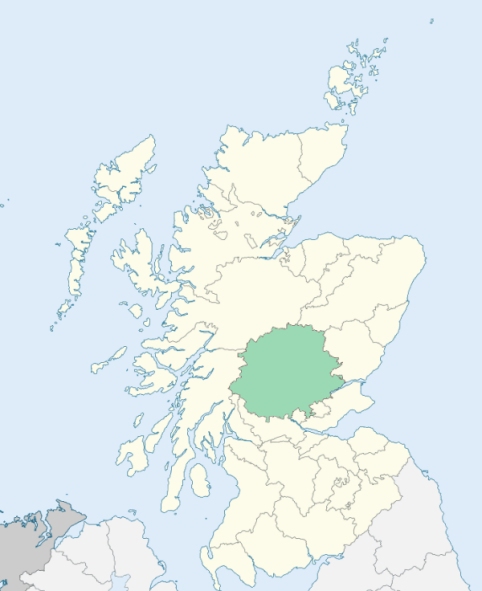
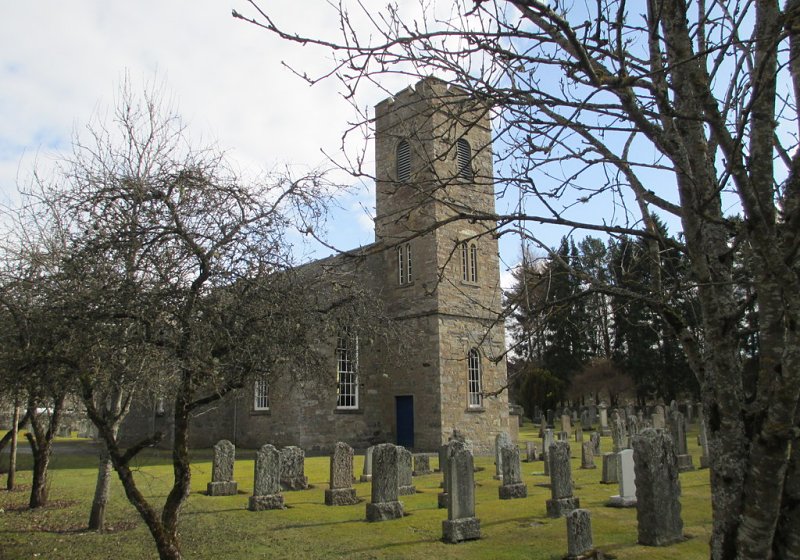
Blair Atholl is an extensive parish in the north of Perthshire. It is bounded on the north by Inverness-shire and Aberdeenshire, and on other sides by the parishes of Fortingall, Dull, Moulin, and Kirkmichael. (1867: The Imperial Gazetteer of Scotland, by John Marius Wilson).
Blair Atholl or Blair Athole, Bridge of Tile, Calbruar, Calvine, Middle Bridge
Blair, Bohally, Bonskeid, Dunalastair, Fincastle, Shierglass, Strathgarry House
The lands of Reinakyllich were transferred from the parish of Blair Atholl to the parish of Moulin. Moulin detached no. 2 was annexed to Blair Atholl. All those parts of Dull which lay north of the River Tummell and of Loch Tummel were transferred to Blair Atholl. The land marked on the Ordnance Survey maps as common to the parishes of Blair Atholl, Fortingall, and Logierait was divided between the first two of these parishes. The part north of Allt Sleibg was annexed to Blair Atholl. See affected properties and landholders. (1892: Boundary of counties and parishes in Scotland as settled by the Boundary Commissioners under the Local Government Act, 1889, by Hay Shennan)
PRE-REFORMATION GOVERNANCE:
POST-REFORMATION GOVERNANCE:
The parishes of Blair Atholl, Struan, Kilmoveonaig, and Lude were united early in the seventeenth century.
Blair Atholl. The ancient parish church of Blair-Atholl stands roofless in the churchyard at Old Blair. It was dedicated to St Bride. In a vault under it are buried many members of the Duke of Atholl's family.
Struan. The church of Struan is still in use as a mission chapel. It was dedicated to St Fillan, and St Fillan's Well is near. At Trinafuar, within the bounds, there is now a mission chapel.
Kilmoveonaig, or Kilmocheonaig. The parish church was dedicated to St Adamnan. Its site is now occupied by an Episcopal Chapel. At Cill Ainrais, not far off, there was of old a chapel of St Andrew.
Lude. On the lands of Little Lude some scanty remains of the ancient church of Lude can still be seen.
Disjoined Quoad Sacra Parishes:
Tenandry, previously Fincastle. The parish of Fincastle, consisting mainly of Glen Fincastle and adjoining portions of Strathtummel, was united to Dull early in the seventeenth century. In 1836 a parliamentary chapel was built at Tenandry in the parish of Blair-Atholl. On 19 November 1851 the ancient parish of Fincastle was again disjoined from Dull, along with the church of Tenandry, and neighbouring parts of Blair-Atholl and Moulin, thus forming an enlarged parish of Fincastle or Tenandry.
Includes ministers, licentiates, assistants, readers, and clerks.
Blair Atholl (QO)
Struan (QO)
Kilmoveonaig, or Kilmocheonaig (QO)
Tenandry, or Fincastle (QS)
(1928: Fasti Ecclesiæ Scoticanæ, by Hew Scott, D. D.)
Parish registers turned over to the Registrar-General, as a result of the Registration of Births, Deaths, and Marriages (Scotland) Act of 1854. The letters B. D. and M. indicate Births (or Baptisms), Deaths (or Burials), and Marriages (or Proclamations of Banns) respectively. Numbers indicate separate volumes or books. Note: These records are by no means complete or without damage; consult the Detailed List of the Old Parochial Registers of Scotland (1872) to learn more about the condition of the records.
| OPR and RD Numbers | |||
|---|---|---|---|
| Date Range | Name | Number | Type |
| 1718-1854 | Blair Atholl | 334 | OPR |
| 1855-1971 | Blair Atholl | 334 | RD |
| 1972-2003 | Blair Atholl | 380 | RD |
| 2009 | Perth and Kinross, Blair Atholl | 380 | RD |
| 2026 | Perth and Kinross Council; Blair Atholl and Struan Community Council Mount Blair Community Council | ||
(2009: Parishes and Registration Districts of Scotland - Old and New, National Records of Scotland)
Local community councils (2026) are provided as a potential source of additional information for settlements within the original boundaries of the parish. (Source)
Statistics from informal and official censuses
Cameron, Campbell, Dow, Forbes, Fraser, Gow, Menzies, Robertson, Scott, Stewart
Note: Names appearing in research materials, other than censuses. Simple names (First name, surname only) have been omitted unless they appear associated with large properties. All women's names, and men's names with occupations, military ranks, or peerage titles are included.
By the Reverend Mr James M'Lagan.
"In August 1791, there were living in the united parishes of Blair Atholl and Strowan, 3120 souls, viz. 1480 males, and 1640 females. Of that number, 758 were under eight years of age. Besides the number above mentioned, there is a considerable number of young people, belonging to the parish, serving in the east and west; of whom part will probably return, and part will not.
The most common vices here, are such as may be expected in that state of society, where the people are poor, and where the most extensive farmers have but little to themselves after paying the landlord. But there are very few instances of capital crimes: Suicide is scarcely known, murders very rare, executions and banishments very uncommon. The people are, in general, become industrious; they have a reasonable share of acuteness, are disposed to be friendly to one another, hospitable to strangers, and charitable to the poor.
The gentlemen are tall and handsome, and fond of a military life; and, though the common people have learned to despise a soldier's pay, and to hate a life of servitude, yet they have still a deal of the martial spirit remaining, and make very good soldiers, when once they undertake it; being firm, hardy, and brave, though not generally tall. With regard to religion, they have not many disputes, nor do they make much noise about it; but, in general, they attend the church, and religious ordinances, with gravity, decency, and every appearance of sincerity; and many of them enter deeply into some of the most important points of controversy among Christians.
The Gaelic language is spoken here, by the natives; and there are but few others in the parish."
(This section contains excerpts, at times restructured or paraphrased, from an article appearing in Statistical Account of Scotland, Sir John Sinclair, 1791-1799)
Primary Sources:
Statistical Account of Scotland (1791-1799), Volume 2, p. 461
New Statistical Account of Scotland (1834-1845), Volume 10, p. 558
See Parish Page Sources for all source information and links.