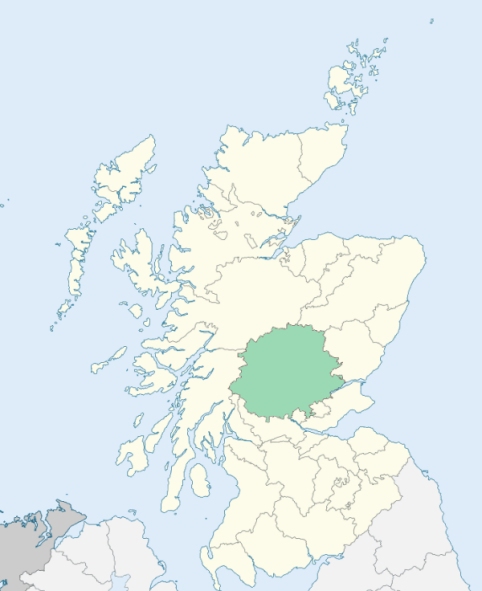
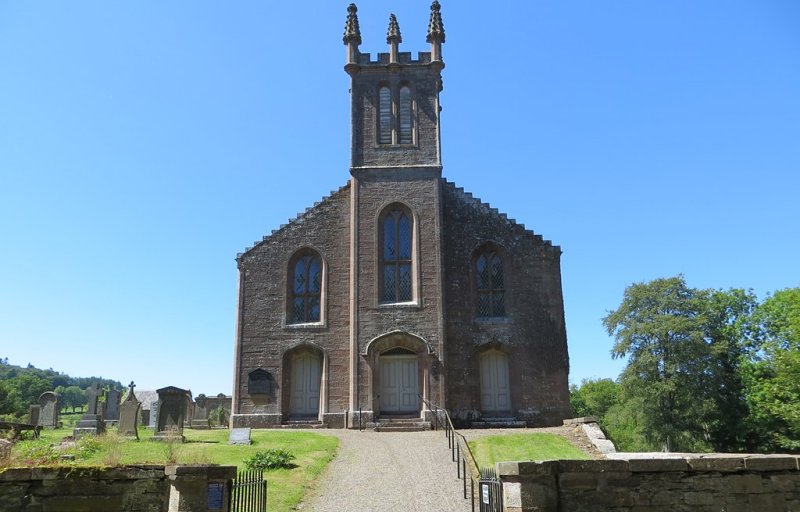
Clunie is a parish in the district of Stormont, Perthshire. It is bounded by Kirkmichael, Blairgowrie, Lethendy and Kinloch, Caputh, and Dunkeld. (1867: The Imperial Gazetteer of Scotland, by John Marius Wilson).
Clunie, Craigie, Forneth, Laigwood
Ballied, Delvine, Drummellie, Easter Logie, Forneth, Gourdie
A detached part of Clunie was transferred to the parish of Caputh. A detached part of Caputh was annexed to Clunie, and the part of Caputh which lies north-east of the western march of the estate of Gourdie was also annexed to Clunie. See affected properties and landholders. (1892: Boundary of counties and parishes in Scotland as settled by the Boundary Commissioners under the Local Government Act, 1889, by Hay Shennan)
PRE-REFORMATION GOVERNANCE:
POST-REFORMATION GOVERNANCE:
On an island in the Loch of Clunie, close to the Episcopal seat of Clunie Castle, George Broun, Bishop of Dunkeld, founded in 1504 a Chapel of St Katherine.
Includes ministers, licentiates, assistants, readers, and clerks.
(1928: Fasti Ecclesiæ Scoticanæ, by Hew Scott, D. D.)
Parish registers turned over to the Registrar-General, as a result of the Registration of Births, Deaths, and Marriages (Scotland) Act of 1854. The letters B. D. and M. indicate Births (or Baptisms), Deaths (or Burials), and Marriages (or Proclamations of Banns) respectively. Numbers indicate separate volumes or books. Note: These records are by no means complete or without damage; consult the Detailed List of the Old Parochial Registers of Scotland (1872) to learn more about the condition of the records.
| OPR and RD Numbers | |||
|---|---|---|---|
| Date Range | Name | Number | Type |
| 1702-1854 | Clunie | 339 | OPR |
| 1855-1953 | Clunie | 339 | RD |
| 2009 | Perth and Kinross, Blairgowrie | 381 | RD |
| 2026 | Perth and Kinross Council; Comrie and District Community Council | ||
(2009: Parishes and Registration Districts of Scotland - Old and New, National Records of Scotland)
Local community councils (2026) are provided as a potential source of additional information for settlements within the original boundaries of the parish. (Source)
Statistics from informal and official censuses
Cameron, Campbell, Clark, Fraser, Hay, Michie, Rattray, Robertson, Smith, Stewart
Note: Names appearing in research materials, other than censuses. Simple names (First name, surname only) have been omitted unless they appear associated with large properties. All women's names, and men's names with occupations, military ranks, or peerage titles are included.
By the Reverend Mr William M'Ritchie.
"The following enumeration was made with exactness, and holds good for November 1791. Total inhabitants 1037, of whom 503 were males and 534 were females. There were 144 families, 254 subtenants, including their families, 95 men servants, 49 maid servants, 21 wrights including apprentices, 11 masons including apprentices, 37 weavers including apprentices, 9 shoemakers including apprentices, 4 tailors including apprentices, 4 smiths including apprentices, 4 flax-dressers, 1 tanner, 1 dyer, 1 slater, 1 butcher, 5 millers, 3 gardeners, 6 day-labourers, 4 distillers of whisky, 1 excise officer, 2 small innkeepers, 2 small shopkeepers. The inhabitants, excepting one born in England, are all natives of Scotland, and mostly of the parish.
With regard to their religious persuasions, they are all of the Established Church, except 2 old Scotch Episopalians, and 4 of the Church of England. There are a few Seceders, principally women, who are natives of other parishes, and who endeavour to train up their children, particularly their daughters, in the principles of their own persuasion; these Seceders, old and young, may be reckoned about 20. Numbers of the people reside in paltry villages, containing each from up to 50 inhabitants.
The generality of the parishioners are disposed to honest industry and good neighbourhood. They are obliging and hospitable, cheerful, contented, and charitable. Seldom are any of them guilty of enormous outrages against the rules of morality. Murder and suicide are unknown among them. None of them, natives of this parish, has been hanged or banished these 60 years; and no person was ever known to perish here for want of bread. Few of the young men join the army or navy. The martial spirit of their forefathers has subsided, and the targe and the broadsword have given place to the ploughshare and the sickle."
(This section contains excerpts, at times restructured or paraphrased, from an article appearing in Statistical Account of Scotland, Sir John Sinclair, 1791-1799)
Primary Sources:
Statistical Account of Scotland (1791-1799), Volume 9, p. 225
New Statistical Account of Scotland (1834-1845), Volume 10, p. 1024
See Parish Page Sources for all source information and links.