Shielkirk, Scheleskirk
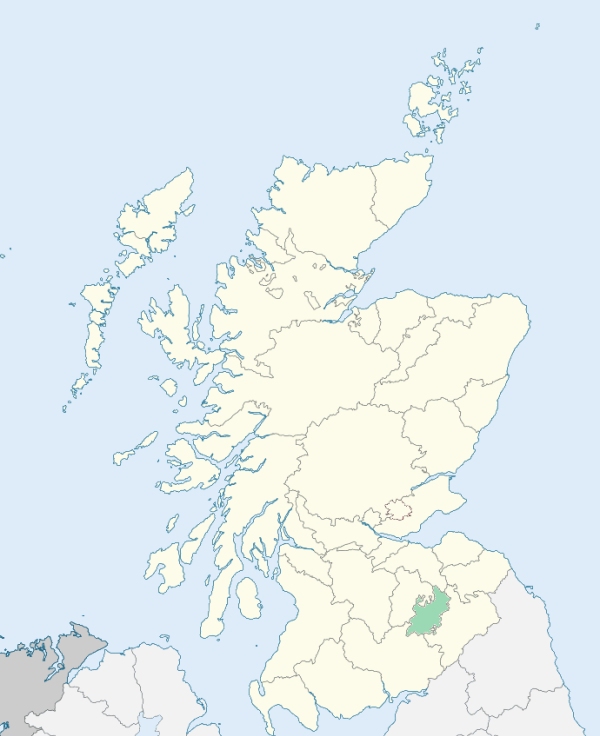
Selkirk is a parish partly in Roxburghshire, but chiefly in Selkirkshire. It consists of two detached districts and a main body. The detached districts lie within Roxburghshire, the one on the north and one on the south of the parish of Ashkirk. The main body is bounded by the parishes of Stow, Galashiels, Bowden, Lilliesleaf, Ashkirk, and Yarrow. (1867: The Imperial Gazetteer of Scotland, by John Marius Wilson).
Bowhill, Bridgelands, Broadmeadows, Broomhill, Carterhaugh, Greenhead, Hartwoodburn, High Sunderland, Philiphaugh, Selkirk, Williamhope
Broadmeadows, Ettrick Bank, The Haining, Yair
The parish of Selkirk was situated partly in the county of Selkirk and partly in the county of Roxburgh. The parish was placed wholly in the county of Selkirk, and at the same time a detached part of the parish in Selkirkshire was transferred to the parish of Ashkirk. See affected properties and landholders. (1892: Boundary of counties and parishes in Scotland as settled by the Boundary Commissioners under the Local Government Act, 1889, by Hay Shennan)
PRE-REFORMATION GOVERNANCE:
POST-REFORMATION GOVERNANCE:
The church, dedicated to St Mary, belonged to the Abbey of Kelso. In the twelfth century the parish church was known as the Abbot's Kirk, to distinguish it from the King's Kirk, this being the name given to the Monastery of St John founded here by David I. This latter foundation was suppressed in 1128 and its revenues given to the Abbey of Kelso. Selkirk had a fair of St Laurence.
Disjoined Quoad Sacra Parishes:
Caddonfoot. A chapel was opened here in 1863. The parish was disjoined quoad sacra from Galashiels, Innerleithen, Selkirk, Stow, and Yarrow in 1867.
Heatherlie. A church was built here in 1877. The parish was disjoined from Selkirk, 12 January 1885.
Includes ministers, licentiates, assistants, readers, and clerks.
Selkirk (QO)
Caddonfoot (QS)
Heatherlie (QS)
(1928: Fasti Ecclesiæ Scoticanæ, by Hew Scott, D. D.)
Parish registers turned over to the Registrar-General, as a result of the Registration of Births, Deaths, and Marriages (Scotland) Act of 1854. The letters B. D. and M. indicate Births (or Baptisms), Deaths (or Burials), and Marriages (or Proclamations of Banns) respectively. Numbers indicate separate volumes or books. Note: These records are by no means complete or without damage; consult the Detailed List of the Old Parochial Registers of Scotland (1872) to learn more about the condition of the records.
| OPR and RD Numbers | |||
|---|---|---|---|
| Date Range | Name | Number | Type |
| 1697-1854 | Selkirk | 778 | OPR |
| 1855-1856 | Selkirk Burgh | 778-1 | RD |
| 1855-1856 | Selkirk Landward | 778-2 | RD |
| 1857-1971 | Selkirk | 778 | RD |
| 1972-2006 | Selkirk | 811 | RD |
| 2007-2009 | Scottish Borders, Selkirk | 811 | RD |
| 2026 | Scottish Borders Council; Selkirk and District Community Council | ||
(2009: Parishes and Registration Districts of Scotland - Old and New, National Records of Scotland)
Local community councils (2026) are provided as a potential source of additional information for settlements within the original boundaries of the parish. (Source)
Statistics from informal and official censuses
Anderson, Brown, Douglas, Hogg, Inglis, Johnstone, Murray, Scott, Smith, Turnbull
Note: Names appearing in research materials, other than censuses. Simple names (First name, surname only) have been omitted unless they appear associated with large properties. All women's names, and men's names with occupations, military ranks, or peerage titles are included.
By the Reverend Mr Thomas Robertson, Minister.
"The number of examinable persons, about 50 years ago, is said to have been 1700. The number of souls, as reported to Dr Webster, for the year 1755, was 1793. By an exact survey, lately made, the number of all ages, now existing, amount to nearly 700 in the country, and 1000 in the burgh. Any decrease of population is entirely in the country part of the parish, as the numbers in the burgh, have, for more than a century, been nearly the same. There is in Selkirk, a meeting of Burgher Seceders. What their number may be in Selkirk parish is not accurately known; but it cannot be considerable. There are no Roman Catholics."
(This section contains excerpts, at times restructured or paraphrased, from an article appearing in Statistical Account of Scotland, Sir John Sinclair, 1791-1799)
Primary Sources:
Statistical Account of Scotland (1791-1799), Volume 2, p. 434
New Statistical Account of Scotland (1834-1845), Volume 3, Section III, p. 1
See Parish Page Sources for all source information and links.