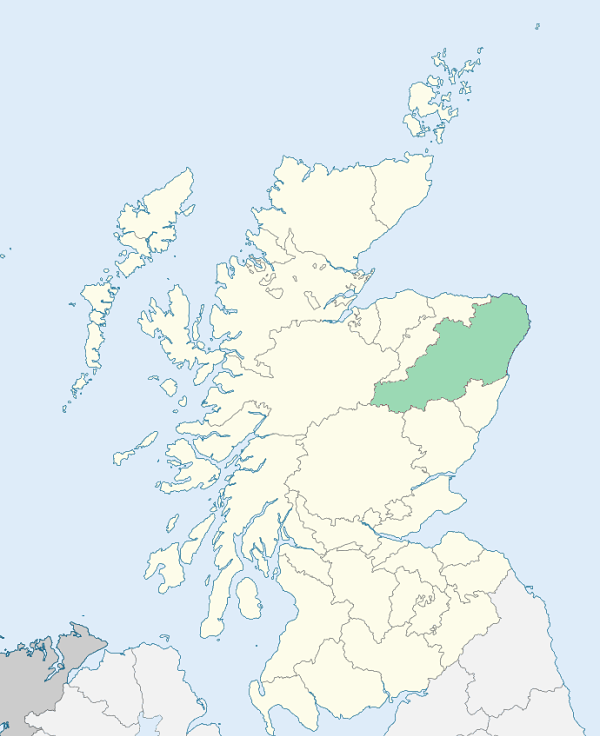
Udny is a parish in the district of Formartine, Aberdeenshire. It is bounded on the north-west by Bourtie and Tarves, on the north by Tarves, on the north-east by Ellon and Logie Buchan, on the east by Foveran and Belhelvie, on the south by New Machar, and on the south-west and west by Fintray, the detached part of New Machar, and by Keithhall. (1867: The Imperial Gazetteer of Scotland, by John Marius Wilson).
Balnakettle, Kingoodie, Tulligray, Udny
Torryleith
The parish of New Machar had a detached part separated from the main portion of the parish by a small intervening part of the parish of Udny. This detached part of New Machar was also a detached part of the county of Banff. It has been transferred to the county of Aberdeen, and it has also been connected with the main portion of the parish of New Machar by annexing to that parish the intervening portion of the parish of Udny, consisting of that part of the estate of Torryleith which was in Udny. See affected properties and landholders. (1892: Boundary of counties and parishes in Scotland as settled by the Boundary Commissioners under the Local Government Act, 1889, by Hay Shennan)
PRE-REFORMATION GOVERNANCE:
POST-REFORMATION GOVERNANCE:
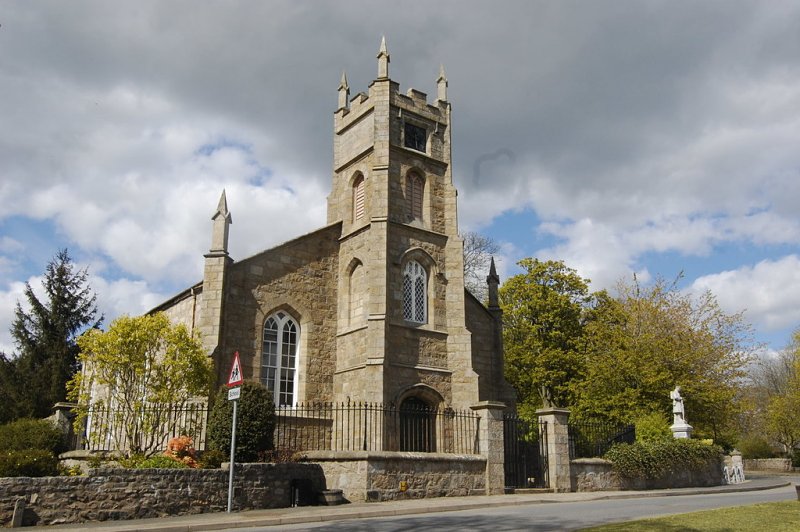
The lands of Udny were of old included in the parish of Ellon. There was then a chapel of the Holy Trinity commonly called Christ's Kirk of Udny. By Act of Parliament passed on 19 December 1597, the parish of Udny was erected and disjoined from Ellon, Logie Buchan, Tarves, and Foveran. In 1605, a church of greater size to replace the chapel of the Holy Trinity was built at Udny. There were two other chapels within the bounds, St Mary's at Kingoodie and St Michael's at Tulligray. On our Lady Day in Harvest, a fair was held at Balnakettle in this parish. A new church built in 1821 was renovated in 1883.
Includes ministers, licentiates, assistants, readers, and clerks.
(1928: Fasti Ecclesiæ Scoticanæ, by Hew Scott, D. D.)
Parish registers turned over to the Registrar-General, as a result of the Registration of Births, Deaths, and Marriages (Scotland) Act of 1854. The letters B. D. and M. indicate Births (or Baptisms), Deaths (or Burials), and Marriages (or Proclamations of Banns) respectively. Numbers indicate separate volumes or books. Note: These records are by no means complete or without damage; consult the Detailed List of the Old Parochial Registers of Scotland (1872) to learn more about the condition of the records.
| OPR and RD Numbers | |||
|---|---|---|---|
| Date Range | Name | Number | Type |
| 1744-1854 | Udny | 249 | OPR |
| 1855-1869 | Udny | 249 | RD |
| 1870-1967 | Udny | 249a | RD |
| 1870-1965 | Ythan Wells | 249b | RD |
| 2009 | (Udny) Aberdeenshire, Ellon | 316 | RD |
| 2009 | (Ythan Wells) Aberdeenshire, Huntly | 317 | RD |
| 2026 | (Udny) Aberdeenshire Council; Udny Community Council | ||
| 2026 | (Ythan Wells) Aberdeenshire Council; Ythan Community Council | ||
(2009: Parishes and Registration Districts of Scotland - Old and New, National Records of Scotland)
Local community councils (2026) are provided as a potential source of additional information for settlements within the original boundaries of the parish. (Source)
Statistics from informal and official censuses
Barron, Davidson, Duncan, Mackie, Milne, Mutch, Robertson, Sangster, Smith, Taylor
Note: Names appearing in research materials, other than censuses. Simple names (First name, surname only) have been omitted unless they appear associated with large properties. All women's names, and men's names with occupations, military ranks, or peerage titles are included.
By the Reverend Mr John Rose.
"The amount of the present population, in January 1791, is 1137 souls; of whom are, 571 males, 566 females. 986 are of the Established Church; 107 Episcopalians, 35 Seceders, 4 Quakers, and 5 Roman Catholics. Number of inhabited houses, 359; no towns nor villages. There are 9 shoemakers, 10 smiths, 4 tailors, 7 wrights, 4 weavers, 2 masons, 1 slater, who are employed in working for the inhabitants of the parish, have crofts of land, and are consequently in part occupied in husbandry. The other inhabitants are farmers, and their subtenants.
The people in this parish are sober, industrious, and seemingly contented with their situation; yet there are many things which would contribute to better their circumstances. None have died from want; nor have murders, suicides, or atrocious crimes been committed for many years past. None have been banished from the parish, nor obliged to leave it for want of employment, as there is a scarcity of hands for work in husbandry. Such as have removed, have had a view of better encouragement at Aberdeen, or in the neighbouring parishes."
(This section contains excerpts, at times restructured or paraphrased, from an article appearing in Statistical Account of Scotland, Sir John Sinclair, 1791-1799)
Primary Sources:
Statistical Account of Scotland (1791-1799), Volume 4, p. 156
New Statistical Account of Scotland (1834-1845), Volume 12, p. 131
See Parish Page Sources for all source information and links.