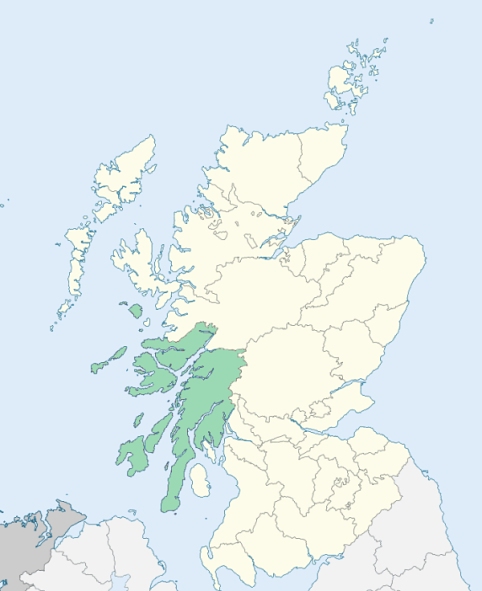
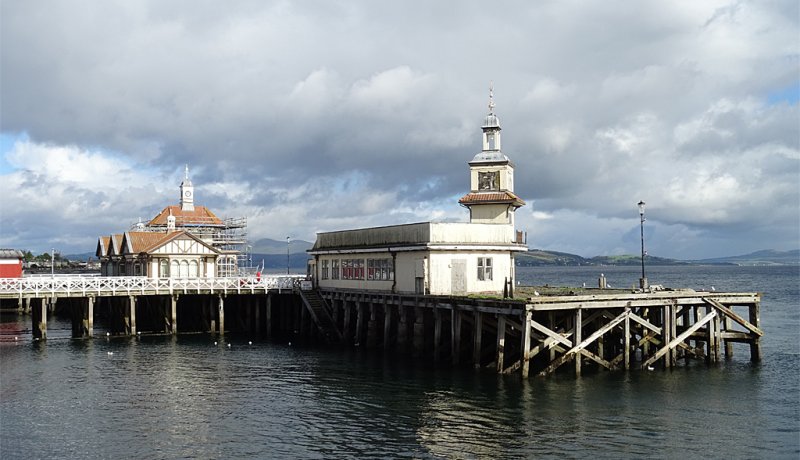
Dunoon is a parish comprehending the ancient parishes of Dunoon and Kilmun in the district of Cowal, Argyleshire. It is bounded on the east by Loch Long and the Firth of Clyde, on the south by the Kyles of Bute, and on the other sides, by the parishes of Inverchaolain, Kilmodan, Strachur, and Lochgoilhead. (1867: The Imperial Gazetteer of Scotland, by John Marius Wilson).
Ardintenny, Blairmore, Clachaig, Dunoon, Inellan or Innellan, Kilmun, Sandbank, Strone, Toward
Hafton
PRE-REFORMATION GOVERNANCE:
POST-REFORMATION GOVERNANCE:
The parishes of Dunoon and Kilmun were united towards the end of the seventeenth century.
Dunoon. Dunoon was a mensal prebend belonging to the Bishop of Argyll.
Kilmun. From a very early time there was on Loch Séant (the Holy Loch) a church of St Fintan Munna. In due time it became the parish church of Kilmun. In 1442 Sir Duncan Campbell of Loch Awe, afterwards first Lord Campbell, granted it a collegiate foundation with the ancient dedication to St Fintan. The parishes of Dunoon and Kilmun were often held by the same incumbent even as late as the seventeenth century. From 1629 onwards efforts were made to have the two parishes sufficiently endowed as separate charges, but without success. Towards the end of the seventeenth century, however, a union was carried through. It lasted until 16 March 1894, when Kilmun was disjoined quoad sacra from Dunoon. Kilmun had a yearly fair of St Fintan, and another fair on Roodmas Day.
Disjoined Quoad Sacra Parishes:
Ardentinny. Ardentinny Church was built in 1838. The parish of Ardentinny was disjoined from Dunoon, Kilmun, and Lochgoilhead on 6 July 1874.
Innellan. A chapel was built here in 1851. The parish of Innellan was disjoined from Dunoon on 7 July 1873. At Toward-an-Uillt, within the bounds, there was of old a chapel of St Mary, with a burial ground.
Kirn. Kirn Chapel was built in 1858. The parish was disjoined from Dunoon, 12 January 1874.
Sandbank. Services were commenced here in 1864. The parish of Sandbank was disjoined from Dunoon and Kilmun, 11 December 1876.
Strone. The parish of Strone was disjoined from Dunoon and Kilmun, 17 March 1884.
Includes ministers, licentiates, assistants, readers, and clerks.
Dunoon (QO)
Kilmun (QO)
Ardentinny (QS)
Innellan (QS)
Kirn (QS)
Sandbank (QS)
Strone (QS)
(1928: Fasti Ecclesiæ Scoticanæ, by Hew Scott, D. D.)
Parish registers turned over to the Registrar-General, as a result of the Registration of Births, Deaths, and Marriages (Scotland) Act of 1854. The letters B. D. and M. indicate Births (or Baptisms), Deaths (or Burials), and Marriages (or Proclamations of Banns) respectively. Numbers indicate separate volumes or books. Note: These records are by no means complete or without damage; consult the Detailed List of the Old Parochial Registers of Scotland (1872) to learn more about the condition of the records.
| OPR and RD Numbers | |||
|---|---|---|---|
| Date Range | Name | Number | Type |
| 1742-1854 | Dunoon and Kilmun | 510 | OPR |
| 1855-1882 | Dunoon and Kilmun | 510 | RD |
| 1883-1969 | Dunoon | 510-1 | RD |
| 1883-1969 | Kilmun | 510-2 | RD |
| 1970-1971 | Dunoon | 510 | RD |
| 1972-2006 | Dunoon | 532 | RD |
| 2007-2008 | Dunoon, Argyll and Bute | 532 | RD |
| 2009 | Argyll and Bute, Dunoon | 532 | RD |
| 2026 | (Dunoon) Argyll and Bute Council; Dunoon Community Council | ||
| 2026 | (Kilmun) Argyll and Bute Council; Kilmun Community Council | ||
(2009: Parishes and Registration Districts of Scotland - Old and New, National Records of Scotland)
Local community councils (2026) are provided as a potential source of additional information for settlements within the original boundaries of the parish. (Source)
Statistics from informal and official censuses
Dunoon: Brown, Cameron, Campbell, Clark, Johnston, Lamont, Millar, Sinclair, Smith, Wallace
Kilmun: Brown, Cameron, Campbell, Clark, Ferguson, Robertson, Smith, Thomson, Weir, Wilson
Note: Names appearing in research materials, other than censuses. Simple names (First name, surname only) have been omitted unless they appear associated with large properties. All women's names, and men's names with occupations, military ranks, or peerage titles are included.
By a Friend to Statistical Inquiries.
"The number of souls in 1791 was 1683, of whom 1123 were above 8 or 10 years of age. There were 334 families, 275 married couples, 17 widows, 95 widowers, 9 old maids or unmarried women above 45 years of age, and 1 old bachelor.
The village of Dunoon contains somewhat more than 30 families, but is reduced in regard to the number of its inhabitants, from what it was some years ago. For half a century, it has been the resort of a few trades people, and of such farmers in the neighbourhood have failed, with poor widows, who find here, more readily than elsewhere, a house, with a little ground for grain, suited to their circumstances.
Many bred to trades, as weaving, shoemaking, &c. leave off these sedentary employments, and bestow a considerable part of the year, in seeking for herrings, upon our own shores, or hiring themselves to the fishing to the northward. This, with the foreign or coasting trade from Clyde, takes many of our young men out of the country, and makes our tradesmen quit their looms, &c. for the more cheerful, and probably more profitable employments of the sea.
The people of the parish are justly accounted sober, inoffensive, and discreet; respectful to their superiors, charitable to one another, and the young remarkably attentive to their parents, who often stand in need of their assistance, when they grow old. The people on the whole, are not remarkable for any thing vicious.
The language of the parish is changing much, from the coming in of low-country tenants, from the constant intercourse our people have with their neighbours, but above all, from our schools. Hence the English or Scottish language is universally spoken by almost all ages, and sexes. But the Gaelic is still the natural tongue with them, their fireside language, and the language of their devotions."
(This section contains excerpts, at times restructured or paraphrased, from an article appearing in Statistical Account of Scotland, Sir John Sinclair, 1791-1799)
Primary Sources:
Statistical Account of Scotland (1791-1799), Volume 2, p. 383
New Statistical Account of Scotland (1834-1845), Volume 7, Section II, p. 567
See Parish Page Sources for all source information and links.