Dalmakerran
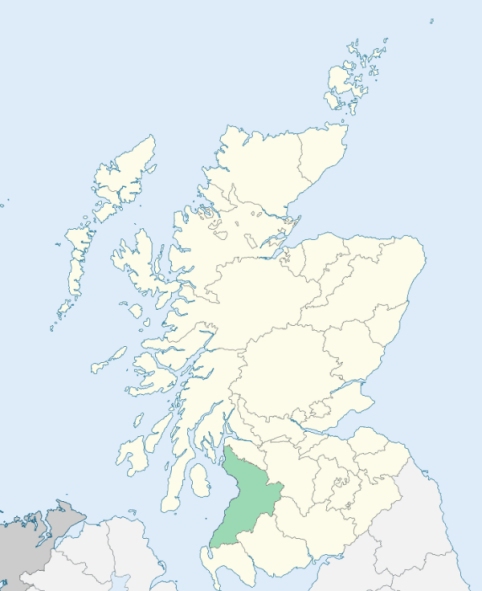
Dailly is a parish in the centre of Carrick, Ayrshire. It is bounded by Kirkoswald, Kirkmichael, Straiton, Barr, and Girvan. (1867: The Imperial Gazetteer of Scotland, by John Marius Wilson).
Cairnhill, Dailly, Dalquharran, Knock, Lindsyston, Moorston, New Dailly, Whitehill
Bargany, Kilkerran
PRE-REFORMATION GOVERNANCE:
POST-REFORMATION GOVERNANCE:
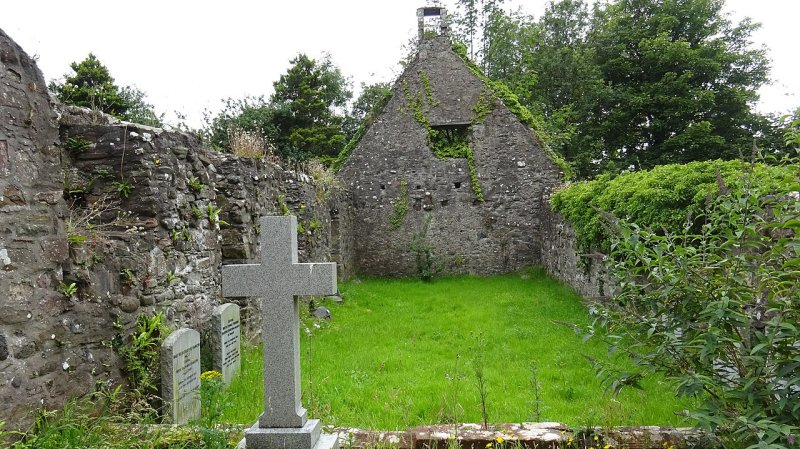
The church of Dalmakerran belonged to the Abbey of Crossregal (Crossraguel). It was dedicated to St Michael, but an older dedication was to St Kiaran. The main part of this parish is inland, its nearest point being almost two miles from the sea; yet the island of Ailsa is included within the bounds of Dailly. There were four chapels in the parish, St Mary's in the Lady Glen, the chapel of Machrikil (Machar a Cille = the level place of the church), another at Altichapel (Allt an t-seipeail = the stream of the chapel), and the fourth on the isle of Ailsa. In 1766 the parish church was removed to New Dailly.
Includes ministers, licentiates, assistants, readers, and clerks.
(1928: Fasti Ecclesiæ Scoticanæ, by Hew Scott, D. D.)
Parish registers turned over to the Registrar-General, as a result of the Registration of Births, Deaths, and Marriages (Scotland) Act of 1854. The letters B. D. and M. indicate Births (or Baptisms), Deaths (or Burials), and Marriages (or Proclamations of Banns) respectively. Numbers indicate separate volumes or books. Note: These records are by no means complete or without damage; consult the Detailed List of the Old Parochial Registers of Scotland (1872) to learn more about the condition of the records.
| OPR and RD Numbers | |||
|---|---|---|---|
| Date Range | Name | Number | Type |
| 1691-1854 | Dailly | 585 | OPR |
| 1855-1968 | Dailly | 585 | RD |
| 2009 | South Ayrshire, Girvan | 686 | RD |
| 2026 | South Ayrshire Council; Dailly Community Council | ||
(2009: Parishes and Registration Districts of Scotland - Old and New, National Records of Scotland)
Local community councils (2026) are provided as a potential source of additional information for settlements within the original boundaries of the parish. (Source)
Statistics from informal and official censuses
Brown, Bryden, Campbell, Davidson, Fergusson, Jones, Rennie, Smith, Wallace, Wilson
Note: Names appearing in research materials, other than censuses. Simple names (First name, surname only) have been omitted unless they appear associated with large properties. All women's names, and men's names with occupations, military ranks, or peerage titles are included.
By the Reverend Mr Thomas Thomson.
"On a survey in the year 1791, the number of inhabitants stood as follows: 781 males, 826 females, 1607 total number of inhabitants, of whom 423 were age from 1 to 10. The inhabitants are collected into 368 families. By far the greater number of the present inhabitants have been born and educated in the parish. Almost the whole are Scotch, with exception of a few Irish, whom the rising wages of labour have of late induced to settle in the parish. The number of settlers, from other parts of Scotland and from Ireland, is, however, much more than counterbalanced by that of those who leave the parish and resort to towns, tempted by the higher wages of manufactories and domestic service.
All the inhabitants of this parish profess the established religion, with the exception of a few seceders, not exceeding five or six, attached to the sects of Burghers or Antiburghers.
The inhabitants live mostly in the open country, and chiefly in the lower and more cultivated part of the parish; only an inconsiderable proportion, not exceeding 170 souls, reside in a small village contiguous to the church. The great body of the people derive their subsistence from agriculture, and the common mechanical arts connected with it. Nearly one third of the whole families in the parish are supported by the wages of common labour. Most of them, however, also rent a garden, and a piece of indifferent ground for pot-herbs, potatoes, and sometimes a little corn and flax. No considerable manufacture has ever been established in the parish. A considerable number of women, in the lower ranks, employ the greater part of their time in working up the inferior wool of the country into a coarse and flimsy cloth, which is carried to the fairs of Ayr and Maybole. By this species of rude manufacture, a few unmarried women and widows earn the greater part of a very scanty subsistence.
There are in the parish 47 farmers, 5 shopkeepers, 18 ale housekeepers and retailers of spirits (most of whom follow a separate occupation), 11 blacksmiths including 4 apprentices, 16 masons, 22 carpenters and joiners including 7 apprentices, 26 weavers, 9 shoemakers including 1 apprentice, 20 tailors including 7 apprentices, 1 butcher and baker, 3 millers, 12 gardeners including 4 apprentices, 2 dyers including 1 apprentice, 1 milliner, 2 coopers including 1 apprentice, 1 stocking weaver, 1 flax-dresser, 1 tanner, 39 colliers, 118 common labourers, 68 male farm and domestic servants, and 67 female farm and domestic servants.
In their manner and style of living, the inhabitants have, within the last 20 or 30 years, experienced a very great, though gradual, revolution. Before their industry began to be stimulated by the prospect of increasing wealth, the dress and mode of living, among the lower ranks, were mean, dirty, and pernicious; and even among those in better circumstances, were not much less scanty or inelegant. Both are now as plentiful and commodious as they were formerly the reverse, and still perceptibly improving. The low, miserable huts, in which the most considerable farmers, at the time, were formerly contented to lodge, are now replaced with tolerably neat and commodious houses. Even the cottages of the lowest ranks begin to assume a more cleanly and comfortable appearance."
(This section contains excerpts, at times restructured or paraphrased, from an article appearing in Statistical Account of Scotland, Sir John Sinclair, 1791-1799)
Primary Sources:
Statistical Account of Scotland (1791-1799), Volume 10, p. 34
New Statistical Account of Scotland (1834-1845), Volume 5, Section I, p. 381
See Parish Page Sources for all source information and links.