Kilwinning and Dalgarven
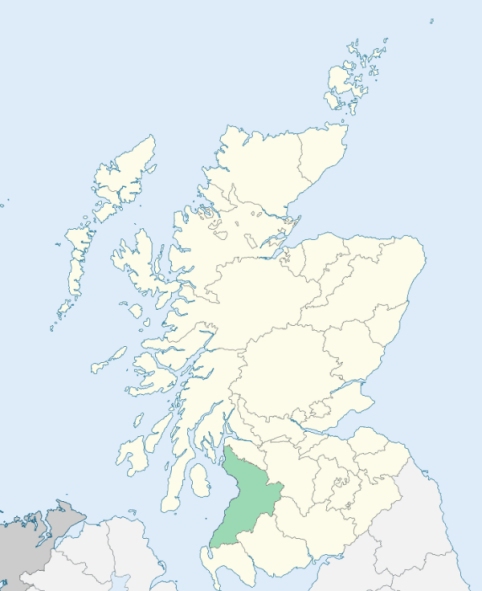
Kilwinning is a parish in the district of Cunningham, Ayrshire. It is bounded by Dalry, Beith, Dunlop, Stewarton, Irvine, Stevenston, and Ardrossan. (1867: The Imperial Gazetteer of Scotland, by John Marius Wilson).
Auchintibber, Bensley, Dalgarven, Doura, Eglinton, Fergushill, Kilwinning, Saltcoats
Eglinton, Montgreenan
PRE-REFORMATION GOVERNANCE:
POST-REFORMATION GOVERNANCE:
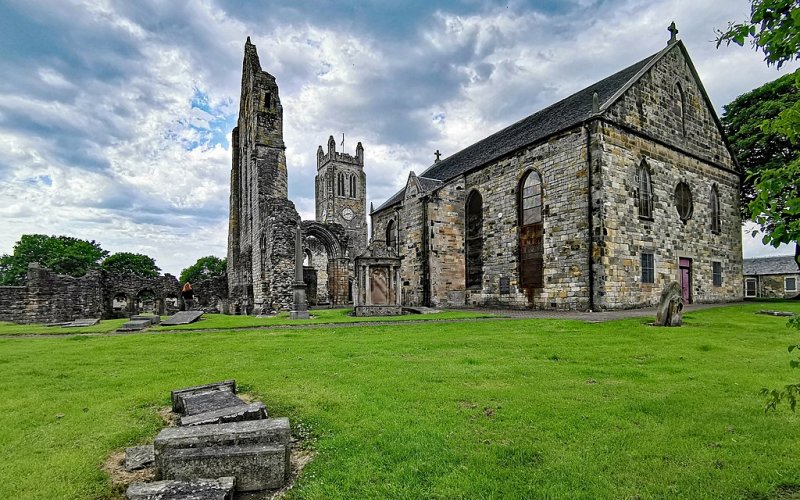
Kilwinning. The church of Kilwinning was dedicated to St Finan. It belonged to the Abbey of Kilwinning within the parish. There was long held here a tryst called St Finan's Fair; and a spring near the manse is still known as St Finan's Well. St Finan's Tyronesian Abbey of Kilwinning was founded in 1140 by Hugh de Morville, Lord Cunningham, and constable of Scotland. Part of the Abbey Church was in use as the Parish Church until 1775, when a separate church was built for parochial worship.
Dalgarven. The church of Dalgarven was dedicated to St Michael.
Disjoined Quoad Sacra Parishes:
Fergushill. A church was built here in 1880. The parish was disjoined from Kilwinning, Irvine, and Stewarton, 15 March 1886.
West Dalry. The parish was disjoined from the parishes of Dalry, Kilwinning, and Ardrossan on 30 October 1896.
Includes ministers, licentiates, assistants, readers, and clerks.
Kilwinning and Dalgarven (QO)
Fergushill (QS)
West Dalry (QS)
(1928: Fasti Ecclesiæ Scoticanæ, by Hew Scott, D. D.)
Parish registers turned over to the Registrar-General, as a result of the Registration of Births, Deaths, and Marriages (Scotland) Act of 1854. The letters B. D. and M. indicate Births (or Baptisms), Deaths (or Burials), and Marriages (or Proclamations of Banns) respectively. Numbers indicate separate volumes or books. Note: These records are by no means complete or without damage; consult the Detailed List of the Old Parochial Registers of Scotland (1872) to learn more about the condition of the records.
| OPR and RD Numbers | |||
|---|---|---|---|
| Date Range | Name | Number | Type |
| 1669-1854 | Kilwinning | 599 | OPR |
| 1855-1971 | Kilwinning | 599 | RD |
| 1972-2004 | Kilwinning | 671 | RD |
| 2005-2008 | Kilwinning, North Ayrshire | 671 | RD |
| 2009 | North Ayrshire, Kilwinning | 671 | RD |
| 2026 | North Ayrshire Council; Kilwinning Community Council | ||
(2009: Parishes and Registration Districts of Scotland - Old and New, National Records of Scotland)
Local community councils (2026) are provided as a potential source of additional information for settlements within the original boundaries of the parish. (Source)
Statistics from informal and official censuses
Brown, Ferguson, Gibson, Kerr, Muir, Reid, Robertson, Smith, Thomson, Wilson
Note: Names appearing in research materials, other than censuses. Simple names (First name, surname only) have been omitted unless they appear associated with large properties. All women's names, and men's names with occupations, military ranks, or peerage titles are included.
By the Reverend Mr Thomas Pollock.
"From a late enumeration there are, in the country part of the parish 1100, and in the town 1260. These are all of the establishment, except 222 Antiburgher Seceders, a few families of Burghers, and an equally small number of the Relief persuasion. There are no Espiscopalians nor Roman Catholics. Of the different artists, including their journeymen and apprentices there are 233 weavers, 24 tambourers, 7 seamstresses, 12 smiths, 6 shoemakers, 9 masons, 10 tailors, 3 coopers, 24 house carpenters, 4 mill-wrights, 2 wheel-wrights, 3 butchers, 2 bakers, 1 surgeon, 2 writers, 1 slater, 1 barber, 1 dyers, 2 tanners, 2 chandlers, 1 clockmaker, 13 keepers of public houses in the town, 11 shopkeepers, grocers, &c., 3 shipmasters, 11 seamen, 12 soldiers in the army, 2 carriers, 9 carters, and 37 day labourers.
There are three collieries in the parish, viz. Easter Dowra, where 12 to 16 colliers are employed; Laigh Fergus-hil, and Monk-greenan, where 4 to 6 men are here usually employed. The trade is now very trifling and inconsiderable, compared to what it was formerly.
The Earl of Eglintoune is proprietor of more than a third part of the lands of the parish. There are 8 other considerable proprietors; 4 of whom reside in it; and 60 small proprietors, called feuars, 15 of whom are non-residing. Within these 10 years there have been 16 new houses built, and 6 weavers' shops built. The number of farms is 132. There are two uninhabited houses.
It is to be observed, that, notwithstanding the very great rise of rents, and of servants wages, the farmers live much more comfortably, and make a more decent and respectable appearance, than they did 50 years ago. There is, however, a still greater, and more striking difference, in the dress and manner of living of the tradesmen, than of the farmers.
The people are, in general, very decent, sober, honest and industrious. Owing to the silk and muslin manufactures, several strangers, of late, have settled in the town. What effects these, in time, may have, on the morals of the people, cannot as yet be said. Though the only civil officer in the place be a constable, there are fewer riots committed, than in most places equally populous and extensive. It is now upwards of 22 years since the present incumbent was ordained, during which time no inhabitant of the parish has been banished, or suffered a capital punishment."
(This section contains excerpts, at times restructured or paraphrased, from an article appearing in Statistical Account of Scotland, Sir John Sinclair, 1791-1799)
Primary Sources:
Statistical Account of Scotland (1791-1799), Volume 11, p. 142
New Statistical Account of Scotland (1834-1845), Volume 5, Section I, p. 811
See Parish Page Sources for all source information and links.