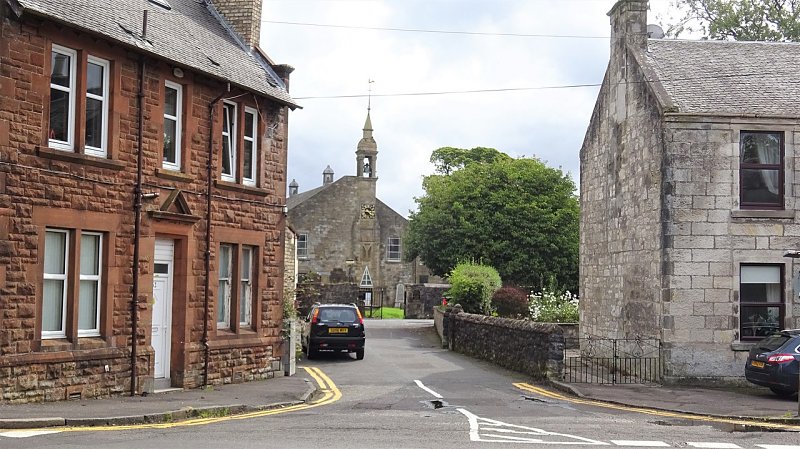
Stewarton and St Columba's Parish Church, East Ayrshire © 2020, Rosser1954
TABLE OF CONTENTS
LOCATION
Location Description:
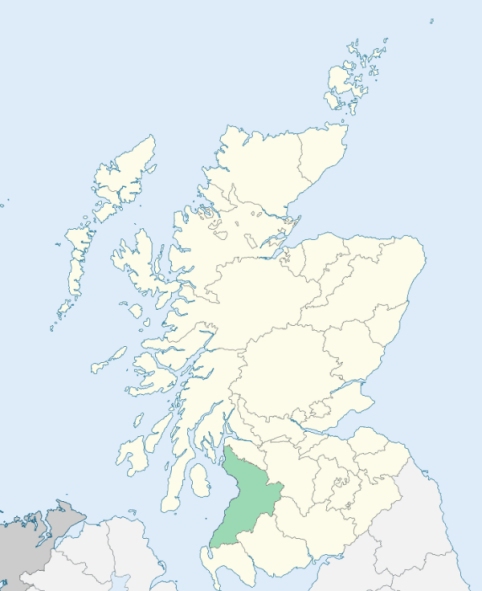
Stewarton is a parish, containing a post-town of its own name, in Cunningham, Ayrshire. It is bounded by Renfrewshire, and by the parishes of Fenwick, Kilmaurs, Dreghorn, Irvine, Kilwinning, and Dunlop. (1867: The Imperial Gazetteer of Scotland, by John Marius Wilson).
Shire, District, and Region Timeline:
- Shire: Ayrshire (Before 1707)
- County: Ayr (After 1707)
- District: Cunninghame (Before 1930)
- Landward District: Kilmarnock (1930-1975)
- Region: Strathclyde (1975-1996)
- Sub-Region: Ayr (1975-1996)
- District: Kilmarnock and Loudoun (1975-1996)
Burghs:
- Name: Stewarton
- Police Burgh (1868)
- Small Burgh (1929)
- Burgh system abolished (1975-1996)
Cities, Towns, Villages, and Hamlets:
Achenharvie, Bloak, Stewarton
Estates:
Corsehill, Kennox, Lainshaw, Lochridge, Robertland
PARISH TIMELINE
PRE-REFORMATION GOVERNANCE:
- Diocese: Glasgow
- Deanery: Kyle and Cunningham
POST-REFORMATION GOVERNANCE:
- Synod: Glasgow and Ayr
- Presbytery: Irvine
PAROCHIAL OVERVIEW:
The vicarage of Stewarton belonged to the Abbey of Kilwinning. At the Chapeltoun of Lainshaw in the parish there was a chapel of St Mary. The church of Stewarton was rebuilt in 1696.
Disjoined Quoad Sacra Parishes:
Fergushill. A church was built here in 1880. The parish was disjoined from Kilwinning, Irvine, and Stewarton, 15 March 1886.
North Church, Saltcoats. A church built here was constituted as a Gaelic chapel by Act of Assembly, 9 May 1837. From 1843 until 6 Aug 1872 the chapel appears to have been closed. The Presbytery then sanctioned that it should be reopened as an English charge. On 14 December 1906 it was disjoined from Ardrossan and Stewarton.
CHURCH OF SCOTLAND CLERGY:
Includes ministers, licentiates, assistants, readers, and clerks.
Stewarton (QO)
- James Lummisdaill (Lumsden), 1567
- Alexander Henderson, 1572
- William Montgomerie, 1574
- Robert Montgomerie, 1589
- William Castlelaw, 1607
- William Castlelaw (son of William, above), 1645
- Andrew Hucheson, 1647
- Alexander Ogilvie, 1664
- Andrew Laing (Lang), 1685
- Alexander Forbes, 1690
- James Arbuckle, 1699
- Robert Paisley, 1704
- John Montgomerie, 1713
- Thomas Maxwell, 1758
- James Douglas, 1793
- Charles Bannatyne Steven, 1825
- Neil Maxwell MacNaughton, 1860
- Alexander Kennedy, 1864
- James Cornwall Brown, 1879
- William Falconer Ogilvie, 1908
Fergushill (QS)
North Church, Saltcoats (QS)
- John Hamilton, 1838
- John Gould Smith, 1873
- Robert William Primrose, 1876
- John Clark, 1877
- Francis Halden, 1878
- John Robert Spottiswoode, 1899
(1928: Fasti Ecclesiæ Scoticanæ, by Hew Scott, D. D.)
RECORDS
Parochial Registers:
Parish registers turned over to the Registrar-General, as a result of the Registration of Births, Deaths, and Marriages (Scotland) Act of 1854. The letters B. D. and M. indicate Births (or Baptisms), Deaths (or Burials), and Marriages (or Proclamations of Banns) respectively. Numbers indicate separate volumes or books. Note: These records are by no means complete or without damage; consult the Detailed List of the Old Parochial Registers of Scotland (1872) to learn more about the condition of the records.
- (1) B. 1693-1755; M. 1693-1820
- (2) B. 1757-1820
- (3) B. 1755-1819; M. 1746-1802; D. 1754-56
- (4) B. and M. 1820-54
|
OPR and RD Numbers |
| Date Range | Name | Number | Type |
| 1693-1854 | Stewarton | 616 | OPR |
| 1855-1968 | Stewarton | 616 | RD |
| 2009 | East Ayrshire | 666 | RD |
| 2026 | East Ayrshire Council; Stewarton and District Community Council |
(2009: Parishes and Registration Districts of Scotland - Old and New, National Records of Scotland)
Local community councils (2026) are provided as a potential source of additional information for settlements within the original boundaries of the parish. (Source)
Population:
Statistics from informal and official censuses
- 1755: 2,819
- 1801: 2,657
- 1821: 3,049
- 1831: 4,503
- 1841: 4,656
- 1861: 4,449
- 1881: 4,326
- 1901: 3,958
- 1911: 3,889
RESIDENTS
Common Surnames:
Brown, Cunningham, Currie, Dunlop, Ferguson, Gillies, Kerr, Smith, Wilson, Young
Land-owners, teachers, and other professionals:
Note: Names appearing in research materials, other than censuses. Simple names (First name, surname only) have been omitted unless they appear associated with large properties. All women's names, and men's names with occupations, military ranks, or peerage titles are included.
- John ALEXANDER, of Meikle Corsehill
- Arthur ALISON, of Hairshaw
- (General) Sir James Stevenson BARNES, of North Kirkhill
- John BICKET, of Kirkford
- George BOYLE, Earl of Glasgow, of Crivochmill
- Andrew BROWN, Esq., of Gabrochhill
- Andrew BROWN, Esq., of Hillhouse
- John BROWN, of Blacklaw
- Robert BROWN, Esq., of Standalane
- Thomas BROWN, of Strandhead
- James S. BURNS, of Auchinharvie
- John CASKIE, of Bridgend
- John CASKIE, Esq., of Little Corsehill
- John CHEAPE, Esq., of Girgenti
- Agnes CREIGHTON, of Holm
- William CUNINGHAME, Esq., of Lainshaw
- Sir Alexander David Montgomery CUNINGHAME, Bart., of Corsehill
- John CUTHBERTSON, of Strandhead
- David DALZEL, of Merryhill
- James DALZEL, of Merryhill
- John DEANS, of Peacockbank
- Thomas DEANS, of Draffan
- John DICKIE, of Whitelee
- Robert DUNCAN, of Auchintiber
- Sir James DUNLOP, Bart., of Dunlop
- John DUNLOP, of Watermeetings
- Alexander FERGUSON, of Auchintiber
- John FERGUSON, of Auchintiber
- John FERGUSON, Esq., of Whitelee
- Andrew FOULDS, of Clerkland
- John FREELAND, Esq., of Corsehouse
- Andrew GEMMEL, of Rashelhouse
- James GILMOUR, of Clerkland
- John GILMOUR, of Bogside
- Alexander KERR, Esq., of Robertland
- John KERR, of Kirkford
- Isabel KING, of Cutstraw
- Margaret KING, of Cutstraw
- Alexander KNOX, of Meikle Cutstraw
- Lady Mary Montgomery LAMB, of Lochmill
- Robert LINDSAY, of Little Cutstraw
- Charles Somerville M'ALISTER, Esq., of Kennox
- Robert MACKIE, of Foggyhillock
- William MACKIE, of Meikle Corsehill
- James MILLER, of Gallowayford
- Robert MILLER, Esq., of Braehead
- Allan POLLOCK, of Blacklaw
- David PROVAN, Esq., of Lochridge
- Robert RAEBURN, of Kirkford
- Alexander REID, of Bollingshaw
- Mary REID, of Stacklawhill
- (Dr) John RITCHIE, of Castlesalt
- Charles SKEOCH, of Kirkford
- John SKEOCH, of Corsehill-mill
- Andrew STEVENSON, of Hairshaw
- John STEVENSON, of Hairshaw
- John STEVENSON, of Whitelee
- John STEWART, Esq., of Gabrochhill
- Robert STEWART, of Gabrochhill
- David WALKER, of Gateside
- Thomas WALLACE, of Wester Blacklaw
- James WILSOn, of Chapelton
- Alexander WYLIE, of North Auchintiber
- James WYLIE, of Gallowberry
- John WYLIE, of Mossdale
- James YOUNG, of Cutstraw
Other land-owners:
- BUCHANAN, of Fairlie Crivoch
- CARSWELL, of Meikle Corsehill
- CURRIE, of Lintbrae and Overhill
- DONALDSON, of Williamshaw
- FERGUSON, of Fullwood
- GLASGOW, of Montgreenan
- LOGAN, of Corsehillmill
- POLLOCK, of Barnahill
- SHERIFF, of Cutstraw
Other residents:
By the Reverend Mr Thomas Maxwell.
"There are belonging to the Church about 2300 souls. Besides, there are some Burghers and Antiburgher Seceders, and a few old Cameronians; but all these sects live in good harmony with the minister and people of the Established Church. The precise number of the whole cannot be exactly ascertained.
There is 1 surgeon and 1 writer in the town, also from 100 to 130 weavers; but the chief trade in this place, and has been, it is said, for above 100 years, is bonnet making, which employs a great number of hands.
The people are mostly of the usual size, and some considerably above it. They are in general a sober intelligent people, hospitable to strangers, and charitable to the poor."
(This section contains excerpts, at times restructured or paraphrased, from an article appearing in Statistical Account of Scotland, Sir John Sinclair, 1791-1799)
NOTES:
Primary Sources:
Statistical Account of Scotland (1791-1799), Volume 9, p. 377
New Statistical Account of Scotland (1834-1845), Volume 5, Section I, p. 727
See Parish Page Sources for all source information and links.