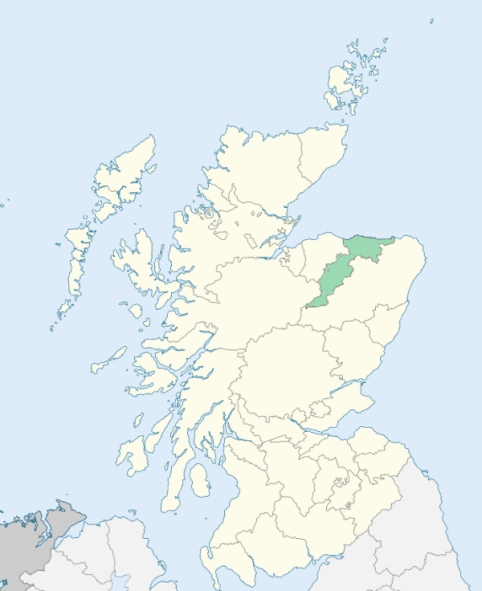
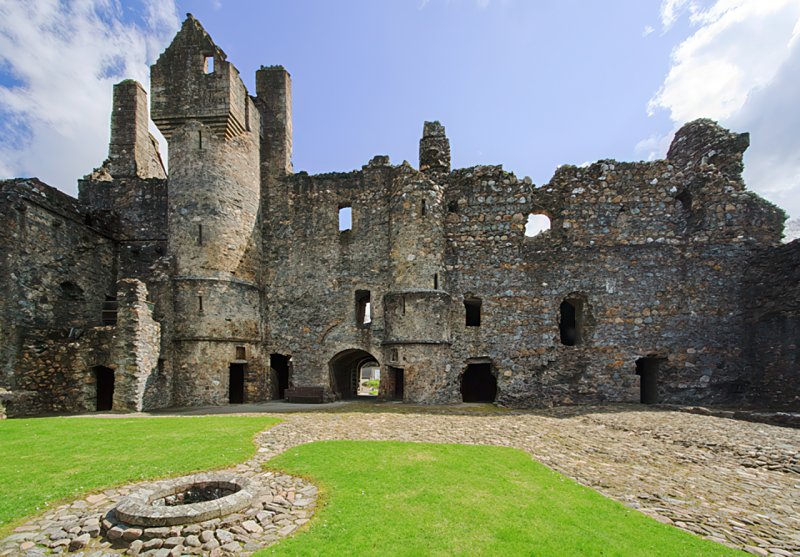
Mortlach is a parish in the Moray district of Banffshire. It is bounded by Boharm, Botriphnie, Glass, Cabrach, Inveraven, and Aberlour. (1867: The Imperial Gazetteer of Scotland, by John Marius Wilson).
Achnastank, Auchindoun, Balvenie, Dufftown, Haugh of Glass, Hazelwood, Keithock, Lettoch, Mortlach, Pitglassie, Priestwell, Smiddyhillock, Torbay, Tullochallum
PRE-REFORMATION GOVERNANCE:
POST-REFORMATION GOVERNANCE:
The church of Mortlach was dedicated to St Luag, who was patron also of an ancient Celtic monastery here. About the year 1000 St Bean was abbot of Mortlach. His name survives in the place, Balvanie (Bal-bheni-mor = The dwelling of Bean the Great). This parish was previously in the Presbytery of Fordyce and Synod of Aberdeen.
Disjoined Quoad Sacra Parishes:
Glenrinnes. Glenrinnes became a station under the Royal Bounty Committee in 1725. Disjoined from Mortlach and Aberlour and erected a parish quoad sacra 15 March 1865.
Includes ministers, licentiates, assistants, readers, and clerks.
Mortlach (QO)
Glenrinnes (QS)
(1928: Fasti Ecclesiæ Scoticanæ, by Hew Scott, D. D.)
Parish registers turned over to the Registrar-General, as a result of the Registration of Births, Deaths, and Marriages (Scotland) Act of 1854. The letters B. D. and M. indicate Births (or Baptisms), Deaths (or Burials), and Marriages (or Proclamations of Banns) respectively. Numbers indicate separate volumes or books. Note: These records are by no means complete or without damage; consult the Detailed List of the Old Parochial Registers of Scotland (1872) to learn more about the condition of the records.
| OPR and RD Numbers | |||
|---|---|---|---|
| Date Range | Name | Number | Type |
| 1741-1854 | Mortlach | 162 | OPR |
| 1855-1967 | Mortlach | 162 | RD |
| 2009 | Moray | 297 | RD |
| 2026 | Moray Council; Dufftown and District Community Council | ||
(2009: Parishes and Registration Districts of Scotland - Old and New, National Records of Scotland)
Local community councils (2026) are provided as a potential source of additional information for settlements within the original boundaries of the parish. (Source)
Statistics from informal and official censuses
Duncan, Gordon, Grant, Innes, Mitchell, Moir, Robertson, Smith, Stewart, Stuart
Note: Names appearing in research materials, other than censuses. Simple names (First name, surname only) have been omitted unless they appear associated with large properties. All women's names, and men's names with occupations, military ranks, or peerage titles are included.
By the Reverend Mr George Gordon, lately Minister there, and now one of the Ministers of Aberdeen.
"In 1792, when the population was exactly taken by the incumbent for this statistical account, the number was found to be 1918 - of whom 901 were males and 1017 females. These occupied 415 houses, for every family had its own separate dwelling, making between 4 and 5 at a medium in each, though very unequally divided, some as large as 18 or 20, including husband, wife, children, land servants, and some as small as one. Such solitary householders, however, and such numerous families were both but few.
Of the above 415 houses, farmers might be said to possess 176; and crofters, or cottagers, the remaining 239. The number of men servants is 135, and of women servants 102 or thereabout; all for the purpose of husbandry or the care of children. This number may seem small, but many of the farmers have their sons and daughters to assist them; and servants wages have risen to such a height, that they must do with as few as possible.
The handicraftsmen are 22 weavers, 11 masons, 10 shoemakers, 6 house carpenters, 5 smiths, 5 tailors, 4 coopers, 2 dyers, 2 slaters, 2 wheel-wrights, 1 plough and cart wright, and 1 harness maker. And they have almost all of them a few acres along with their houses. The number of apprentices is about 20. There are likewise 4 shopkeepers, 2 innkeepers, 3 distillers of whisky, 3 gardeners, 3 meal-millers, 1 lint-miller and 1 saw-miller.
The inhabitants may be said, on the whole, to be lively, active, and vigorous; though from the backwardness of the seasons for several years, and other difficulties in the way of their getting a comfortable subsistence, both the spirits and strength of the ordinary farmer and the labouring man are weaker and worse than they were, it must be owned, - and owned with particular regret; for such men, engaged with heart's ease in the healthful pursuit of agricultural employments, are the very nerves and permanent riches of a country."
(This section contains excerpts, at times restructured or paraphrased, from an article appearing in Statistical Account of Scotland, Sir John Sinclair, 1791-1799)
Primary Sources:
Statistical Account of Scotland (1791-1799), Volume 17, p. 413
New Statistical Account of Scotland (1834-1845), Volume 13, Section I, p. 103
See Parish Page Sources for all source information and links.