Eyton, Eitun
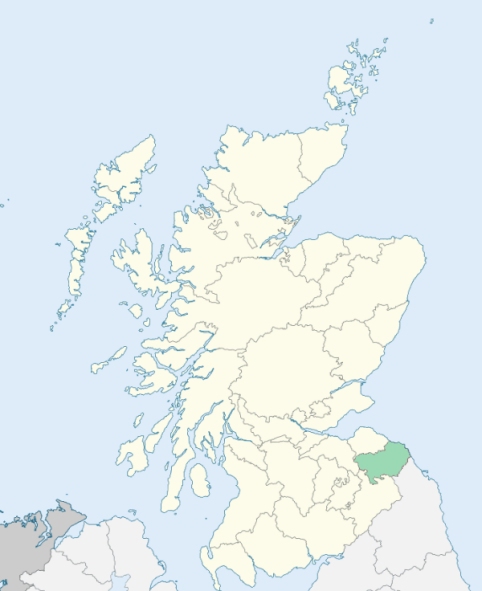
Ayton is a parish on the coast of Berwickshire. The parish is bounded by Coldingham and Eyemouth parishes on the north, by the German Ocean (North Sea) on the east, by Mordington and Foulden on the south, and by Chirnside and Coldingham on the west. (1867: The Imperial Gazetteer of Scotland, by John Marius Wilson).
Ayton, Burnmouth, Flemington, Whiterig
Gunsgreen
PRE-REFORMATION GOVERNANCE:
POST-REFORMATION GOVERNANCE:
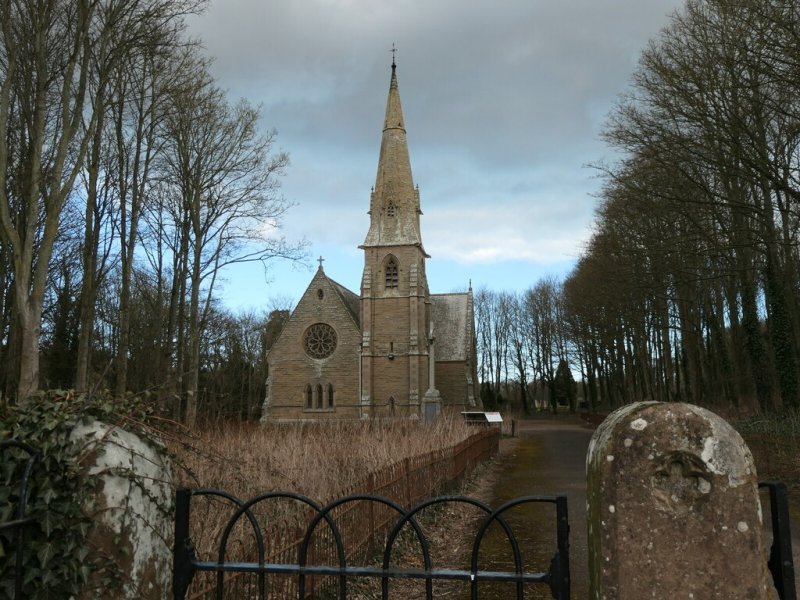
A church, dedicated to St Denys, existed here before the close of the twelfth century. Lamberton, united to Ayton in 1627, was annexed to Mordington in 1650. A church was built at Ayton in 1865, at the expense of Alexander Mitchell-Innes of Ayton.
Includes ministers, licentiates, assistants, readers, and clerks.
(1928: Fasti Ecclesiæ Scoticanæ, by Hew Scott, D. D.)
Parish registers turned over to the Registrar-General, as a result of the Registration of Births, Deaths, and Marriages (Scotland) Act of 1854. The letters B. D. and M. indicate Births (or Baptisms), Deaths (or Burials), and Marriages (or Proclamations of Banns) respectively. Numbers indicate separate volumes or books. Note: These records are by no means complete or without damage; consult the Detailed List of the Old Parochial Registers of Scotland (1872) to learn more about the condition of the records.
| OPR and RD Numbers | |||
|---|---|---|---|
| Date Range | Name | Number | Type |
| 1743-1854 | Ayton | 727 | OPR |
| 1855-1966 | Ayton | 727 | RD |
| 2009 | Scottish Borders, Eyemouth | 782 | RD |
| 2026 | Scottish Borders Council; Ayton Community Council | ||
(2009: Parishes and Registration Districts of Scotland - Old and New, National Records of Scotland)
Local community councils (2026) are provided as a potential source of additional information for settlements within the original boundaries of the parish. (Source)
Statistics from informal and official censuses
Aitchison, Anderson, Johnston, Kerr, Martin, Paterson, Purves, White, Wilson, Wood
Note: Names appearing in research materials, other than censuses. Simple names (First name, surname only) have been omitted unless they appear associated with large properties. All women's names, and men's names with occupations, military ranks, or peerage titles are included.
By the Reverend Mr George Home.
"In the present year, 1790, the number of souls amounts to 1245. The village contains 147 families; there are 202 males and 229 females, and 98 below 10 years of age. The country part of the parish contains 136 families, which consist of 263 males and 310 females, and 143 below 10 years of age.
A paper-mill was lately erected here at considerable expense. It employs about 70 or 80 work people. This manufacture gives employment to a number of young persons, who are taken in at eight years of age. There are four water-mills in this parish; one brewery, which does not carry on an extensive trade; a bleach-field, which was established many years ago; it employs about 7 or 8 hands. There are two white thread-makers in the parish.
Two persons belonging to this parish have been banished from Scotland since the incumbent was settled. He knows only of one person who has been guilty of suicide. There is no want of employment for the people. They seem contented with their situation and circumstances, and are not strangers to the comforts of life."
(This section contains excerpts, at times restructured or paraphrased, from an article appearing in Statistical Account of Scotland, Sir John Sinclair, 1791-1799)
Primary Sources:
Statistical Account of Scotland (1791-1799), Volume 1, p. 79
New Statistical Account of Scotland (1834-1845), Volume 2, Section III, p. 130
See Parish Page Sources for all source information and links.