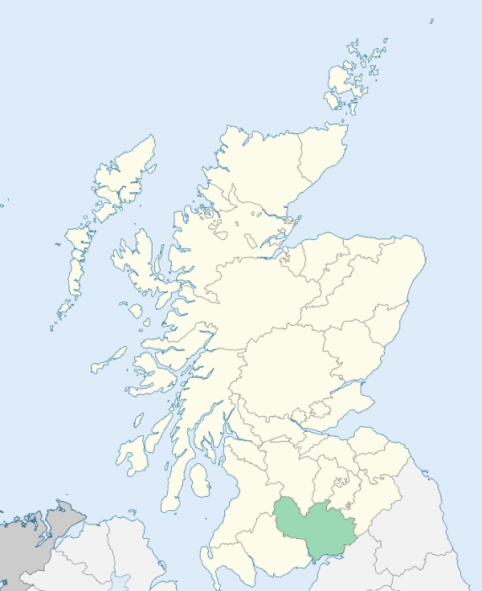
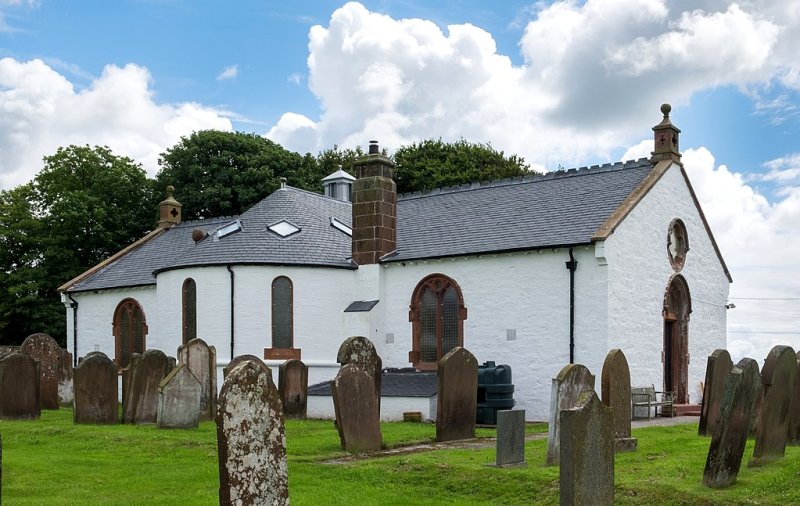
Ruthwell is a parish on the coast of Dumfriesshire. It is bounded by the Solway Firth, and by the parishes of Caerlaverock, Mouswald, Dalton, and Cummertrees. (1867: The Imperial Gazetteer of Scotland, by John Marius Wilson).
Brow, Clarencefield, Crossgills, Margaretsfield, Piehills, Ruthwell
PRE-REFORMATION GOVERNANCE:
POST-REFORMATION GOVERNANCE:
The church was dedicated to St Cuthbert. In it is preserved the fine ancient monument called the Ruthwell Cross. There was a chapel in the parish at Cumlongan. The Knights of St John had a preceptory at Kirkside.
Includes ministers, licentiates, assistants, readers, and clerks.
(1928: Fasti Ecclesiæ Scoticanæ, by Hew Scott, D. D.)
Parish registers turned over to the Registrar-General, as a result of the Registration of Births, Deaths, and Marriages (Scotland) Act of 1854. The letters B. D. and M. indicate Births (or Baptisms), Deaths (or Burials), and Marriages (or Proclamations of Banns) respectively. Numbers indicate separate volumes or books. Note: These records are by no means complete or without damage; consult the Detailed List of the Old Parochial Registers of Scotland (1872) to learn more about the condition of the records.
| OPR and RD Numbers | |||
|---|---|---|---|
| Date Range | Name | Number | Type |
| 1723-1854 | Ruthwell | 846 | OPR |
| 1855-1968 | Ruthwell | 846 | RD |
| 2009 | Dumfries and Galloway, Annan | 839 | RD |
| 2026 | Dumfries & Galloway Council; Ruthwell and Clarencefield Community Council | ||
(2009: Parishes and Registration Districts of Scotland - Old and New, National Records of Scotland)
Local community councils (2026) are provided as a potential source of additional information for settlements within the original boundaries of the parish. (Source)
Statistics from informal and official censuses
Boyd, Dunbar, Graham, Grierson, Jardine, Johnstone, Little, Murray, Phillips, Smith
Note: Names appearing in research materials, other than censuses. Simple names (First name, surname only) have been omitted unless they appear associated with large properties. All women's names, and men's names with occupations, military ranks, or peerage titles are included.
By the Reverend Mr John Craig.
"The number of souls is 1061, whereof 519 are males, and 542 females. The return to Dr Webster in 1755 was only 599 souls. None of the natives of this parish are Seceders from the Established Church; but two persons who lately settled here are Antiburghers.
No species of manufacture in the linen or woolen branches are carried on in this parish; but, in the summer season, the people upon the sea coast employ themselves in making a kind of coarse salt, which answers the common uses tolerably well. Limestone was accidentally discovered in the neighbourhood of Comlongan about 10 years ago, and a quarry opened. There are in the parish about 70 farmers, 3 blacksmiths, 6 joiners, 5 shoemakers, 2 cloggers, 12 weavers, 6 tailors, 1 tinker, and about 75 day labourers.
The temper of the people is benevolent and charitable. Living upon the shore, many of the young men betake themselves to a seafaring life; those who continue at home, are farmers or labourers, with a few artisans, and are tolerably industrious. The farms are in general small, and many of the farmers are besides jobbers or dealers in cattle, which they carry to the English market; they also breed and rear many swine, disposing of the hams in England or Edinburgh; thus trade is attended with considerable profits."
(This section contains excerpts, at times restructured or paraphrased, from an article appearing in Statistical Account of Scotland, Sir John Sinclair, 1791-1799)
Primary Sources:
Statistical Account of Scotland (1791-1799), Volume 10, p. 218
New Statistical Account of Scotland (1834-1845), Volume 4, Section I, p. 218
See Parish Page Sources for all source information and links.