Rafford and Altyre
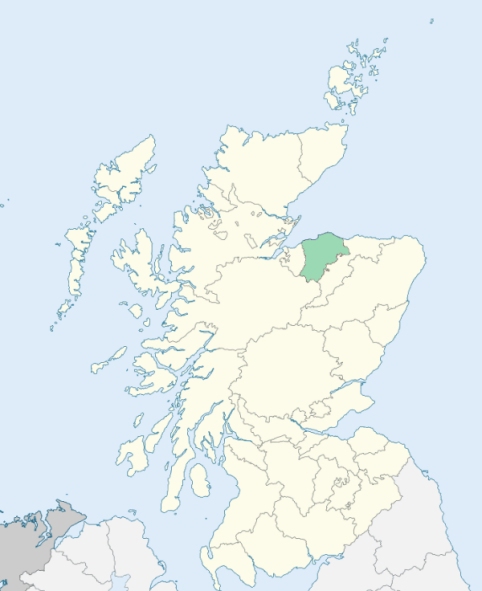
Rafford is a parish in the west of Morayshire. It is bounded by Forres, Kinloss, Alves, Elgin, Dallas, Edinkillie, and Dyke and Moy. (1867: The Imperial Gazetteer of Scotland, by John Marius Wilson).
Altyre, Ardclach, Blervie, Califer, Lower Rafford, Rafford, Shougle
Blervie, Burgie
PRE-REFORMATION GOVERNANCE:
POST-REFORMATION GOVERNANCE:
The parishes of Rafford and Altyre were united on 20 March 1661.
Rafford. The sub-chantor of Elgin Cathedral was prebendary of Rafford. There was a chapel in the parish at Ardclach. At St John's Mead stood a small monastic foundation.
Altyre. Altyre was annexed to Dallas before 1601. It was again disjoined from Dallas and annexed to Rafford 23 September 1657. This annexation was approved by the Synod 6 October 1657 and 3 October 1660, and ratified by Parliament on 20 March 1661.
(1928: Fasti Ecclesiæ Scoticanæ, by Hew Scott, D. D.)
Includes ministers, licentiates, assistants, readers, and clerks.
Rafford (QO)
Altyre (QO)
(1928: Fasti Ecclesiæ Scoticanæ, by Hew Scott, D. D.)
Parish registers turned over to the Registrar-General, as a result of the Registration of Births, Deaths, and Marriages (Scotland) Act of 1854. The letters B. D. and M. indicate Births (or Baptisms), Deaths (or Burials), and Marriages (or Proclamations of Banns) respectively. Numbers indicate separate volumes or books. Note: These records are by no means complete or without damage; consult the Detailed List of the Old Parochial Registers of Scotland (1872) to learn more about the condition of the records.
| OPR and RD Numbers | |||
|---|---|---|---|
| Date Range | Name | Number | Type |
| 1682-1854 | Rafford | 140 | OPR |
| 1855-1963 | Rafford | 140 | RD |
| 2009 | Moray, Forres | 281 | RD |
| 2026 | Moray Council; Finderne Community Council | ||
(2009: Parishes and Registration Districts of Scotland - Old and New, National Records of Scotland)
Local community councils (2026) are provided as a potential source of additional information for settlements within the original boundaries of the parish. (Source)
Statistics from informal and official censuses
Anderson, Cameron, Fraser, Grant, Laing, Miller, Murray, Ross, Smith, Stewart
Note: Names appearing in research materials, other than censuses. Simple names (First name, surname only) have been omitted unless they appear associated with large properties. All women's names, and men's names with occupations, military ranks, or peerage titles are included.
By the Reverend Mr William Stephen, Minister.
"From an accurate list taken in 1791, the number of parishioners did not exceed 1072; of these 488 were males, and 584 females; about 840 were found examinable, i.e. above 7 years old. The number of householders was exactly 238; of whom 136 were married, and had issue; 16 were married, and had no issue; 18 were widowers, 48 widows; the remaining 20 unmarried, and 5 of them bachelors.
Spinning flax is the great occupation of the females, most of which they raise at home, and make into sheeting, diaper, and sackcloth; for little of the native growth is fine enough for shirting. Many of the poorer class, too support themselves by spinning to yarn-merchants.
Of handicraftsmen, weavers are the most numerous class, amounting to 16 or 17, including journeymen and apprentices. There are 4 tailors; 3 blacksmiths; 3 millers; 5 joiners, and some of the farmers work in wood, and make their own ploughs, harrows, carts, and other implements of husbandry.
All the parishioners, (excepting two or three families, who belong to the Secession), profess the Established Religion, and are very punctual in their attendance at church. Viewed in this light, they appear, upon the whole, a sensible, decent, and serious people. On the other hand, as no earthly community is perfect, the most prevalent vices I have had occasion to remark in this, are falsehood, intemperance, sensuality, and petty thefts; these perhaps will be found most congenial to mild and temperate climates."
(This section contains excerpts, at times restructured or paraphrased, from an article appearing in Statistical Account of Scotland, Sir John Sinclair, 1791-1799)
Primary Sources:
Statistical Account of Scotland (1791-1799), Volume 16, p. 338
New Statistical Account of Scotland (1834-1845), Volume 13, Section II, p. 238
See Parish Page Sources for all source information and links.