Kingorn, Kinghorn Easter
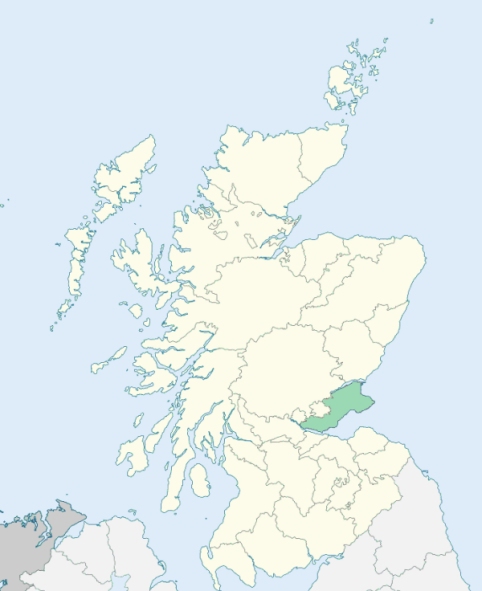
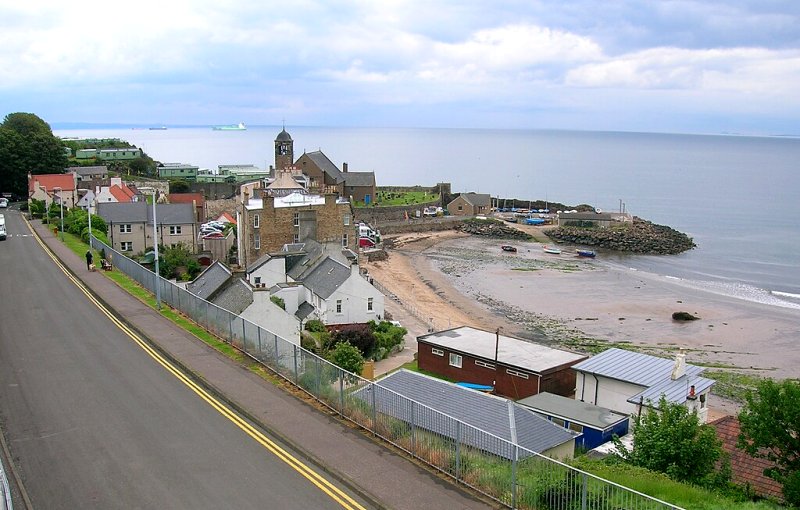
Kinghorn is a parish on the north coast of Fife. It is bounded by the Firth of Forth, and by the parishes of Burntisland, Aberdour, Auchtertool, and Abbotshall. (1867: The Imperial Gazetteer of Scotland, by John Marius Wilson).
Balmuto, Boglillie or Boglily, Boswell, Cragencat or Craigencalt, Glassmount, Grange, Grangehill, Inchkeith, Invertiel, Kilrie, Kinghorn, Lamberts Mill, Linhead, Longloch, Meadowfield, Pettycur, Pirniss, Pitkinnie, Rodanbraes, Rossness, Seafield, Tyrie, West Balbairdie
Balmuto, Glassmount, Kilrie
The parish of Aberdour had one detached part adjoining the north-east corner of the parish of Burntisland, and almost entirely surrounded by the parish of Kinghorn. This detached part was annexed to Kinghorn parish. See affected properties and landholders. (1892: Boundary of counties and parishes in Scotland as settled by the Boundary Commissioners under the Local Government Act, 1889, by Hay Shennan)
PRE-REFORMATION GOVERNANCE:
POST-REFORMATION GOVERNANCE:
The church of Kingorn (Ceann gorm = "the green headland") was dedicated to St Serf. It belonged to the Abbey of Dunfermline. There was within the bounds a chapel of St James. On the night of 19 March 1286, King Alexander III was killed by a fall from his horse near the seashore in this parish. A fair of St James was held at Kinghorn.
Disjoined Quoad Sacra Parishes:
Invertiel. There was of old at Invertiel a chapel of St Katherine. In 1836 a mission chapel was built here. The parish of Invertiel was disjoined from Kinghorn and Abbotshall, 19 July 1869.
(1928: Fasti Ecclesiæ Scoticanæ, by Hew Scott, D. D.)
Includes ministers, licentiates, assistants, readers, and clerks.
Kinghorn (QO)
Invertiel (QS)
(1928: Fasti Ecclesiæ Scoticanæ, by Hew Scott, D. D.)
Parish registers turned over to the Registrar-General, as a result of the Registration of Births, Deaths, and Marriages (Scotland) Act of 1854. The letters B. D. and M. indicate Births (or Baptisms), Deaths (or Burials), and Marriages (or Proclamations of Banns) respectively. Numbers indicate separate volumes or books. Note: These records are by no means complete or without damage; consult the Detailed List of the Old Parochial Registers of Scotland (1872) to learn more about the condition of the records.
| OPR and RD Numbers | |||
|---|---|---|---|
| Date Range | Name | Number | Type |
| 1576-1854 | Kinghorn | 349 | OPR |
| 1855-1967 | Kinghorn | 349 | RD |
| 2009 | Fife, Kirkcaldy | 421 | RD |
| 2026 | Fife Council; Royal Burgh of Kinghorn Community Council | ||
(2009: Parishes and Registration Districts of Scotland - Old and New, National Records of Scotland)
Local community councils (2026) are provided as a potential source of additional information for settlements within the original boundaries of the parish. (Source)
Statistics from informal and official censuses
Anderson, Brown, Dewar, Downie, Fisher, Henderson, Morrison, Robertson, Thomson, Williamson
Note: Names appearing in research materials, other than censuses. Simple names (First name, surname only) have been omitted unless they appear associated with large properties. All women's names, and men's names with occupations, military ranks, or peerage titles are included.
By the Reverend Mr John Usher.
"The number of souls in this parish now amounts to no more than 1768, including persons of every age and denomination. Of the present inhabitants of this parish there are 1118 that reside in the town, and 650 that dwell in the country, and in a village called Bridgetown, about 2 miles NE from Kinghorn. Of these, there are 127 that adhere to the Established Church, the remaining 531 are Seceders of different denominations, but mostly Burghers. Of the whole body of the people, both in the town and country, there are 501 under 10 years of age. The inhabitants of the town, and of the village called Bridgetown, are mostly sailors, weavers, tradesmen, innkeepers, and horse-hirers; those of the country, farmers, their children and servants, who are employed in agriculture.
Within these few years, a manufacture has sprung up in the town of Kinghorn, for the teasing, and rolling, and spinning of cotton and flax. There are 4 mills for the purposes above mentioned. The number of hands which these mills employ must amount to some hundreds. Young women, who before were not able to earn by the needle, or by the knitting of stockings, or by the spinning of flax can now easily earn between 5s and 7s 6d in a week. Little girls, between 8 and 12 years of age, who before were a burden to their fathers and mothers, by engaging at these works, are not only able to support themselves, but to assist their aged and indigent parents. The boys, who before thought of nothing but the sea, or of running about idle, or which was little better, of running about the country at the horse's heels, as horse-hirers servants, have now generally turned their attention to the loom, and bind themselves as apprentices to the weaver."
(This section contains excerpts, at times restructured or paraphrased, from an article appearing in Statistical Account of Scotland, Sir John Sinclair, 1791-1799)
Primary Sources:
Statistical Account of Scotland (1791-1799), Volume 12, p. 229
New Statistical Account of Scotland (1834-1845), Volume 9, Section I, p. 800
See Parish Page Sources for all source information and links.