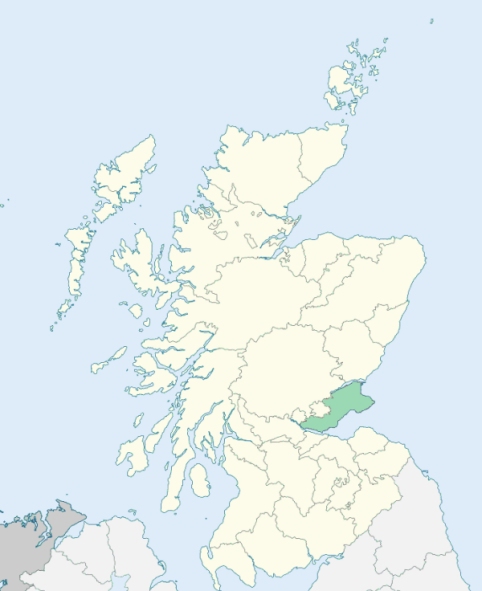
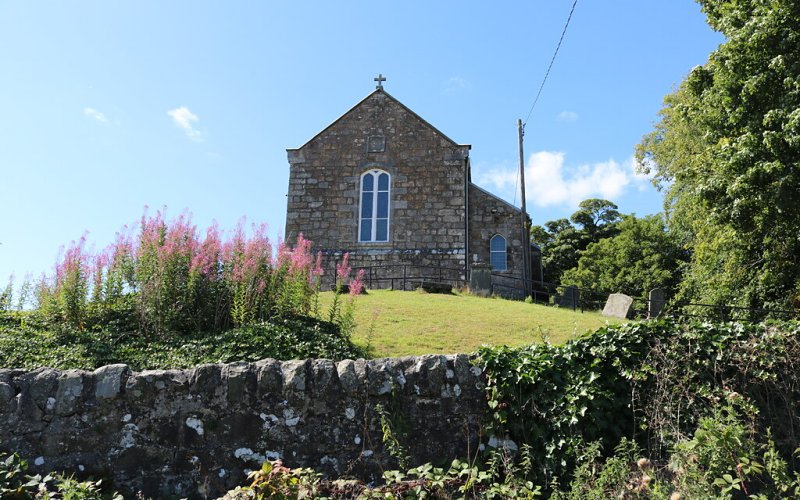
Auchtertool is a parish in the south-western part of Fife. It is bounded by the parishes of Ballingry, Auchterderrran, Abbotshall, Kinghorn, Aberdour, Dalgety, and Beath. (1867: The Imperial Gazetteer of Scotland, by John Marius Wilson).
Auchtertool, Camilla, Craigton, East Clentry, Easter Lochhead, Hallyards, Kirkton, Newbiggin, Newton, Pilkhambrae, Thistleford, Walton, West Lochhead
PRE-REFORMATION GOVERNANCE:
POST-REFORMATION GOVERNANCE:
The church of Auchtertool belonged to the abbey of Inchcolm.
Disjoined Quoad Sacra Parishes:
Cowdenbeath. A Mission was begun here in 1894, and in 1896 a church was built, and a chapel-of-ease constitution was obtained. On 9 July 1915 the parish of Cowdenbeath was disjoined from Beath and Auchtertool.
(1928: Fasti Ecclesiæ Scoticanæ, by Hew Scott, D. D.)
Includes ministers, licentiates, assistants, readers, and clerks.
Auchtertool (QO)
Cowdenbeath (QS)
(1928: Fasti Ecclesiæ Scoticanæ, by Hew Scott, D. D.)
Parish registers turned over to the Registrar-General, as a result of the Registration of Births, Deaths, and Marriages (Scotland) Act of 1854. The letters B. D. and M. indicate Births (or Baptisms), Deaths (or Burials), and Marriages (or Proclamations of Banns) respectively. Numbers indicate separate volumes or books. Note: These records are by no means complete or without damage; consult the Detailed List of the Old Parochial Registers of Scotland (1872) to learn more about the condition of the records.
| OPR and RD Numbers | |||
|---|---|---|---|
| Date Range | Name | Number | Type |
| 1708-1854 | Auchtertool | 407 | OPR |
| 1855-1967 | Auchtertool | 407 | RD |
| 2009 | Fife, Cowdenbeath | 430 | RD |
| 2026 | Fife Council; Auchtertool Community Council | ||
(2009: Parishes and Registration Districts of Scotland - Old and New, National Records of Scotland)
Local community councils (2026) are provided as a potential source of additional information for settlements within the original boundaries of the parish. (Source)
Statistics from informal and official censuses
Anderson, Brown, Cook, Moyes, Paterson, Pollock, Scott, Whyte, Wilson, Wright
Note: Names appearing in research materials, other than censuses. Simple names (First name, surname only) have been omitted unless they appear associated with large properties. All women's names, and men's names with occupations, military ranks, or peerage titles are included.
By the Reverend Mr John Scott.
"The population at present is 334, of whom 148 are males, and 186 are females. In the village are 213; in the country are 103. There are 9 farmers with an average of 9 in their families. The number of male servants, including cotters, is 31; the number of female servants is 14. There are 8 day labourers, 2 wrights, 1 smith, 1 shoemaker, 2 tailors, 1 miller, 1 brewer, 2 innkeepers, 1 baker, and 17 weavers. There are 80 inhabited houses in the parish; the average number of persons in each house is 4. Here, all are of the Established Church.
There have been only 3 families, during these 30 years, who have emigrated to North America. Some young men and women, go yearly to serve in the Low Country, merely in expectation of higher wages, though they generally return within a year or two. A considerable number, particularly of the cotter class, go to the harvest; some as far as the Lothians.
The language commonly spoken is the Gaelic, which is the native tongue, though the English is generally a little understood even by the common people, and spoken by many.
No manufacturers, properly so called, are carried on: There may be some spinning and knitting, in the intervals of labour by broken weather, and in the winter nights; and also dressing small parcels of lint, by the common people; but these are principally for use of their families. There are no other manufactures, except a whisky distillery."
(This section contains excerpts, at times restructured or paraphrased, from an article appearing in Statistical Account of Scotland, Sir John Sinclair, 1791-1799)
Primary Sources:
Statistical Account of Scotland (1791-1799), Volume 8, p. 110
New Statistical Account of Scotland (1834-1845), Volume 9, Section I, p. 249
See Parish Page Sources for all source information and links.