Tranent and Seton
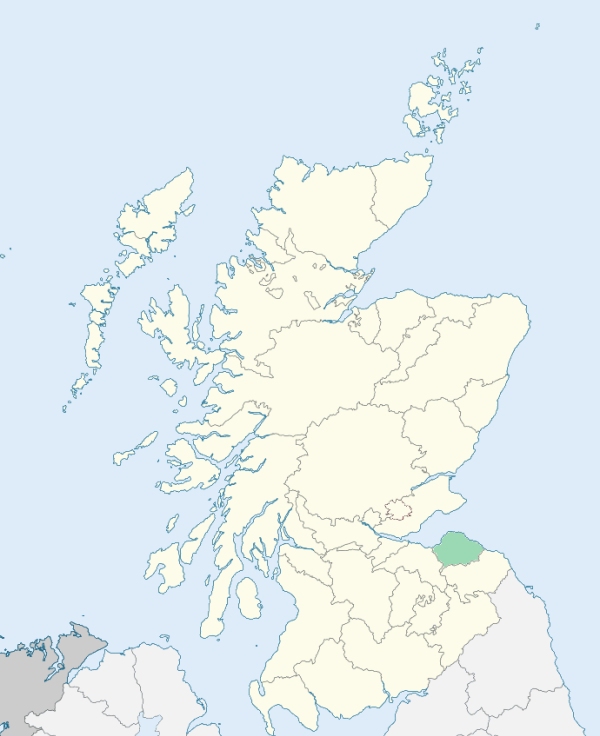
Tranent is a parish on the north-west border of Haddingtonshire. It is bounded by Edinburghshire, Prestonpans, the Firth of Forth, Gladsmuir, Pencaitland, and Ormiston. (1867: The Imperial Gazetteer of Scotland, by John Marius Wilson).
Cockenzie, Elphinstone, Meadowmill, Port Seaton or Portseaton, Tranent
PRE-REFORMATION GOVERNANCE:
POST-REFORMATION GOVERNANCE:
Tranent. Previous to the Reformation the church of Tranent belonged to the Abbey of Holyroodhouse.
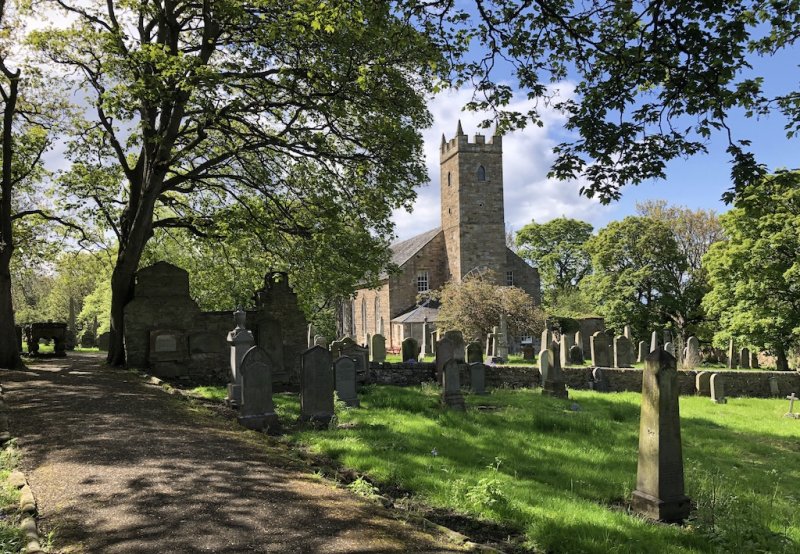
Seton. Seton Church, dedicated to the Holy Rood, and erected in the thirteenth century, was made collegiate by George, Lord, Seton, 20 June 1493. The chapel is now used as a mausoleum for the Wemyss family. Seton was united to Tranent after 1580.
Disjoined Quoad Sacra Parishes:
Cockenzie. Disjoined from Tranent and declared a parish quoad sacra, 28 May 1838.
Includes ministers, licentiates, assistants, readers, and clerks.
Tranent (QO)
Cockenzie (QS)
(1928: Fasti Ecclesiæ Scoticanæ, by Hew Scott, D. D.)
Parish registers turned over to the Registrar-General, as a result of the Registration of Births, Deaths, and Marriages (Scotland) Act of 1854. The letters B. D. and M. indicate Births (or Baptisms), Deaths (or Burials), and Marriages (or Proclamations of Banns) respectively. Numbers indicate separate volumes or books. Note: These records are by no means complete or without damage; consult the Detailed List of the Old Parochial Registers of Scotland (1872) to learn more about the condition of the records.
| OPR and RD Numbers | |||
|---|---|---|---|
| Date Range | Name | Number | Type |
| 1611-1854 | Tranent | 722 | OPR |
| 1855-1971 | Tranent | 722 | RD |
| 1972-2003 | Tranent | 723 | RD |
| 2004-2006 | Tranent, East Lothian | 723 | RD |
| 2007-2009 | East Lothian, Tranent | 723 | RD |
| 2026 | East Lothian Council; Tranent and Elphinstone Community Council Cockenzie and Port Seton Community Council | ||
(2009: Parishes and Registration Districts of Scotland - Old and New, National Records of Scotland)
Local community councils (2026) are provided as a potential source of additional information for settlements within the original boundaries of the parish. (Source)
Statistics from informal and official censuses
Brown, Dickson, Donaldson, Hogg, Johnston, Marshall, Scott, Smith, Thomson, Wilson
Note: Names appearing in research materials, other than censuses. Simple names (First name, surname only) have been omitted unless they appear associated with large properties. All women's names, and men's names with occupations, military ranks, or peerage titles are included.
By the Reverend Mr Hugh Cunynghame.
"The number of souls in the whole parish in 1791 is 2732, of whom about 500 are under 8 years of age. In Tranent there are 1380; in Cockenzie and Port Seton, 430; in Seton, 86; in Relief and Meadow Mill, 115; in Elphingstone, 206; in Wester Falside, 145; in St Clements Wells, 74; in the rest of the parish, 296. There are 110 Burgher Seceders, 8 Antiburgher Seceders, 1 Relief Seceder, and 10 Episcopalians.
There are 2 surgeons, 12 shopkeepers, 25 wrights, 15 masons, 40 weavers, 62 shoemakers, 12 tailors, 2 coopers, 4 tanners, 12 bakers, 4 brewers, 7 butchers, 13 smiths, 1 wheel-wright, 2 barbers, 3 stocking-weavers, 2 slaters, 1 saddlers, 22 salt-makers, 50 fishermen, and 30 licensed alehouses.
There are 4 threshing-mills in the parish. The most considerable distillery now in Scotland is carried on at St Clements Wells, in this parish. In the feeding of cattle, distilling, and working of coal, about 120 hands are employed. There is here also a considerable tannery, and a small manufacture of locks and nails. A good many looms are employed in the parish, but chiefly for private use, though a few do what is called factory work. One only weaves muslin. There are collieries in Tranent, Elphinston, and Birsley."
(This section contains excerpts, at times restructured or paraphrased, from an article appearing in Statistical Account of Scotland, Sir John Sinclair, 1791-1799)
Primary Sources:
Statistical Account of Scotland (1791-1799), Volume 10, p. 83
New Statistical Account of Scotland (1834-1845), Volume 2, Section II, p. 282
See Parish Page Sources for all source information and links.