Lundichity (Dunlichity)
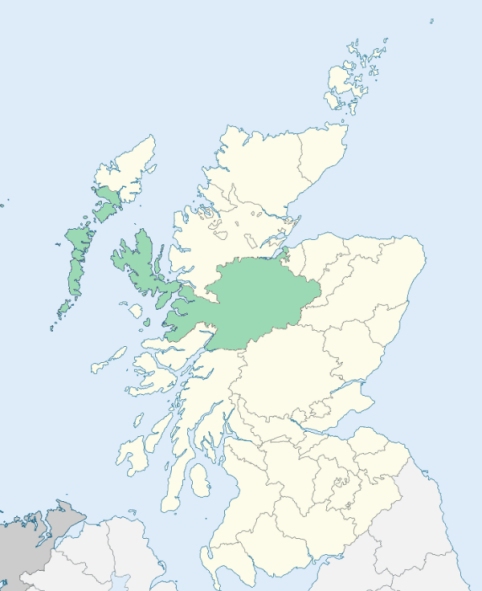
Daviot and Dunlichity is a united parish, partly in Nairnshire, but chiefly in Inverness-shire. It extends on both sides of the river Nairn, and lies nearly due east and west. It is bounded on the north by Croy, on the east by Moy, on the south by Kingussie, and on the west by Dores. (1867: The Imperial Gazetteer of Scotland, by John Marius Wilson).
Aberarder, Craggie, Croachy, Culloden, Daviot, Dunlichity, Easter Aberchalder, Tullich, Wester Aberchalder
Aberehalder, Brin, Culloden, Dunmaglass, Farr, Flichity
The parish of Daviot & Dunlichity was situated partly in the county of Inverness and partly in the county of Nairn. The part in the latter county consisted of two portions, one being a detached part of Nairnshire, and the other being part of the main portion of the county of Nairn. Both portions have been transferred to Inverness-shire. See affected properties and landholders. (1892: Boundary of counties and parishes in Scotland as settled by the Boundary Commissioners under the Local Government Act, 1889, by Hay Shennan)
PRE-REFORMATION GOVERNANCE:
POST-REFORMATION GOVERNANCE:
The parishes of Daviot and Dunlichity were united in 1618. Each of them has its own church.
Daviot. The church of Daviot belonged to the Priory of Pluscarden. It was a mensal kirk of the Bishop of Moray.
Dunlichity, or Lundichity. The church of the vicarage of Lundichity was dedicated to St Finan.
Includes ministers, licentiates, assistants, readers, and clerks.
Daviot and Dunlichity (QO)
Dunlichity (QO)
(1928: Fasti Ecclesiæ Scoticanæ, by Hew Scott, D. D.)
Parish registers turned over to the Registrar-General, as a result of the Registration of Births, Deaths, and Marriages (Scotland) Act of 1854. The letters B. D. and M. indicate Births (or Baptisms), Deaths (or Burials), and Marriages (or Proclamations of Banns) respectively. Numbers indicate separate volumes or books. Note: These records are by no means complete or without damage; consult the Detailed List of the Old Parochial Registers of Scotland (1872) to learn more about the condition of the records.
| OPR and RD Numbers | |||
|---|---|---|---|
| Date Range | Name | Number | Type |
| 1774-1854 | Daviot and Dunlichity | 95 | OPR |
| 1855-1952 | Daviot and Dunlichity | 95 | RD |
| 2009 | Highland, Inverness | 240 | RD |
| 2026 | Highland Council; Strathnairn Community Council | ||
(2009: Parishes and Registration Districts of Scotland - Old and New, National Records of Scotland)
Local community councils (2026) are provided as a potential source of additional information for settlements within the original boundaries of the parish. (Source)
Statistics from informal and official censuses
Cameron, Campbell, Forbes, Fraser, MacBean, MacDonald, MacKintosh, Rose, Shaw, Smith
Note: Names appearing in research materials, other than censuses. Simple names (First name, surname only) have been omitted unless they appear associated with large properties. All women's names, and men's names with occupations, military ranks, or peerage titles are included.
By the Reverend Mr Alexander Gordon.
"By a survey of these united parishes, taken 2 years ago, they contain 400 families, including tradesmen and labourers who are married; and the whole number of persons was then 1697. Our young men, how soon they are fit for labour, go to the south country, or elsewhere, for employment, where they remain some part of the spring, together with all the summer and harvest. The people, though not robust, are very healthy; and many of both sexes attain to the age of 80 years and upwards. There are, in these parishes, 20 persons now living at and about that age.
As to the general character of our people, they cannot be commended for industry. The small returns for manual labour, may perhaps be the reason, since none, by the greatest exertions of this kind, can make rich. They are however frugal, and have a sense of honour and shame, in a high degree for their station; and remarkable for that acuteness of judgment which has been peculiarly attributed to Highlanders. In their morals, they are not sufficiently strict in abstaining from the smaller breaches of duty; but felony, or any great crime, has not been committed among them for many generations. In their profession of religion, they are devout and regular, a little incined to lay too much stress upon certain local forms and customs not legally imposed, but which, it does not appear, has any bad effect on their morals."
(This section contains excerpts, at times restructured or paraphrased, from an article appearing in Statistical Account of Scotland, Sir John Sinclair, 1791-1799)
Primary Sources:
Statistical Account of Scotland (1791-1799), Volume 14, p. 67
New Statistical Account of Scotland (1834-1845), Volume 14, Section I, p. 513
See Parish Page Sources for all source information and links.