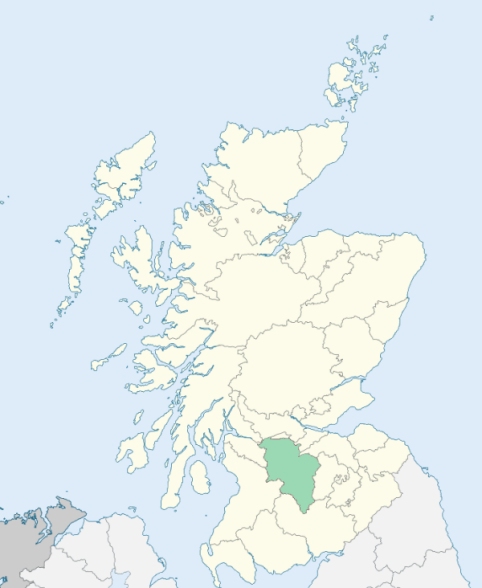
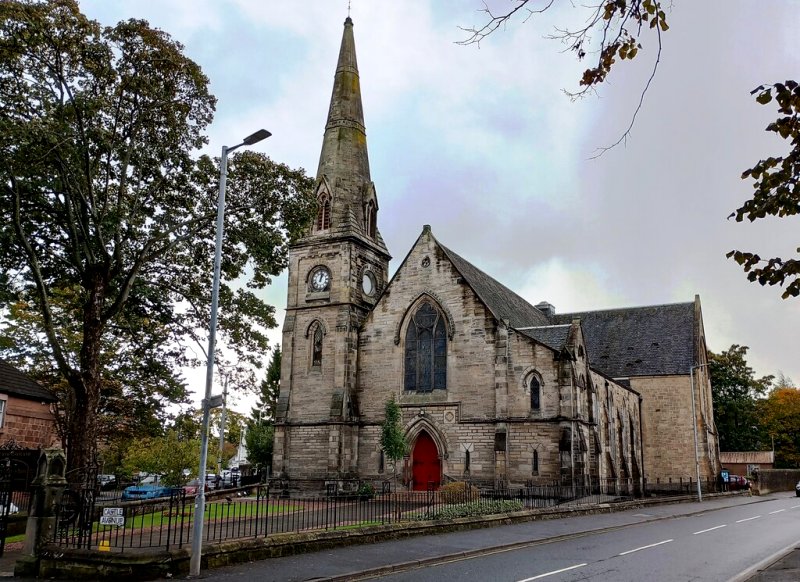
Bothwell is a parish in the middle ward of Lanarkshire. It is bounded by the parishes of Old Monkland, New Monkland, Shotts, Dalziel, Hamilton, and Blantyre. (1867: The Imperial Gazetteer of Scotland, by John Marius Wilson).
Bothwell, Bellshill, Cairnbroe or Carnboe, Carfin, Chapelhall, Cleland, Clydesdale, Gardnerside, Holytown, Lachop, Langside, Legbranock, Motherwell, Muirhead, Nackerton, New Stevenston, Newarthill, Newhouse, Orbiston, Stevenston, Uddingstone, Woodhall
Carnbroe, Douglas Park, Jerviston
PRE-REFORMATION GOVERNANCE:
POST-REFORMATION GOVERNANCE:
The church of Bothwell was dedicated to St Bride. on 10 October 1398 it was constituted and endowed as a collegiate church by Archibald the Grim, Earl of Douglas. There were two chapels in the parish, St Katherine's at Osbernstoun, now called Orbiston, and St Lasrach's at Lachop. There are now mission chapels within the bounds at Thornwood and the Palace Colliery.
Disjoined Quoad Sacra Parishes:
Bellshill. The parish of Bellshill was disjoined from Bothwell, 18 March 1878.
Cleland. A church was built here in 1877. The parish of Cleland was disjoined from Shotts and Bothwell, 11 December 1882.
Holytown. A church was built here in 1837. The parish of Holytown was disjoined from Bothwell, 15 July 1863.
Uddingston. The parish of Uddingston was disjoined from Bothwell, 7 December 1874.
Includes ministers, licentiates, assistants, readers, and clerks.
Bothwell (QO)
Bellshill (QS)
Cleland (QS)
Holytown (QS)
Uddingston (QS)
(1928: Fasti Ecclesiæ Scoticanæ, by Hew Scott, D. D.)
Parish registers turned over to the Registrar-General, as a result of the Registration of Births, Deaths, and Marriages (Scotland) Act of 1854. The letters B. D. and M. indicate Births (or Baptisms), Deaths (or Burials), and Marriages (or Proclamations of Banns) respectively. Numbers indicate separate volumes or books. Note: These records are by no means complete or without damage; consult the Detailed List of the Old Parochial Registers of Scotland (1872) to learn more about the condition of the records.
| OPR and RD Numbers | |||
|---|---|---|---|
| Date Range | Name | Number | Type |
| 1671-1854 | Bothwell | 625 | OPR |
| 1855-1963 | Bothwell | 625-1 | RD |
| 1855-1963 | Holytown | 625-2 | RD |
| 1855-1963 | Bellshill | 625-3 | RD |
| 1964-1969 | Bothwell | 625 | RD |
| 1970-1971 | Bellshill | 625 | RD |
| 1972-2006 | Bellshill | 566 | RD |
| 2007-2008 | Bellshill, North Lanarkshire | 566 | RD |
| 2009 | North Lanarkshire; Bellshill | 566 | RD |
| 2026 | (Bothwell) South Lanarkshire Council; Bothwell Community Council Uddingston Community Council | ||
| 2026 | (Bellshill) North Lanarkshire Council; Bellshill Community Council | ||
| 2026 | (Holytown) North Lanarkshire Council; Holytown Community Council | ||
(2009: Parishes and Registration Districts of Scotland - Old and New, National Records of Scotland)
Local community councils (2026) are provided as a potential source of additional information for settlements within the original boundaries of the parish. (Source)
Statistics from informal and official censuses
Anderson, Brown, Clark, Hamilton, Paterson, Russell, Smith, Thomson, Watson, Wilson
Note: Names appearing in research materials, other than censuses. Simple names (First name, surname only) have been omitted unless they appear associated with large properties. All women's names, and men's names with occupations, military ranks, or peerage titles are included.
By the Reverend Mr Michael MacCulloch, Minister.
"The population of the parish is 1337 males, 1370 females, total 2707. There are 4 bakers, 14 shopkeepers, 21 stocking-weavers, 50 colliers, 41 masons, 113 weavers, 19 joiners, 19 blacksmiths, 14 tailors, 22 shoemakers, 6 millers, 6 coopers, and 20 innkeepers. The weavers are chiefly supplied with business from the manufactures in Glasgow. There are six corn mills, two lint mills, and one bleachfield.
The language spoken here is English, with the Scotch dialect. Like their neighbours, within these 20 years, they are much improved in their dress. The women wear a black silk cloak and hat; the men appear in English cloth and a hat. Their appearance in public and at church is decent and elegant; but this taste for shew and finery, is at once the cause of their demand of high wages, and why so little more of their earning is allowed to accumulate than formerly, when they had scarcely more than the half of their present allowance.
In general, the farmers are an industrious, sober, and virtuous people; regular in their attendance upon public worship; just, charitable, and humane; constantly engaged in the culture of their fields, they are happily removed from the arts of circumvention to acquire wealth; of those of dissipation to obtain licentious pleasure.
The first day of the new year is their only holiday, which they spend in friendly visits and mutual congratulations. Curling is their chief amusement in winter. Their weddings are celebrated with a decent cheerfulness. After partaking of a plentiful entertainment, the evening is spent in festive mirth, and the social dance."
(This section contains excerpts, at times restructured or paraphrased, from an article appearing in Statistical Account of Scotland, Sir John Sinclair, 1791-1799)
Primary Sources:
Statistical Account of Scotland (1791-1799), Volume 16, p. 299
New Statistical Account of Scotland (1834-1845), Volume 6, p. 765
See Parish Page Sources for all source information and links.