Cadyow
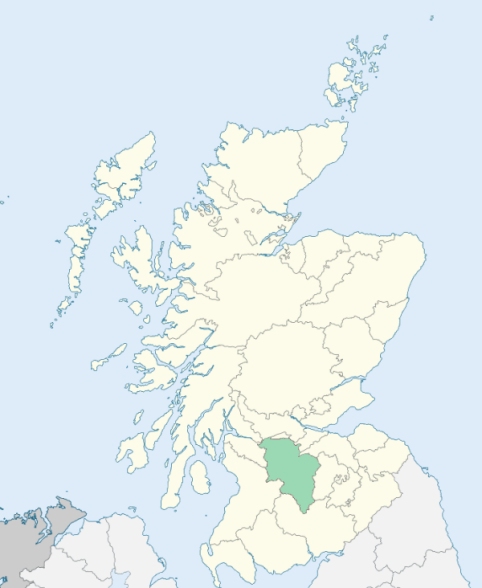
Hamilton is a parish in the middle ward of Lanarkshire. It is bounded by Bothwell, Dalziel, Cambusnethan, Dalserf, Stonehouse, Glassford, and Blantyre. (1867: The Imperial Gazetteer of Scotland, by John Marius Wilson).
Allanton, Cadzoe, Dalserf, Darngaber, Eddlewood, Ferniegair or Fernigair, Greenfield, Hamilton, Larkhall, Low Waters, Meikle Earnock, Motherwell, Plotcock, Quarter, Quarter Ironworks, Townhead
Earnock, Fairholm, Neilsland House, Ross, Udston
PRE-REFORMATION GOVERNANCE:
POST-REFORMATION GOVERNANCE:
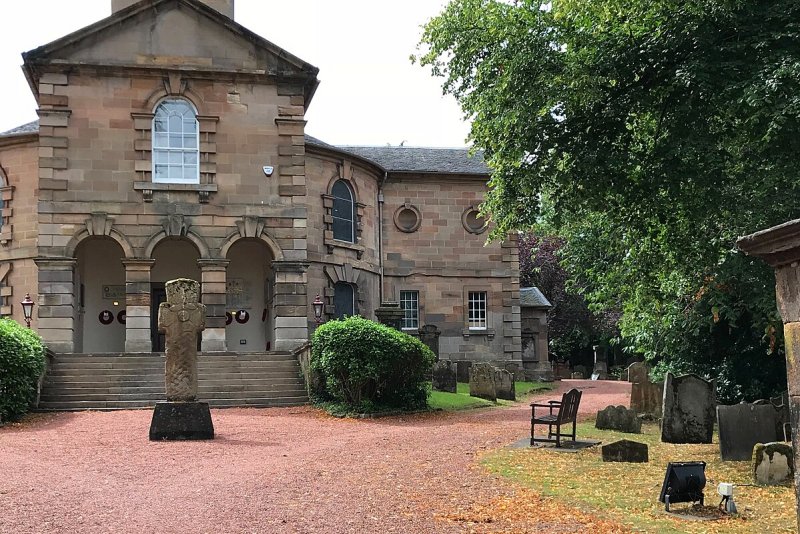
The rectory of Cadyow was a prebend belonging to the Dean of Glasgow. In 1451 James, first Lord Hamilton, built a new and larger church for the parish on a site very near where Hamilton Palace now stands. This new place of worship he endowed as a collegiate church. At the same time he caused the name of the parish to be changed to Hamilton. In 1732 the parish church was removed to the town of Hamilton. Yearly fairs were held at Hamilton in honour of St Laurence and St Martin.
Disjoined Quoad Sacra Parishes:
Burnbank. The parish of Burnbank was disjoined from Hamilton, 27 February 1882.
Cadzow. A church was built for this district in 1876. The parish of Cadzow was disjoined from Hamilton, 13 January 1879.
Chapelton. The parish of Chapelton was disjoined from Glassford, Hamilton, and East Kilbride, 17 January 1876.
Quarter. The parish of Quarter was disjoined from Hamilton, 12 July 1901.
Includes ministers, licentiates, assistants, readers, and clerks.
Hamilton (QO)
Burnbank (QS)
Cadzow (QS)
Chapelton (QS)
Quarter (QS)
(1928: Fasti Ecclesiæ Scoticanæ, by Hew Scott, D. D.)
Parish registers turned over to the Registrar-General, as a result of the Registration of Births, Deaths, and Marriages (Scotland) Act of 1854. The letters B. D. and M. indicate Births (or Baptisms), Deaths (or Burials), and Marriages (or Proclamations of Banns) respectively. Numbers indicate separate volumes or books. Note: These records are by no means complete or without damage; consult the Detailed List of the Old Parochial Registers of Scotland (1872) to learn more about the condition of the records.
| OPR and RD Numbers | |||
|---|---|---|---|
| Date Range | Name | Number | Type |
| 1645-1854 | Hamilton | 647 | OPR |
| 1855-1856 | Hamilton Burgh | 647-1 | RD |
| 1855-1856 | Hamilton Landward | 647-2 | RD |
| 1857-1971 | Hamilton | 647 | RD |
| 1972-2005 | Hamilton | 577 | RD |
| 2006-2008 | Hamilton, South Lanarkshire | 577 | RD |
| 2009 | South Lanarkshire, Hamilton | 577 | RD |
| 2026 | South Lanarkshire Community Council; Burnbank Community Council Hamilton Centre and Ferniegair Community Council Hillhouse Community Council Low Waters Community Council Meikle Earnock Community Council Quarter and Cadzow Community Council Silvertonhill Community Council Udston Community Council Wellhall Community Council Whitehill Community Council | ||
(2009: Parishes and Registration Districts of Scotland - Old and New, National Records of Scotland)
Local community councils (2026) are provided as a potential source of additional information for settlements within the original boundaries of the parish. (Source)
Statistics from informal and official censuses
Brown, Hamilton, Paterson, Robertson, Russell, Scott, Smith, Stewart, Thomson, Wilson
Note: Names appearing in research materials, other than censuses. Simple names (First name, surname only) have been omitted unless they appear associated with large properties. All women's names, and men's names with occupations, military ranks, or peerage titles are included.
By Mr John Naismith, Author of "Thoughts on Various Subjects of Industry pursued after in Scotland".
"From a minute enumeration of the inhabitants, taken in 1791, it appears, there are 954 families in the town, and palace of Hamilton. The number of souls is as follows: 1198 males, 436 males under ten years of age, total 1634 males; 1508 females, 459 females under ten years of age, total 1967 females; total number of souls in the town 3601. The families in the country part of the parish number 298, containing 516 males, 153 males under 10 years of age, total 669 males; 574 females, 173 females under 10 years of age, total 747 females; total number in the country 1416. Total souls in the parish, 5107.
There are 48 farmers in the parish, besides a number of occupiers of small spots, many of whom have some other employment, and above 42 persons employed in the coal and lime-works. Thirty years ago, there were not more than 9 or 10 carpenters and joiners of all kinds in the parish, and some of these, at times, not very well employed. There are now about 48 in the town of Hamilton, alone. Three or four bakers baked all the bread for this, and the neighbouring parishes: There are now 18 bakers, masters and assistants, in this place, besides many ovens and bakers in the neighbourhood. There were not more than 250 weavers' looms: there are now 450. These, without carrying the comparison farther, will evidently show a considerable increase of population and industry.
There are 5 practitioners of medicine in the town; and six attorneys; three common brewers; and one distiller, who consumes much more grain than all the brewers. There is no less a number, than 66 houses for retailing liquors, besides those which are unlicensed.
All kinds of cabinet and carpenter work are executed here, not only for the use of the inhabitants, but for others at a considerable distance. The tanning and dressing of leather is carried on to a considerable extent; and great quantities of skins, for that manufacture, are brought from Glagow, and even from Ireland. Saddlery is carried on to some extent. There is also a great manufacture for shoes, and 120 shoemakers are employed in it. The candles made here, have long had a great characters; one family in particular, has carried on that business with reputation and success, for four generations.
But the principal manufacture is weaving, which has long been followed here to some extent, and has of late greatly increased. Besides the looms above mentioned, there are 24 stocking frames. A small manufacture of thread lace has long been carried on here; there are above 40 at the business, who make handsome laces of different patterns. But the principal employment of the women of this parish has long been the spinning of linen yarn.
The young men of this parish have always shown a great ardour for a military life. A popular recruiting officer never comes to the place, in time of war, without making great levies. The women have shown little less eagerness to follow the camp, a good many always going off, with every party of the military, who have been quartered here.
The people of this place have long had the character of being affable, courteous, and humane; and are distinguished for easy, sociable, and accommodating manners. But the most leading feature in their general character, is a kind of sportive humour, breaking out in little sallies of fancy, as often as opportunities occur. This has frequently shown itself in whimsical rhymes, squibs, and pasquinades on all occasions; in giving people additional names, adapted to their dispositions, or some remarkable occurrence in their lives, and in contest for superiority in conversation, and repartee."
(This section contains excerpts, at times restructured or paraphrased, from an article appearing in Statistical Account of Scotland, Sir John Sinclair, 1791-1799)
Primary Sources:
Statistical Account of Scotland (1791-1799), Volume 2, p. 177
New Statistical Account of Scotland (1834-1845), Volume 6, p. 249
See Parish Page Sources for all source information and links.