Dalzell
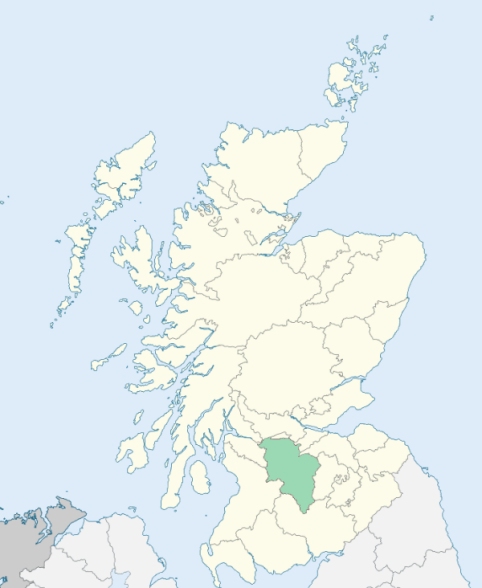
Dalziel is a parish in the centre of the middle ward of Lanarkshire. It is bounded by the parishes of Hamilton, Bothwell, Shotts, and Cambusnethan.(1867: The Imperial Gazetteer of Scotland, by John Marius Wilson).
Coursington, Craigneuk, Motherwell, Windmillhill
PRE-REFORMATION GOVERNANCE:
POST-REFORMATION GOVERNANCE:
The church of Dalziel was dedicated to St Patrick. It belonged to the Abbey of Paisley. At Motherwell, in the parish, there were wells of Our Lady and St Katherine. The parish church was rebuilt at Dalziel in 1789, but was removed to Motherwell in 1874.
Disjoined Quoad Sacra Parishes:
Craigneuk. The parish of Craigneuk was disjoined from South Dalziel, 7 March 1913.
St Andrew's. The parish of St Andrew's in Motherwell was disjoined from Dalziel, 3 December 1909.
St Mary's. The parish was disjoined from Dalziel, 15 November 1918.
South Dalziel. The church of South Dalziel is the old church of the parish of Dalziel as rebuilt in 1789 and enlarged in 1860. Near it was the Holy Well of St Patrick, to whom in ancient times Dalziel Church was dedicated. On 15 March 1880, the parish of South Dalziel was disjoined from Dalziel, and the old church at Dalziel was made the church of the new parish.
Includes ministers, licentiates, assistants, readers, and clerks.
Dalziel (QO)
Craigneuk (QS)
St Andrew's (QS)
St Mary's (QS)
South Dalziel (QS)
(1928: Fasti Ecclesiæ Scoticanæ, by Hew Scott, D. D.)
Parish registers turned over to the Registrar-General, as a result of the Registration of Births, Deaths, and Marriages (Scotland) Act of 1854. The letters B. D. and M. indicate Births (or Baptisms), Deaths (or Burials), and Marriages (or Proclamations of Banns) respectively. Numbers indicate separate volumes or books. Note: These records are by no means complete or without damage; consult the Detailed List of the Old Parochial Registers of Scotland (1872) to learn more about the condition of the records.
| OPR and RD Numbers | |||
|---|---|---|---|
| Date Range | Name | Number | Type |
| 1648-1854 | Dalziel | 639 | OPR |
| 1855-1967 | Dalziel | 639 | RD |
| 1968-1971 | Chryston | 639 | RD |
| 1972-2006 | Chryston | 561 | RD |
| 2007-2008 | Chryston, North Lanarkshire | 561 | RD |
| 2009 | North Lanarkshire, Chryston | 561 | RD |
| 2026 | (Dalziel) North Lanarkshire Council; Craigneuk and Wishawhill Community Council | ||
| 2026 | (Chryston) North Lanarkshire Council; Chryston Community Council | ||
(2009: Parishes and Registration Districts of Scotland - Old and New, National Records of Scotland)
Local community councils (2026) are provided as a potential source of additional information for settlements within the original boundaries of the parish. (Source)
Statistics from informal and official censuses
Brown, Campbell, Ferguson, Miller, Paterson, Reid, Russell, Smith, Stewart, Thomson
Note: Names appearing in research materials, other than censuses. Simple names (First name, surname only) have been omitted unless they appear associated with large properties. All women's names, and men's names with occupations, military ranks, or peerage titles are included.
By the Reverend Mr Robert Clawson.
"The number of inhabited houses, or families in the parish, is 78; the number of souls is as follows: 255 males, 223 females, total number of souls in the parish 478; of these 124 are below the age of 10.
Of the above number there are 23 farmers, besides their families, and male and female servants; 30 male adults, cottagers, mostly employed in field labour; 7 masons, 7 joiners and carpenters, 42 weavers of fine and coarse fabrics, 9 stocking-makers, 8 shoemakers, 3 blacksmiths, and 1 retailer of liquors, the keeper of a country inn on the road.
All the women were formerly employed in spinning fine yarn, except when occupied in the different offices of husbandry, which fall to the share of that sex; but of late the young girls belonging to the cottages have learned to flower muslin, in large frames made for the purpose, which they find more profitable. The greatest luxury which prevails among them, is drinking tea and smoking tobacco, in which they all indulge. Their dress is also more showy and expensive than formerly.
The people, in general, are quiet, orderly, and industrious, their being no instance of any of them being convicted of crimes; or even of one inhabitant of the parish having recourse to the degrading practice of begging."
(This section contains excerpts, at times restructured or paraphrased, from an article appearing in Statistical Account of Scotland, Sir John Sinclair, 1791-1799)
Primary Sources:
Statistical Account of Scotland (1791-1799), Volume 3, p. 454
New Statistical Account of Scotland (1834-1845), Volume 6, p. 442
See Parish Page Sources for all source information and links.