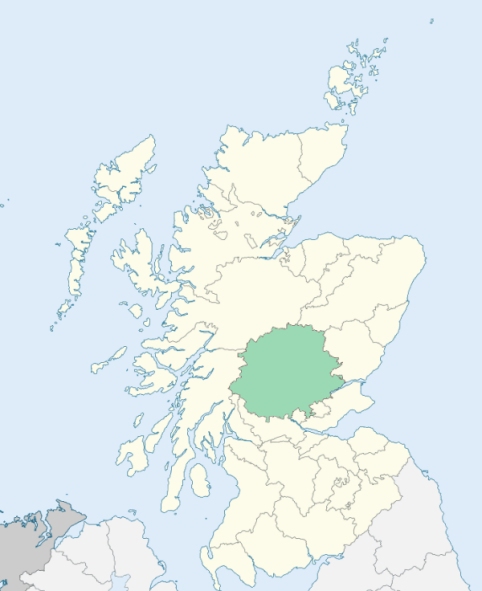
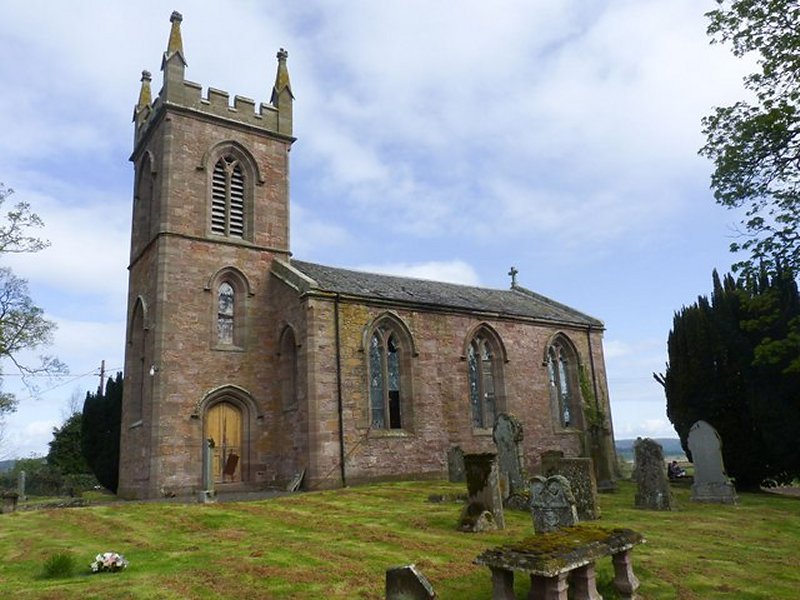
Dron is a parish on the south-east border of Perthshire. It is bounded on the south-east by Fife, and on other sides by the parishes of Arngask, Forgandenny, Dunbarney, and Abernethy. (1867: The Imperial Gazetteer of Scotland, by John Marius Wilson).
Bridge of Earn, Dron
Glenearn
The parish of Dron had a detached part lying to the west of the main portion of the parish, and separated from it by a narrow intervening strip of the parish of Dunbarney. The greater portion of this intervening strip was annexed to Dron, and the detached part of Dron has in this way been united with the main portion of the parish. See affected properties and landholders. (1892: Boundary of counties and parishes in Scotland as settled by the Boundary Commissioners under the Local Government Act, 1889, by Hay Shennan)
PRE-REFORMATION GOVERNANCE:
POST-REFORMATION GOVERNANCE:
The parishes of Dron, Kirkpottie, and Ecclesmoghridain were united in 1652.
Kirkpottie. The Church of Kirkpottie was dedicated to St Pothinus, the Martyr of Lyons. During a spate in 1830, its ruins were swept away by the river Farg.
Ecclesmoghridain. The church of this parish, now a ruin, was dedicated to St Adrian.
Includes ministers, licentiates, assistants, readers, and clerks.
Dron (QO)
Ecclesmoghridain (QO)
(1928: Fasti Ecclesiæ Scoticanæ, by Hew Scott, D. D.)
Parish registers turned over to the Registrar-General, as a result of the Registration of Births, Deaths, and Marriages (Scotland) Act of 1854. The letters B. D. and M. indicate Births (or Baptisms), Deaths (or Burials), and Marriages (or Proclamations of Banns) respectively. Numbers indicate separate volumes or books. Note: These records are by no means complete or without damage; consult the Detailed List of the Old Parochial Registers of Scotland (1872) to learn more about the condition of the records.
| OPR and RD Numbers | |||
|---|---|---|---|
| Date Range | Name | Number | Type |
| 1683-1854 | Dron | 345 | OPR |
| 1855-1940 | Dron | 345 | RD |
| 1941-1965 | Dunbarney and Dron | 347 | RD |
| 1966-1968 | Dunbarney District | 347 | RD |
| 2009 | Perth and Kinross, Perth | 390 | RD |
| 2026 | Perth and Kinross Council; Earn Community Council | ||
(2009: Parishes and Registration Districts of Scotland - Old and New, National Records of Scotland)
Local community councils (2026) are provided as a potential source of additional information for settlements within the original boundaries of the parish. (Source)
Statistics from informal and official censuses
Clark, Ford, Forrest, Harris, Johnston, Nicol, Pearson, Proudfoot, Reid, Thomson
Note: Names appearing in research materials, other than censuses. Simple names (First name, surname only) have been omitted unless they appear associated with large properties. All women's names, and men's names with occupations, military ranks, or peerage titles are included.
By the Reverend Mr David Dow.
"By the last account which was taken of the number of souls in this parish about 18 years ago, when there was a proposal for embodying the Scotch militia, they amounted to 500; at present they do not exceed 450, which is a decrease of one-tenth in so short a period. This no doubt is principally owing to the modern practice of united several farms into one, and the suppressing of cottagers. By the suppression of these little plantations, it may be observed, a number of people, who, from their manner of life and employment in the country, were a healthy vigorous race, have been, for the present, forced to seek a subsistence in the neighbouring cities; where the nature of their occupations, confined apartments and unwholesome air, are by no means favourable circumstances for the increase of population, or the health of the individual.
There are about 14 farmers. The rest of the inhabitants are tradesmen or artificers, a few cottagers and day-labourers. These last, and a few young men who hire themselves for domestic service in the winter, are employed in ditching, draining, fishing, and working on the roads during the summer. Many young women, who used to go into service, find it more advantageous to stay at home and spin for the manufacturer, or to purchase lint and dispose of the yarn. By this mode of life, they feel themselves independent, and more at their own disposal, which is no doubt an additional motive for preferring it.
As to the general character of the people here, it is but justice to say, that with a few exceptions, and such there always will be in every collection of human beings, they are a sober, peaceable, industrious set of persons; apparently contented in their various situations. Crimes of an atrocious or capital nature are scarcely known among them, or indeed any which require the interference of the civil judge. They are in general decent and regular in their attendance on the public institutions of religion; and as far as external appearances can ascertain the character, they are to be reckoned well disposed, religious in their sentiments, and in general cautious and prudent in their conduct."
(This section contains excerpts, at times restructured or paraphrased, from an article appearing in Statistical Account of Scotland, Sir John Sinclair, 1791-1799)
Primary Sources:
Statistical Account of Scotland (1791-1799), Volume 9, p. 466
New Statistical Account of Scotland (1834-1845), Volume 10, p. 862
See Parish Page Sources for all source information and links.