Edderachillis
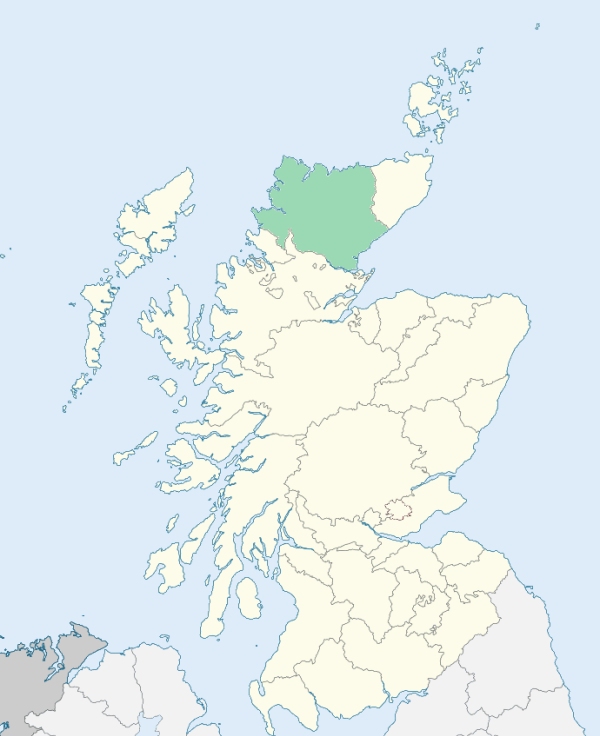
Eddrachillis is a parish on the west coast of Sutherlandshire. It is bounded by the Atlantic Ocean, and by the parishes of Durness, Farr, Lairg, Creich, and Assynt. (1867: The Imperial Gazetteer of Scotland, by John Marius Wilson).
Achriesgill, Kinlochbervie, Kylesku, Lower Badcall, Scourie, Upper Badcall
PRE-REFORMATION GOVERNANCE:
POST-REFORMATION GOVERNANCE:
On 16 May 1724 the General Assembly appointed a collection to be taken for building a church at Eddrachillis. In the same year, the Lords Commissioners of Teinds disjoined the parish of Eddrachillis from those of Lairg and Durness.
Disjoined Quoad Sacra Parishes:
Kinlochbervie. The parish of Kinlochbervie was disjoined from Eddrachillis on 4 February 1846.
Includes ministers, licentiates, assistants, readers, and clerks.
Eddrachillis (QO)
Kinlochbervie (QS)
(1928: Fasti Ecclesiæ Scoticanæ, by Hew Scott, D. D.)
Parish registers turned over to the Registrar-General, as a result of the Registration of Births, Deaths, and Marriages (Scotland) Act of 1854. The letters B. D. and M. indicate Births (or Baptisms), Deaths (or Burials), and Marriages (or Proclamations of Banns) respectively. Numbers indicate separate volumes or books. Note: These records are by no means complete or without damage; consult the Detailed List of the Old Parochial Registers of Scotland (1872) to learn more about the condition of the records.
| OPR and RD Numbers | |||
|---|---|---|---|
| Date Range | Name | Number | Type |
| 1808-1854 | Eddrachillis | 49 | OPR |
| 1855-1855 | Eddrachillis | 49 | RD |
| 1856-1971 | Scourie | 49-1 | RD |
| 1856-1971 | Kinlochbervie | 49-2 | RD |
| 1972-2006 | Kinlochbervie | 171 | RD |
| 1972-2006 | Scourie | 172 | RD |
| 2009 | Highland, Kinlochbervie | 171 | RD |
| 2026 | (Eddrachillis) Highland Council; Eddrachillis Community Council | ||
| 2026 | (Scourie) Highland Council; Eddrachillis Community Council | ||
| 2026 | (Kinlochbervie) Highland Council; Kinlochbervie Community Council | ||
(2009: Parishes and Registration Districts of Scotland - Old and New, National Records of Scotland)
Local community councils (2026) are provided as a potential source of additional information for settlements within the original boundaries of the parish. (Source)
Statistics from informal and official censuses
Campbell, Corbett, Fraser, Gunn, MacKay, Mackenzie, Matheson, Morrison, Munro, Ross
Note: Names appearing in research materials, other than censuses. Simple names (First name, surname only) have been omitted unless they appear associated with large properties. All women's names, and men's names with occupations, military ranks, or peerage titles are included.
By the Reverend Mr Alexander Falconer.
"The inhabitants, or natives, (who are all, except a very few, of three names, M'Clays, Morrisons, and M'Cleods), are all Presbyterians, and have been so, for so long a time back, that the present generation have no remembrance of seeing in the country any resident of another persuasion. Notwithstanding their detached and distant habitations, they are remarkable for their attendance upon divine ordinances and public worship, for the sobriety and regularity of their manners and lives, without being addicted to any particular vice in any remarkable degree. Their character for peaceableness, and their harmony among themselves, is uncommon. For the last 20 years and more, scarce one instance has happened of any quarrel or fight among them, or so much as of any of them receiving any bodily hurt from another.
From their practice of fishing, and early and constant acquaintance with the sea, they are excellent boatmen, as well as ingenious, and ready to learn any mechanical business; so that scarcely any artificers in the parish but are self-taught. And yet there are among them pretty good carpenters and boat-wrights, dry-stone masons, coopers, and net-makers; and, as for shoemakers, there is scarce a man in the parish but can make his own shoes. They love also to appear as decent and clean as possible; so that the fishers, who frequent this place, have declared they make the most decent and cleanly appearance of any Highlanders on the whole coast.
The Muses too are partial to the natives of this place, as if the air of the Edderachylies mountains had inspiration in it; for there have been, of late years, several poets in this parish, whose compositions, mostly of the lyric kind, have been admired by good judges, and have shewn them to be possessed of uncommon parts and genius."
(This section contains excerpts, at times restructured or paraphrased, from an article appearing in Statistical Account of Scotland, Sir John Sinclair, 1791-1799)
Primary Sources:
Statistical Account of Scotland (1791-1799), Volume 6, p. 278
New Statistical Account of Scotland (1834-1845), Volume 15, Section I, p. 118
See Parish Page Sources for all source information and links.