
Plaidwerx


Features: Scottish Parishes » Historic Shires » Sutherland » Lairg

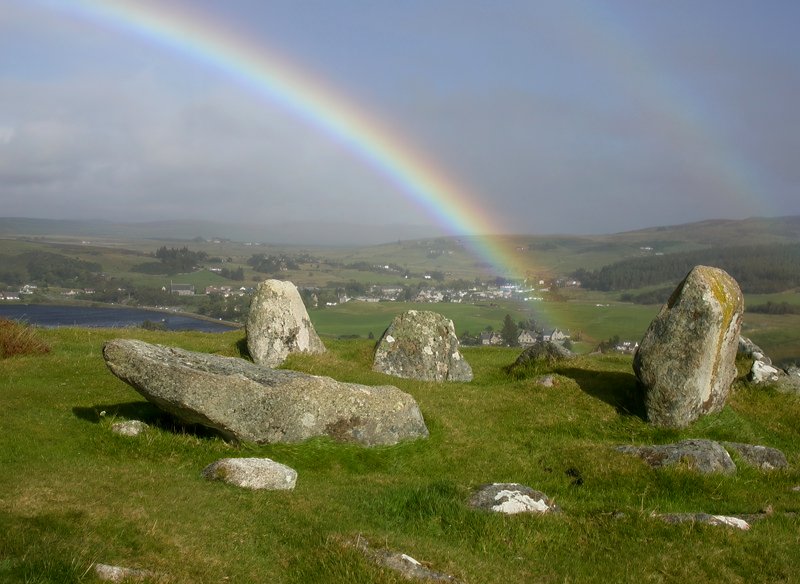
Standing Stones, Lairg by Sandra Hogg
Standing Stones, Lairg © 2004, Sandra Hogg/Scottish Rural Network

LAIRG PARISH

TABLE OF CONTENTS


LOCATION

Location Description:

Lairg is a parish in the centre of the south of Sutherlandshire. It is bounded by Farr, Rogart, Creich, Assynt, and Eddrachillis. (1867: The Imperial Gazetteer of Scotland, by John Marius Wilson).

Shire, District, and Region Timeline:

  • Shire: Sutherland (Before 1707)
  • County: Sutherland (After 1707)
  • District: Sutherland (Before 1930)
  • Landward District: Golspie, Rogart, and Lairg (1930-1975)
  • Region: Highland (1975-1996)
  • District: Sutherland (1975-1996)

Cities, Towns, Villages, and Hamlets:

Achfridh, Achnairn, Balloan, Balnadelson, Gruids, Lairg, Lairg Muir, Saval, Tirryside, Torroble

Estates:

Achany


PARISH TIMELINE

PRE-REFORMATION GOVERNANCE:

  • Diocese: Caithness

POST-REFORMATION GOVERNANCE:

  • Synod: Sutherland and Caithness
  • Presbytery: Dornoch

PAROCHIAL OVERVIEW:

The church of Lairg was dedicated to St Malrubh, and a fair of St Malrubh was held beside it. A prebend of Lairg was held by the treasurer of the Cathedral of Dornoch.

CHURCH OF SCOTLAND CLERGY:

Includes ministers, licentiates, assistants, readers, and clerks.

  • Donald Williamson, 1565
  • Hew Polson, 1574
  • Thomas Murray, 1578
  • William Gray, 1574
  • James Gray (son of William, above), 1607
  • James Thomson, 1627
  • Robert Ross, 1658
  • David Munro, 1663
  • William MacKay, 1668
  • John Dempster, 1668
  • John Robertson, 1706
  • John MacKay, 1714
  • Thomas MacKay, 1749
  • Angus Kennedy, 1804
  • Duncan MacGillivray, 1817
  • Farquhar Matheson, 1843
  • Robert Robertson, 1879
  • David Mackenzie, 1884
  • John MacNaughton, 1888
  • Donald MacRae, 1890
  • John Kenneth MacLean, 1902
  • Archibald Campbell, 1908
  • John MacKechnie, 1912
  • Walter Shaw, 1916
  • John Cunningham Moore, 1919

(1928: Fasti Ecclesiæ Scoticanæ, by Hew Scott, D. D.)


RECORDS

Parochial Registers:

Parish registers turned over to the Registrar-General, as a result of the Registration of Births, Deaths, and Marriages (Scotland) Act of 1854. The letters B. D. and M. indicate Births (or Baptisms), Deaths (or Burials), and Marriages (or Proclamations of Banns) respectively. Numbers indicate separate volumes or books. Note: These records are by no means complete or without damage; consult the Detailed List of the Old Parochial Registers of Scotland (1872) to learn more about the condition of the records.

  • (1) B. 1768-1819; M. 1784-1828; D. 1804-44
  • (2) B. 1819-54; M. 1820-54

OPR and RD Numbers
Date RangeNameNumberType
1768-1854Lairg53OPR
1855-1971Lairg53RD
1972-2006Lairg179RD
2009Highland, Lairg179RD
2026Highland Council; Lairg Community Council

(2009: Parishes and Registration Districts of Scotland - Old and New, National Records of Scotland)

Local community councils (2026) are provided as a potential source of additional information for settlements within the original boundaries of the parish. (Source)

Population:

Statistics from informal and official censuses

  • 1755: 1,010
  • 1831: 1,045
  • 1841: 913
  • 1861: 961
  • 1901: 1,081
  • 1911: 995

RESIDENTS


Common Surnames:

Cameron, Fraser, MacDonald, MacKay, Mackenzie, Matheson, Munro, Murray, Ross, Sutherland

Land-owners, teachers, and other professionals:

Note: Names appearing in research materials, other than censuses. Simple names (First name, surname only) have been omitted unless they appear associated with large properties. All women's names, and men's names with occupations, military ranks, or peerage titles are included.

  • (Major) George Gunn MUNRO, of Poyntzfield
  • Harriet (née HOWARD) SUTHERLAND-LEVESON-GOWER, Duchess-Countess of Sutherland

Other residents:

By a Friend to Statistical Inquiries.
"Notwithstanding the disadvantage of a rainy climate, surely nothing but that want of industry, which reigns among the inhabitants, could prevent their availing themselves of the limestone they have in such abundance, for meliorating their land. Respecting their character, in general, it is not much in its favour, that they seemed to entertain a particular dread of these statistical inquiries, and would not permit the minister of the district to draw up an account of it, as if conscious that it could not turn out much in their favour."
(This section contains excerpts, at times restructured or paraphrased, from an article appearing in Statistical Account of Scotland, Sir John Sinclair, 1791-1799)


NOTES:

Primary Sources:
Statistical Account of Scotland (1791-1799), Volume 11, p. 569
New Statistical Account of Scotland (1834-1845), Volume 15, Section I, p. 58

See Parish Page Sources for all source information and links.
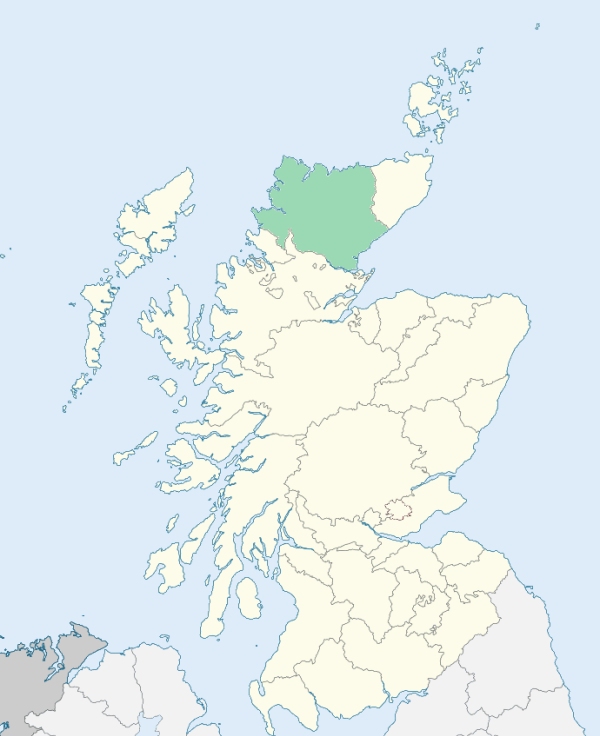

Photo credits: (Featured) Standing Stones, Lairg, © 2004 Scottish Rural Network, used under Creative Commons License CC BY-SA 2.0, (Related Resources) Sutherland Locator Map, © 2024, Elianfoo, used under Creative Commons License CC BY-SA 4.0.
Related Resources
Map of Scotland with Sutherland highlighted
Location of Sutherland
See more maps at Wikimedia Commons
Glossary
  • Burghs:
  • Royal - Towns on royal lands
  • Regality - Towns granted to noblemen/landowners
  • Barony - Towns granted to tenant-in-chief (laird)
  • Police - Towns with elected officials
  • Small - Population under 20,000
  • Large - Population over 20,000
  •  
  • Chapel-of-Ease: Small church for those living far from the main church
  • Collegiate church: See What is a Collegiate Church?
  • Commune kirk: Owned by a larger church
  • Court of Teinds: Controlled funds for support of clergy
  •  
  • Friars:
  • Black - Dominican
  • Grey - Franciscan
  • Red - Trinitarian
  • White - Carmelite
  •  
  • Iron chapel: Building made of corrugated galvanized iron
  •  
  • Landward District: Rural part of a district
  •  
  • Mensal: Source of income to support clergy member (Roman Catholic)
  •  
  • OPR: Old Parochial Register
  •  
  • Pre-Reformation: Before 1560
  • Prebend: Source of income to support a clergy member
  •  
  • QO: Quoad Omnia - Civil and church control
  • QS: Quoad Sacra - Church control only
  •  
  • RD: Registration District - Civil control
  •  
  • Tryst: Large-scale market or fair, particularly for livestock
  •