Inverness and Bona
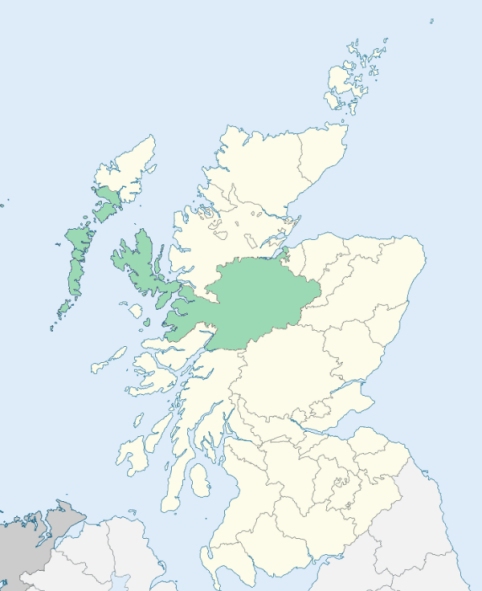
Inverness is a parish on the north-east border of Inverness-shire. It is bounded on the north-east by the Beauly and Moray Firths, on the east by Petty, on the south-east and south by Croy and Daviot, on the south-west by Loch Ness and the parish of Dores, and on the west by Urquhart, Kiltarlity, and Kirkhill. (1867: The Imperial Gazetteer of Scotland, by John Marius Wilson).
Abriachan, Allanfearn, Balchraggan, Ballifeary, Balloch, Balmore, Castlehill, Castleton, Clachnaharry, Culcabock, Culduthel, Culloden, Dochgarroch, Drummond, Hilton, Inverness, Leachkin, Lochend, Resaudrie, Smithton or Smithtown of Culloden, South Kessock, Westhill
Culloden, Dunain or Dunean, Essich, Inches, Raigmore
PRE-REFORMATION GOVERNANCE:
POST-REFORMATION GOVERNANCE:
The parishes of Inverness and Bona were united in 1618.
Inverness. In early times the church of Inverness was dedicated to St Columba. There was a later dedication to St Mary. The old church belonged to the Abbey of Arbroath. In and near this town there were of old a number of chapels and shrines. The Black Friars had a convent n the burgh; it was dedicated to St Bartholomew. In 1792 St Mary's Church was rebuilt. In 1798 another place of worship was erected, called the East Chapel. In 1837 another church was opened called the North. Fairs were held of old at Inverness on Palm Sunday, Marymas in Harvest, Roodmas, Petermas in February, Martinmas, and the anniversaries of St Andrew, St Thomas, and St Mark. Each of these fairs seems to have gone on for eight days.
Bona. The ancient church of Bona was dedicated to St Curadan. This parish, the smallest in the county, was added to that of Inverness on 8 July 1618. Its church probably stood at Killionan of Abriachan, or at Cladh Uradain of Lochend. The name of Elias, vicar of Bonar, is found as early as 1233.
Disjoined Quoad Sacra Parishes:
St Stephen's. The parish of St Stephen's was disjoined from Inverness and erected on 9 July 1915.
Includes ministers, licentiates, assistants, readers, and clerks.
Inverness (QO)
Bona (QO)
St Stephen's (QS)
North Church (QS)
East Church (QS)
(1928: Fasti Ecclesiæ Scoticanæ, by Hew Scott, D. D.)
Parish registers turned over to the Registrar-General, as a result of the Registration of Births, Deaths, and Marriages (Scotland) Act of 1854. The letters B. D. and M. indicate Births (or Baptisms), Deaths (or Burials), and Marriages (or Proclamations of Banns) respectively. Numbers indicate separate volumes or books. Note: These records are by no means complete or without damage; consult the Detailed List of the Old Parochial Registers of Scotland (1872) to learn more about the condition of the records.
| OPR and RD Numbers | |||
|---|---|---|---|
| Date Range | Name | Number | Type |
| 1602-1854 | Inverness | 98 | OPR |
| 1855-1856 | Inverness Burgh | 98-1 | RD |
| 1855-1856 | Inverness Landward | 98-2 | RD |
| 1857-1910 | Inverness | 98 | RD |
| 1911-1970 | Inverness | 98a | RD |
| 1911-1927 | Kilmallie | 98b | RD |
| 1928-1970 | Kilmallie | 98b1 | RD |
| 1928-1970 | Ballachulish and Onich | 98c | RD |
| 1972-1987 | Inverness | 231 | RD |
| 1988-2006 | Inverness | 240 | RD |
| 2009 | Highland, Inverness | 240 | RD |
| 2026 | (Inverness) Highland Council; (See list below) | ||
| 2026 | (Kilmallie) Highland Council; Kilmallie Community Council | ||
| 2026 | (Ballachulish) Highland Council; Ballachulish Community Council | ||
| 2026 | (Onich) Highland Council; Nether Lochaber Community Council | ||
(2009: Parishes and Registration Districts of Scotland - Old and New, National Records of Scotland)
Local community councils (2026) are provided as a potential source of additional information for settlements within the original boundaries of the parish. (Source)
Community councils in vicinity of the city of Inverness:
Statistics from informal and official censuses
Cameron, Campbell, Chisholm, Fraser, Grant, MacDonald, Mackenzie, MacKintosh, Munro, Ross
Note: Names appearing in research materials, other than censuses. Simple names (First name, surname only) have been omitted unless they appear associated with large properties. All women's names, and men's names with occupations, military ranks, or peerage titles are included.
By Reverend Messrs Robert Rose, George Watson, and Alexander Fraser, Ministers of the Town and Parish.
"There are six corporations of craftsmen in the town, viz. Hammermen, including smiths, tinsmiths, coppersmiths, silversmiths, watchmakers, braziers, cutlers, saddlers. 2d, Wrights, including house-carpenters, cabinet-makers, wheel-wrights and coopers. 3d, Weavers. 4th, Tailors. 5th, Shoemakers; and 6th Skinners. There are 2 tanneries and 1 tawing work in the town. The tanned leather is consumed at home; but the tawed is sent to London. These manufactures do not indeed employ many hands, but they are very beneficial to this country. There are 2 tallow-chandlers and 1 soap-boiler. These two do much work with few hands. There is a brick work in the neighbourhood of the town. This work is only in its infancy. A hemp manufacture was established here above 30 years ago. This business at present employs, in spinning, dressing and weaving, above 1000 men, women and children. A white and coloured thread manufacture is now established here about 10 years. This business employs, in heckling, spinning, twisting, bleaching and dyeing near 10,000 persons, including men, women and children. There is on the Ness an infant bleachfield. It has many advantages, and promises to do well.
From an actual survey, taken in the spring 1791, there were in the town and parish 7930, 5107 of which were in the town. Besides the above corporated trades, there are several other crafts which are not coroporate: 34 bakers, 14 butchers, 23 barbers, 6 perfumers and wigmakers, 13 gardeners, 16 millers, 270 farmers, 10 writers, 12 dyers.
Prisoners in the Tolbooth in 1790, &c. Thirty for horsestealing; 8 for petty thefts; 4 for threatening expressions; 1 for alleged willful fire-raising, but liberated upon investigation; 1 for scandal and defamation; 3 for deserting their apprenticeships; a boy for alleged murder, liberated on investigation; 3 for violent assaults, 3 for child-murder; 1 for selling spiritous liquors without a license; 2 women of bad fame, for irregularities and misdemeanours; 5 men from Campbeltown for breach of the peace; 1 for deserting his Majesty's service; 17 for civil debts.
The inhabitants of the town and parish are decent, and regular in their attendance on the public ordinances of religion. They are well affected to the government of their country, good neighbours, and industrious in their several occupations. Instances of dissipation and profligacy are rare. Their modes and habits of living have undergone, during the last 30 years, an alteration greatly to the better. Even the lower farmers and cottagers are by far more industrious than they were formerly, more cleanly in their persons and houses, and improved considerably in their apparel."
(This section contains excerpts, at times restructured or paraphrased, from an article appearing in Statistical Account of Scotland, Sir John Sinclair, 1791-1799)
Primary Sources:
Statistical Account of Scotland (1791-1799), Volume 9, p. 603
New Statistical Account of Scotland (1834-1845), Volume 14, Section I, p. 1
See Parish Page Sources for all source information and links.